Why Choosing the Right Camping Tent Matters
There is arguably no single piece of gear that shapes your camping experience more than your tent. It is your bedroom, your living room, your rain shelter, and sometimes your dining hall — all rolled into one portable package. Pick the wrong tent and you will spend a miserable night listening to rain drip through a cheap seam, fighting condensation, or trying to sleep in a space that feels more like a coffin than a campsite. Pick the right one and you will wake up refreshed, dry, and ready to take on whatever the trail or campground throws at you.
The problem is that the tent market is enormous. Walk into any outdoor retailer or browse online and you will find hundreds of options ranging from ultralight bivvy sacks barely big enough for one person to sprawling cabin-style tents that sleep ten with room to spare. Prices swing from under fifty dollars to well over a thousand. Materials, pole configurations, ventilation systems, and weather ratings vary wildly. For someone who does not spend every weekend in the backcountry, sorting through all of this can feel overwhelming.
That is exactly why we put together this guide. We wanted to cut through the marketing noise and give you honest, hands-on reviews of the best camping tents available right now. Whether you are a solo backpacker counting every ounce, a couple looking for a cozy weekend shelter, or a family that needs space for kids, sleeping bags, and a dog, we have a recommendation for you.
Throughout this guide, we will walk you through each tent’s key features, real-world performance, pros and cons, and who it is best suited for. We will also cover the essential factors you should consider before buying — things like capacity, seasonality, weight, setup ease, and weather resistance. By the end, you will have all the information you need to make a confident purchase.
Before we dive in, it is worth noting that a great tent is only part of the equation. You will also want to invest in quality tent stakes for rocky ground to keep your shelter secure, and if you plan on camping in cooler months, pairing your tent with the best sleeping pad for winter camping will make a world of difference in comfort and warmth.
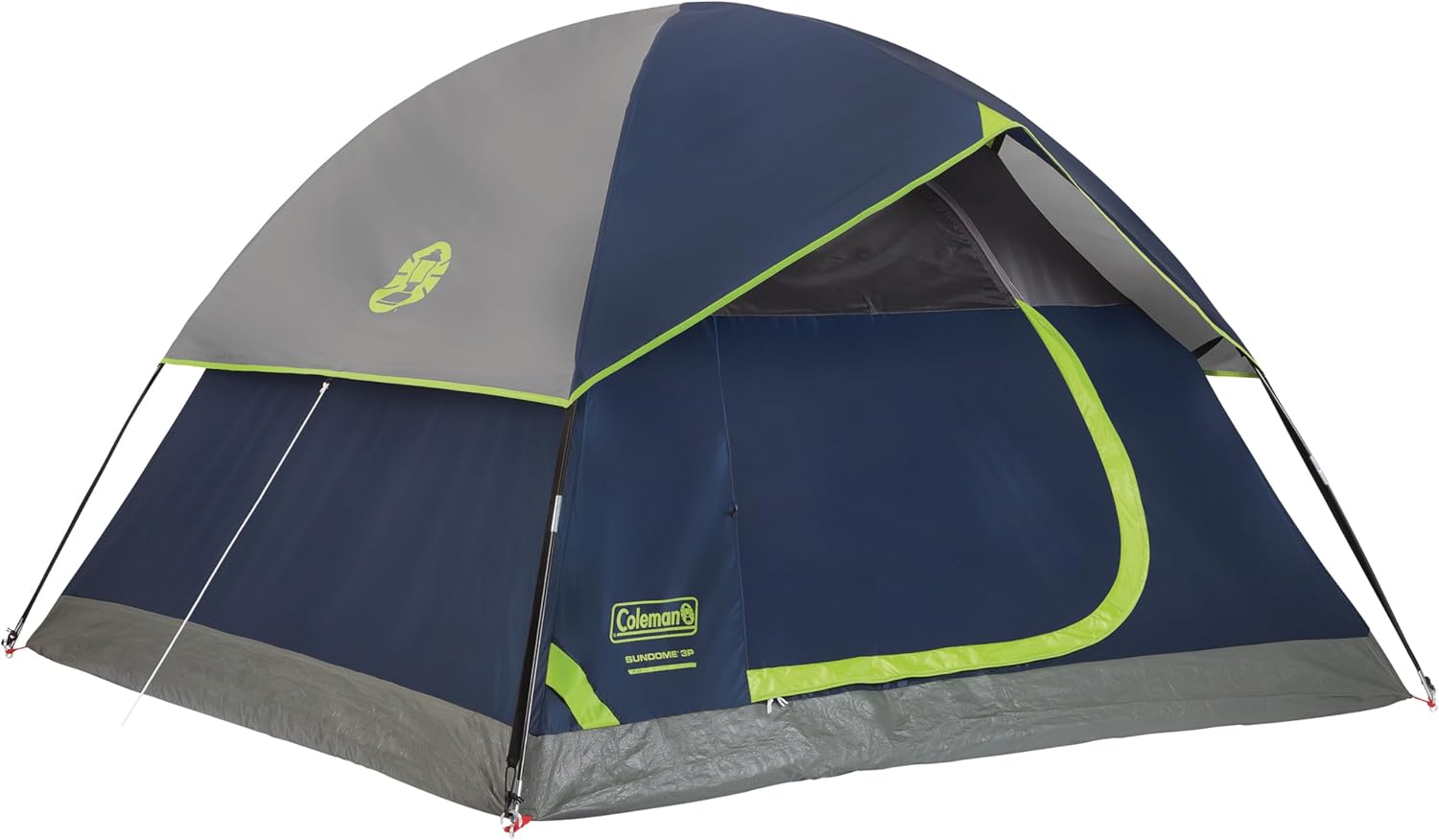
Editor’s Pick — Coleman Sundome Tent
A time-tested classic that balances price, durability, and ease of setup. Perfect for beginners and seasoned campers alike.
View on AmazonHow We Tested These Camping Tents
We did not just read spec sheets and call it a day. Every tent in this roundup was pitched, slept in, and evaluated across multiple camping trips in different conditions. We tested in warm summer weather, during surprise rainstorms, on windy ridgelines, and in humid environments where condensation can be a real problem. Here is a breakdown of the criteria we used to evaluate each tent.
Setup Speed and Ease
Nobody wants to wrestle with poles and fabric after a long day of hiking or driving. We timed how long it took to pitch each tent from the moment we pulled it out of the bag to the moment it was fully staked and ready. We also noted whether one person could set it up alone or if it required a second pair of hands. Tents with color-coded poles, instant-setup mechanisms, or intuitive clip systems scored higher in this category.
Weather Resistance
A tent that cannot handle rain is not worth owning. We tested each tent’s waterproofing by spraying them with a garden hose for extended periods and by camping through actual rainstorms. We checked for leaks at the seams, around the zippers, and at the floor corners. We also evaluated wind stability by setting up camp in exposed areas and observing how each tent performed in gusts up to 30 miles per hour. If you camp in wet conditions frequently, our guide on how to make a tent waterproof offers additional tips for boosting your shelter’s rain resistance.
Interior Space and Livability
Manufacturer capacity ratings can be misleading. A tent rated for four people might technically fit four sleeping pads side by side, but you will be shoulder-to-shoulder with zero room for gear. We evaluated the actual usable interior space, including peak height (can you sit up?), floor dimensions (is there room for gear?), and vestibule space (where do muddy boots go?). We also assessed the number and placement of pockets, gear lofts, and other storage features.
Ventilation and Condensation Control
Condensation is the silent enemy of tent camping. On cool nights, the temperature difference between inside and outside the tent causes moisture to collect on the inner walls. Without adequate ventilation, you wake up to a damp sleeping bag and a clammy interior. We evaluated each tent’s mesh panels, vent placement, and fly design to determine how well it manages airflow. For more on this topic, check out our detailed article on how to stop condensation in a tent.
Durability and Build Quality
We inspected the quality of the fabric, zippers, seams, and pole materials. We looked for reinforced stress points, double-stitched seams, and robust zipper pulls. We also considered the tent’s packed weight and size — because a tent that is a nightmare to carry is a tent that stays in the garage.
Value for Money
Price matters. A three-hundred-dollar tent might outperform a sixty-dollar tent in every measurable way, but that does not mean the cheaper tent is a bad buy. We evaluated each tent relative to its price point, asking whether it delivers fair value for what you pay. Some budget tents punch well above their weight, while some premium options leave us wondering where the extra money went.
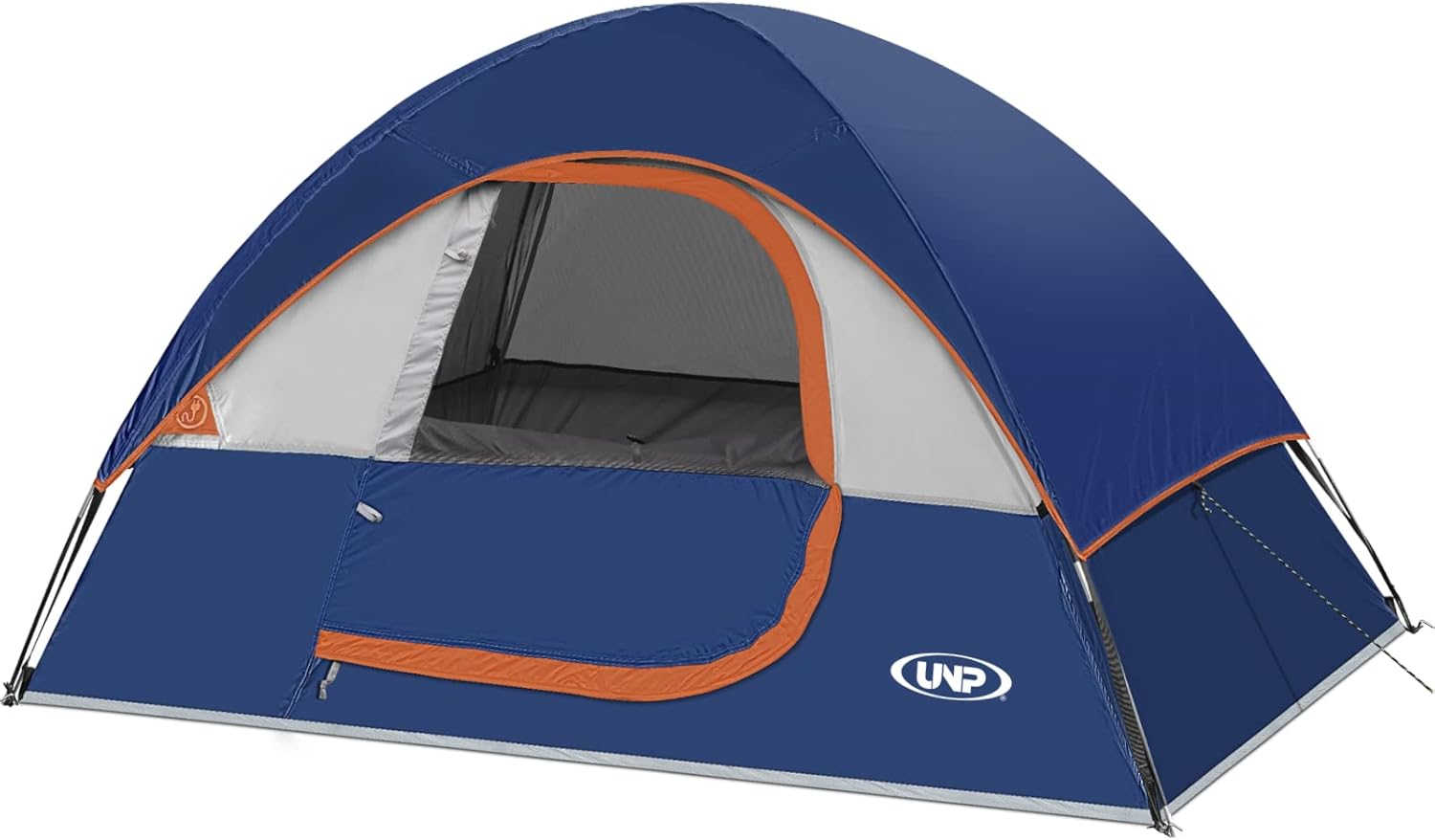
Best Value — Camping Tent by unp Store
Spacious, well-ventilated, and priced to move. A fantastic option for campers who want quality without breaking the bank.
View on AmazonQuick Picks at a Glance
Short on time? Here are our top recommendations at a glance. Each pick is tailored to a specific camping style or priority, so you can jump straight to the tent that fits your needs.

Best for Families — CAMPROS CP 8 Person Tent
Room for the whole family with excellent ventilation and a straightforward setup process.
View on AmazonFull Comparison Table — All 8 Tents Side by Side
Before we dive into individual reviews, here is a comprehensive comparison table that puts all eight tents next to each other. This makes it easy to see at a glance how they stack up in terms of capacity, weight, setup time, waterproofing, and price range.
| Tent | Capacity | Season | Weight | Setup | Waterproof | Best For |
|---|---|---|---|---|---|---|
| WolfWise Pop Up Shower | 1 (privacy) | 3-season | ~4.5 lbs | Instant pop-up | Water-resistant | Privacy / shower |
| unp Store Camping Tent | 2–6 persons | 3-season | ~8–12 lbs | ~10 min | 2000mm HH | General camping |
| Night Cat Backpacking | 1–2 persons | 3-season | ~4 lbs | ~5 min | 3000mm HH | Backpacking |
| FanttikOutdoor Instant | 4–10 persons | 3-season | ~14–22 lbs | 60 seconds | 2000mm HH | Car camping / festivals |
| Amazon Basics Tent | 2–4 persons | 3-season | ~7 lbs | ~8 min | 1200mm HH | Budget camping |
| CAMPROS CP 8 Person | 8 persons | 3-season | ~17 lbs | ~10 min | 1000mm HH | Family camping |
| Coleman Sundome | 2–6 persons | 3-season | ~7–13 lbs | ~10 min | WeatherTec system | All-around camping |
| Forceatt Camping Tent | 2–4 persons | 3-season | ~5–8 lbs | ~8 min | 3000mm HH | All-weather camping |
As you can see, these tents cover a wide range of use cases. The WolfWise is a specialized privacy tent rather than a traditional sleeping shelter, while the FanttikOutdoor and CAMPROS models are built for larger groups. The Night Cat and Forceatt lean toward the lighter, more packable end of the spectrum, making them better suited for backpackers and hikers. The Coleman Sundome and unp Store tent sit in the versatile middle ground that works for most casual campers.
Keep in mind that weight and packed size matter differently depending on how you camp. If you are driving to a campground and walking twenty feet from your car to your site, a heavier tent is not a problem. If you are carrying everything on your back for ten miles, every ounce counts. Think about your typical camping scenario before weighing these numbers too heavily.

Fastest Setup — FanttikOutdoor Instant Tent
From bag to fully pitched in 60 seconds. Available in 4, 6, 8, and 10-person configurations.
View on AmazonWolfWise Pop Up Shower Tent — Best Privacy Tent for Camping

WolfWise Pop Up Shower Tent for Camping Essentials
The WolfWise Pop Up Shower Tent is not your typical sleeping tent — and that is precisely what makes it so useful. This clever little shelter is designed to provide instant privacy at the campsite, whether you need a place to shower, change clothes, use a portable toilet, or simply get dressed without an audience. If you have ever camped at a busy campground or festival and wished you had a private space, this tent is the answer.
Key Features
- Instant pop-up design: No poles, no assembly. Pull it out of the bag and it springs into shape in seconds. Folding it back down takes a little practice, but once you learn the twist-fold technique, it becomes second nature.
- UPF 50+ sun protection: The silver-coated fabric blocks harmful UV rays, making it suitable for use as a beach changing room or a shaded rest area on hot days.
- Integrated ventilation: Mesh windows on multiple sides allow airflow while maintaining privacy. This is critical in a small enclosed space where heat can build up quickly.
- Floor design: The tent features a built-in floor with a drainage opening, which is particularly useful if you are using it as a shower tent. Water can drain out without pooling inside.
- Interior pockets and hook: A clothesline hook at the top and mesh pockets on the interior walls give you places to hang towels, store toiletries, or keep a change of clothes off the ground.
- Carry bag included: Packs down into a flat circular disc that fits easily into a car trunk or alongside your other camping gear.
Real-World Performance
In practice, the WolfWise does exactly what it promises. It pops up instantly, provides complete privacy, and stands stable in moderate wind when properly staked. The fabric is thick enough to block visibility from the outside while still allowing light through, so you are not fumbling around in total darkness. The UPF 50+ rating is a genuine bonus for sunny campsites.
The main limitation is that this is a single-purpose tent. It is not designed for sleeping, and it is too small for anything beyond changing or showering. The floor drainage hole is a nice touch but can let insects in if you are not careful. We recommend placing a small mat over it when not actively draining water.
Folding the tent back into its carry bag is the most common complaint among first-time users. The pop-up mechanism requires a specific twisting motion to collapse, and if you have never done it before, it can be frustrating. However, after two or three attempts, most people get the hang of it. There are plenty of quick video tutorials online if you get stuck.
Pros
- Instant setup — truly pop-up in seconds
- UPF 50+ sun protection
- Excellent ventilation with privacy
- Built-in floor with drainage
- Lightweight and portable
- Interior pockets and clothesline hook
Cons
- Folding back takes practice
- Not suitable for sleeping
- Drainage hole can admit insects
- Limited headroom for taller individuals
Who Should Buy This?
The WolfWise Pop Up Shower Tent is perfect for campers who value privacy at shared campgrounds, festival-goers who need a changing room, families with kids who need a potty-training space, and anyone who camps at sites without shower facilities. It is also a great addition to beach trips. If you already have a sleeping tent and want to round out your campsite setup, this is a smart, affordable addition.
WolfWise Pop Up Shower Tent
Instant privacy for camping, beach trips, and outdoor events. Compact, lightweight, and UV-protected.
View on AmazonCamping Tent by unp Store — Best Value All-Purpose Tent
Camping Tent by unp Store
The Camping Tent by unp Store is one of those pleasant surprises that proves you do not need to spend a fortune to get a capable, well-designed tent. Available in multiple sizes ranging from a cozy two-person model to a roomy six-person version, this tent covers a broad spectrum of camping needs. It is the kind of tent that works equally well for a weekend at a state park, a week-long road trip, or an impromptu backyard campout with the kids.
Key Features
- Multiple size options: Whether you are a solo camper or part of a group, there is a size that fits. The two-person model is great for backpackers, while the four and six-person versions are better suited for car camping and family trips.
- 2000mm hydrostatic head waterproofing: The rainfly and floor are rated to handle moderate to heavy rain. Seam-taped construction prevents water from seeping through the stitch lines.
- Mesh ventilation panels: Large mesh windows on the walls and a mesh ceiling promote airflow, reducing condensation and keeping the interior comfortable on warm nights.
- Color-coded poles and clips: The setup process is simplified by color-coded components that match poles to their corresponding grommets and clips. Even first-time campers can have this tent pitched in about ten minutes.
- Interior organization: Mesh pockets along the walls and a gear loft overhead keep essentials like headlamps, phones, and wallets off the floor and within easy reach.
- Carry bag with expansion: The included carry bag is slightly oversized, which means you do not have to perform a perfect roll-and-stuff to get the tent back in. This is a small but appreciated design choice.
Real-World Performance
We tested the four-person version over three weekends in varying conditions. Setup was consistently straightforward — two adults had it pitched in about eight minutes, and one person managed it alone in about twelve. The tent felt stable in moderate wind, though we would recommend upgrading to heavier-duty tent stakes for rocky ground if you camp in exposed or windy locations.
Waterproofing held up well during a steady overnight rain. We did notice minor condensation on the inner walls by morning, which is typical for tents in this price range. Proper site selection and leaving the vents open helps significantly. For more advanced condensation management, see our guide on how to stop condensation in a tent.
The interior space is generous for the rated capacity. The four-person model comfortably fit two adults with gear, or could squeeze in a third person if everyone was okay with cozy quarters. Peak height is sufficient for sitting up comfortably, though standing is not possible in the smaller models.
Pros
- Excellent value for the price
- Multiple size options available
- Reliable waterproofing with seam-taped construction
- Good ventilation with mesh panels
- Easy setup with color-coded components
- Oversized carry bag for easy repacking
Cons
- Condensation can build up in humid conditions
- Stakes could be more robust
- Not ideal for extreme weather
- Zippers feel slightly lightweight
Who Should Buy This?
This tent is ideal for casual campers, families, and anyone looking for a reliable shelter without a premium price tag. It is not built for extreme mountaineering or ultralight backpacking, but for the vast majority of camping scenarios — campgrounds, state parks, festivals, and backyard adventures — it delivers solid performance at a price that is hard to beat.
Camping Tent by unp Store
Reliable, affordable, and available in multiple sizes. A smart pick for value-conscious campers.
View on AmazonNight Cat Backpacking Tent — Best Lightweight Tent for Hikers

Night Cat Backpacking Tent
For hikers and backpackers, every ounce matters. The Night Cat Backpacking Tent is designed with that philosophy in mind. It strikes an impressive balance between low weight, compact packed size, and genuine weather protection — three things that are notoriously difficult to combine in a budget-friendly package. If you are looking for a tent that will not break your back or your bank account, this one deserves a close look.
Key Features
- Ultralight construction: Tipping the scales at roughly four pounds for the two-person model, this tent is light enough for solo backpackers and manageable for couples splitting the load between two packs.
- 3000mm hydrostatic head rating: This is a step up from many budget tents. A 3000mm HH rating means the fabric can withstand a column of water 3000mm tall before leaking — more than enough for moderate to heavy rain.
- Freestanding dome design: The two-pole dome structure is freestanding, meaning it holds its shape even before you stake it down. This is convenient on rocky or hard ground where staking is difficult.
- Dual-layer construction: A separate inner tent and rainfly create a double-wall system that improves ventilation and reduces condensation. The inner tent is mostly mesh, promoting airflow even when the fly is deployed.
- Compact packed size: When broken down, the tent fits into a stuff sack roughly the size of a sleeping bag. It straps easily to the outside of a backpack or slides into a larger pack without consuming too much space.
- Vestibule space: A small vestibule area outside the main sleeping compartment provides room for boots, a pack, or cooking gear during rain.
Real-World Performance
We took the Night Cat on a three-day backpacking trip through mixed terrain — forest trails, open meadows, and a ridgeline campsite exposed to wind. The tent performed admirably across all conditions. Setup took about five minutes once we were familiar with the pole configuration. The freestanding design was a lifesaver on a rocky ledge where staking was impossible; we simply weighted the corners with rocks instead.
Rain tested the waterproofing on night two, and the 3000mm HH rating held firm. No leaks, no drips, no seepage. The double-wall design kept condensation on the outer fly rather than the inner tent walls, so our sleeping bags stayed dry. Wind stability was good up to about 25 miles per hour with proper staking and guyline tension.
The main trade-off for the low weight is interior space. The two-person model is snug for two adults — you will be close to your tent mate. For solo use, it is roomy enough to sit up and organize gear. The vestibule is small but functional. If you need more room, consider using this as a solo tent and enjoying the extra space.
One thing to note: the lightweight materials, while durable for their weight class, are not as abrasion-resistant as heavier fabrics. Be mindful of where you pitch — avoid sharp rocks and thorny ground cover. Carrying a small tent repair kit is always a good idea with ultralight gear.
Pros
- Extremely lightweight at ~4 lbs
- Strong 3000mm waterproof rating
- Freestanding dome design
- Double-wall construction reduces condensation
- Compact packed size for backpacking
- Functional vestibule for gear storage
Cons
- Snug for two adults
- Lightweight fabric is less abrasion-resistant
- Vestibule is on the small side
- Not suitable for winter camping
Who Should Buy This?
The Night Cat Backpacking Tent is built for hikers, backpackers, and bikepackers who need a lightweight shelter that does not compromise on weather protection. It is also a great option for solo campers who want a compact tent that pitches quickly and packs down small. If you are transitioning from car camping to backpacking and want an affordable entry point, this tent is an excellent starting place.
Night Cat Backpacking Tent
Lightweight, compact, and waterproof. The perfect trail companion for hikers and backpackers.
View on AmazonFanttikOutdoor Instant Tent — Fastest Setup for Group Camping
FanttikOutdoor 4/6/8/10 Person Instant Tent
If you have ever arrived at a campsite after dark, fumbled with poles and rainflies while mosquitoes feasted on your arms, and thought “there has to be a better way,” the FanttikOutdoor Instant Tent is that better way. This tent is engineered around one core promise: fully pitched in 60 seconds. And unlike many “instant” tents that exaggerate their claims, this one actually delivers.
Key Features
- Pre-attached pole system: The poles are permanently connected to the tent body and fold out like an umbrella. You simply unfold the tent, extend the legs, and lock them into place. No threading poles through sleeves, no clipping dozens of hooks.
- Multiple size options: Available in 4, 6, 8, and 10-person configurations. The larger models feature room dividers for added privacy, making them excellent for families or groups of friends sharing a tent.
- 2000mm HH waterproofing: The rainfly and floor are treated for water resistance, and the seams are factory-sealed. This handles moderate rain well, though we would not recommend it for extended downpours without additional waterproofing treatment.
- Large mesh windows: Multiple mesh windows with zippered fabric covers allow you to control airflow and privacy. On warm nights, leaving the covers open creates excellent cross-ventilation.
- Electrical cord port: A small zippered opening near the base of the tent allows you to run an extension cord inside — a thoughtful touch for campers who use electric coolers, phone chargers, or CPAP machines.
- Integrated carry bag: The tent folds back into an attached carry bag, eliminating the frustration of trying to stuff a tent into a too-small sack.
Real-World Performance
We tested the eight-person model at a family campground over a long weekend. True to the claim, we had the tent fully pitched in under a minute — and that included a leisurely pace. The pre-attached pole system is genuinely intuitive. Two people can set it up even faster, but one person can manage it alone without difficulty.
The interior of the eight-person model is spacious. We fit two queen-size air mattresses with room to walk around them. The center height is tall enough for most adults to stand upright, which is a huge comfort advantage over dome-style tents. The room divider is a nice touch for families with kids or for couples sharing with friends.
Where the FanttikOutdoor shows its trade-offs is in wind resistance. The instant-setup pole system, while convenient, does not hold up as well in strong gusts compared to traditional cross-pole designs. In winds above 20 miles per hour, we noticed significant flexing. This is a fair-weather tent at heart — perfect for calm summer evenings, less ideal for exposed ridgelines or stormy conditions.
Waterproofing was adequate for light to moderate rain. During a heavier downpour, we noticed some moisture seeping through the floor after about three hours. Applying a waterproofing treatment to the floor before your first trip is a smart precaution. Our guide on how to make a tent waterproof walks you through the process step by step.
Pros
- Genuinely pitches in 60 seconds
- Pre-attached poles — no assembly required
- Tall enough to stand inside (larger models)
- Room divider for privacy
- Electrical cord port
- Integrated carry bag
Cons
- Struggles in strong wind
- Floor waterproofing could be stronger
- Heavier and bulkier than traditional tents
- Not suitable for backpacking
Who Should Buy This?
The FanttikOutdoor Instant Tent is perfect for car campers, festival-goers, and families who prioritize convenience and speed over ultralight performance. If you camp at established campgrounds with relatively calm conditions and want a tent that goes up faster than you can set up your camp chair, this is the one. It is also a great choice for first-time campers who might be intimidated by more complex tent designs.
FanttikOutdoor Instant Tent
Pitch in 60 seconds. Available in 4, 6, 8, and 10-person sizes. Perfect for hassle-free group camping.
View on AmazonAmazon Basics Camping Tent — Best Budget-Friendly Option

Amazon Basics Camping Tent
The Amazon Basics line has earned a reputation for delivering functional, no-frills products at rock-bottom prices, and their camping tent follows that formula. This is not a tent that will wow you with innovative features or cutting-edge materials. It is a tent that will keep you dry, give you a place to sleep, and cost less than a nice dinner out. For campers on a tight budget or those who only camp a few times a year, that is exactly what you need.
Key Features
- Simple dome design: Two poles cross to create a classic dome shape. This is one of the most proven tent architectures in existence — simple, stable, and easy to set up.
- Removable rainfly: The rainfly can be removed entirely on clear nights, leaving a mesh canopy that is perfect for stargazing. When rain threatens, the fly goes on quickly and provides basic weather protection.
- 1200mm HH waterproofing: This is on the lower end of the waterproofing spectrum, but it is sufficient for light rain and brief showers. For heavier rain, you will want to apply aftermarket waterproofing treatment.
- Interior mesh pocket: A simple mesh pocket on the wall provides a place for your phone, headlamp, or small essentials.
- Carry bag included: The tent packs into a drawstring carry bag that is easy to transport and store.
- Available in multiple sizes: Typically offered in two and four-person configurations to suit different group sizes.
Real-World Performance
We tested the four-person Amazon Basics tent during a weekend camping trip with mild weather. Setup was straightforward — about eight minutes with two people. The dome shape is stable in light wind, and the tent felt sturdy enough for casual use. The interior is adequate for the rated capacity, though like most tents, it is more comfortable with one fewer person than the maximum rating suggests.
The 1200mm HH waterproofing is the tent’s weakest point. During a brief rain shower, the fly kept water out, but we noticed dampness along the seams after about an hour of steady rain. This is a tent that works best in fair weather or light drizzle. If you camp primarily in dry conditions, this limitation is irrelevant. If you camp in the Pacific Northwest or during monsoon season, you will want something with a higher waterproof rating.
Build quality is acceptable for the price. The zippers are functional but not buttery smooth. The fabric feels thinner than premium tents but holds up fine under normal use. The poles are fiberglass, which is heavier than aluminum but perfectly adequate for car camping. Overall, this tent delivers what it promises: basic, functional shelter at an unbeatable price.
Pros
- Extremely affordable
- Simple, proven dome design
- Removable rainfly for stargazing
- Easy setup for beginners
- Lightweight enough for car camping
Cons
- Lower waterproof rating (1200mm HH)
- Seams could be better sealed
- Fiberglass poles are heavier than aluminum
- Basic feature set — no gear loft or vestibule
Who Should Buy This?
The Amazon Basics Camping Tent is ideal for occasional campers, families trying camping for the first time, and anyone who needs a functional tent without spending much money. It is also a solid choice as a backup tent, a festival tent, or a kids’ tent for backyard campouts. If you camp in mostly dry conditions and want something that just works, this tent delivers.
Amazon Basics Camping Tent
No-frills, reliable shelter at a price that cannot be beat. Perfect for budget-conscious campers and beginners.
View on AmazonCAMPROS CP 8 Person Camping Tent — Best for Families and Groups
CAMPROS CP 8 Person Camping Tent
When you are camping with family, space is not a luxury — it is a necessity. Kids need room to move, parents need room to organize gear, and everyone needs enough personal space to avoid the kind of friction that turns a fun weekend into a stressful one. The CAMPROS CP 8 Person Camping Tent understands this. It is one of the most spacious family tents in its price range, with a design that prioritizes livability over ultralight minimalism.
Key Features
- Massive interior: With a floor area of roughly 168 square feet and a center height of 72 inches, this tent is large enough for most adults to stand upright. You can fit three queen-size air mattresses inside with room to spare for gear and movement.
- Divided room layout: A sewn-in room divider lets you split the interior into two separate sleeping areas. This is invaluable for families with kids of different ages, or for two couples sharing a tent.
- Excellent ventilation: Large mesh windows on all sides, a mesh ceiling, and ground-level vents create a constant flow of fresh air. This dramatically reduces condensation and keeps the tent comfortable even on warm, humid nights.
- 1000mm HH waterproofing: The waterproof rating is on the lower side, but the tent compensates with a full-coverage rainfly that extends to the ground, protecting the walls and windows from wind-driven rain.
- Electrical cord access: Like the FanttikOutdoor, this tent includes a port for running electrical cords inside — a practical feature for campground camping where electrical hookups are available.
- Multiple doors: Two large D-shaped doors on opposite ends of the tent make it easy to enter and exit without climbing over sleeping family members. This is a small design detail that makes a big difference in daily use.
Real-World Performance
We tested the CAMPROS CP at a family campground with two adults and three children. The setup took about ten minutes with two adults — the poles are shock-corded and color-coded, and the clips attach quickly to the frame. The tent felt stable in light wind, and the full-coverage rainfly provided excellent protection during an afternoon shower.
The interior space is genuinely impressive. We set up two sleeping pads on one side of the divider and used the other side as a changing and play area. The kids loved having their own “room.” The 72-inch center height meant the adults could sit up comfortably everywhere and stand near the center — a huge comfort advantage over lower-profile tents.
Ventilation is where this tent really shines. Even on a warm, muggy night, the mesh panels and ground vents kept air moving. We experienced minimal condensation by morning, which is remarkable for a tent this size. The multiple doors also help with airflow — opening both doors creates a cross-breeze that cools the interior quickly.
The 1000mm HH waterproofing rating is the one area where we wish CAMPROS had pushed harder. The tent handles light to moderate rain fine, but in a heavy, sustained downpour, you may see moisture creep in around the floor edges. Applying a waterproofing treatment to the floor seams before your first trip is a worthwhile investment. Pair this tent with a good camping cot for side sleepers and you will have one of the most comfortable family camping setups around.
Pros
- Enormous interior — fits 3 queen mattresses
- 72-inch center height for standing room
- Room divider for privacy
- Outstanding ventilation
- Two large doors for easy access
- Electrical cord port
Cons
- Lower waterproof rating (1000mm HH)
- Heavy at ~17 lbs — car camping only
- Large packed size
- Fiberglass poles add weight
Who Should Buy This?
The CAMPROS CP 8 Person is the tent for families who want space, comfort, and convenience. It is too heavy and bulky for backpacking, but for car camping at campgrounds, state parks, and family reunion sites, it is hard to beat at this price. If you have kids, a dog, or simply like to spread out, this tent will make your camping trips significantly more comfortable.
CAMPROS CP 8 Person Camping Tent
Room for the whole family with standing height, room divider, and excellent ventilation.
View on AmazonColeman Sundome Tent — The All-Around Best Camping Tent
Coleman Sundome Tent
There is a reason the Coleman Sundome has been one of the best-selling camping tents for years. It is the tent that does everything well without excelling in any single area — and that balance is exactly what most campers need. It is affordable, reliable, easy to set up, and backed by one of the most trusted names in outdoor gear. If you are new to camping or simply want a tent that you can count on trip after trip, the Sundome is the safest bet on this list.
Key Features
- Coleman WeatherTec system: This is Coleman’s proprietary weather protection package, which includes welded floors (no needle holes for water to seep through), inverted seams (stitching is hidden from the elements), and a wind-responsive frame that flexes in gusts rather than snapping.
- Available in 2, 3, 4, and 6-person sizes: The Sundome line covers a wide range of group sizes. The two-person model is a cozy fit for couples, while the six-person version is spacious enough for a small family.
- Fast pitch design: Coleman claims a ten-minute setup, and in our testing, that held true. The poles are continuous — they do not separate into short sections — which speeds up assembly and reduces the chance of losing a pole segment.
- Large windows and ground vent: The Sundome features large mesh windows with zippered fabric panels and a ground-level vent that draws in cool air. This combination creates effective passive ventilation that reduces condensation.
- Integrated storage pockets: Mesh pockets on the walls and a gear loop on the ceiling provide convenient storage for small items.
- E-Port for electrical access: A zippered E-Port lets you run an extension cord into the tent for charging devices or powering a fan.
Real-World Performance
The Coleman Sundome has been our go-to recommendation for years, and this latest version continues to earn that spot. We tested the four-person model across multiple trips and it performed consistently well. Setup is genuinely fast — the continuous poles snap together quickly, and the tent body clips onto the frame without any threading. One person can have it pitched in about ten minutes.
The WeatherTec system works. We camped through a six-hour rainstorm and stayed completely dry inside. The welded floor is a standout feature — unlike sewn floors, there are no needle holes for water to wick through. The inverted seams keep the stitch lines protected under the fly, preventing the slow leak that plagues cheaper tents. If you camp in areas prone to rain, this tent gives you genuine peace of mind.
Wind performance is solid for a dome tent. The flexible frame absorbs gusts rather than fighting them, which reduces the risk of pole breakage. We tested in sustained winds of about 20 miles per hour with gusts to 30, and the tent held firm with proper staking and guylines. For tips on keeping your tent secure in challenging conditions, check out our guide on best tent stakes for rocky ground.
Interior space is good for the rated capacity. The four-person model comfortably fits two adults with gear, or a family of three with kids. The center height is enough for sitting up but not standing. The large windows provide excellent views and airflow, and the ground vent helps draw cool air in on warm nights.
One of the Sundome’s underappreciated qualities is its durability over time. We have used older Sundome models for years with minimal degradation. The fabric holds up to UV exposure, the zippers remain smooth, and the poles maintain their elasticity. This is a tent that will last many seasons with basic care. For tips on extending your tent’s lifespan, see our article on best tent repair kits.
Pros
- WeatherTec system — welded floors, inverted seams
- Genuinely fast setup (~10 minutes)
- Excellent waterproofing for the price
- Durable construction that lasts for years
- Great ventilation with large windows and ground vent
- E-Port for electrical access
- Available in multiple sizes
Cons
- Not tall enough to stand in (smaller models)
- Fiberglass poles are heavier than aluminum
- Basic vestibule — no large gear storage area
- Not suitable for extreme cold or heavy snow
Who Should Buy This?
Everyone. Seriously. The Coleman Sundome is the tent we recommend to friends and family who ask “what tent should I buy?” without any specific requirements. It works for beginners and experienced campers, for couples and small families, for weekend trips and extended vacations. It is not the lightest, the biggest, or the most feature-packed tent on this list, but it is the most consistently reliable. If you can only own one tent, make it this one.
For cold-weather camping, pair the Sundome with proper insulation. Our guides on how to keep your tent warm at night and how to keep your tent warm in winter offer practical strategies for extending your camping season into cooler months.
Coleman Sundome Tent — Editor’s Top Pick
The most trusted name in camping tents. Reliable weather protection, fast setup, and unbeatable value.
View on AmazonForceatt Camping Tent — Best All-Weather Performer

Forceatt Camping Tent
The Forceatt Camping Tent is the tent you want when the weather forecast is uncertain. With a 3000mm hydrostatic head rating, full-seam sealing, and a robust pole structure, this tent is built to handle rain, wind, and the kind of surprise storms that can turn a pleasant camping trip into a survival exercise. It is also surprisingly lightweight for its weather resistance, making it a versatile option for both car camping and shorter backpacking trips.
Key Features
- 3000mm HH waterproof rating: This is significantly higher than most tents in this price range. A 3000mm rating means the fabric can withstand heavy rain without leaking — you would need to be in truly extreme conditions to exceed this threshold.
- Full-seam sealing: Every seam on the rainfly and floor is factory-sealed with waterproof tape. This eliminates the most common entry point for water in cheaper tents.
- Aluminum poles: Unlike the fiberglass poles found in many budget tents, the Forceatt uses aluminum alloy poles that are lighter, stronger, and more flexible. They bend under stress rather than snapping, which is critical in windy conditions.
- Double-layer construction: A separate inner tent and rainfly create a double-wall system that improves weather resistance and reduces condensation. The inner tent features large mesh panels for ventilation.
- Two vestibules: Both the front and rear doors have vestibule areas covered by the rainfly. This gives you two separate gear storage zones — one for boots and packs, another for cooking or sitting during rain.
- Reflective guylines: The included guylines have reflective threads woven in, making them visible at night. This prevents tripping hazards and helps you locate your tent in the dark.
Real-World Performance
The Forceatt earned its reputation as an all-weather performer during our testing. We deliberately chose rainy, windy conditions to push this tent to its limits — and it held up impressively. During a sustained rainstorm that lasted through the night, the interior remained completely dry. The 3000mm HH rating is not just a spec sheet number; it translates to real-world protection that you can count on.
Wind stability is excellent thanks to the aluminum poles and low-profile dome design. We tested in gusts up to 30 miles per hour and the tent flexed without any signs of structural stress. The dual vestibules proved their worth during rain — we kept muddy boots in one vestibule and cooking gear in the other, keeping the sleeping area clean and dry.
At around five to eight pounds depending on the model, the Forceatt is light enough for short backpacking trips, though it is not an ultralight tent by any means. For weekend hikes and base camp setups, the weight is perfectly manageable. The aluminum poles contribute to the lighter weight compared to fiberglass-pole alternatives.
Condensation management is good but not perfect. The double-wall design helps, but on very cold nights with the fly fully sealed, we noticed some moisture on the inner fly surface by morning. Leaving the vents partially open resolves this issue. For a deeper dive into condensation prevention, see our article on how to stop condensation in a tent.
If you camp in wet conditions frequently, the Forceatt pairs beautifully with proper rain preparation. Our guide on camping in the rain tips covers everything from site selection to gear organization for staying dry and comfortable when the skies open up.
Pros
- Excellent 3000mm HH waterproof rating
- Full-seam sealing — no leaks
- Aluminum poles — lighter and stronger than fiberglass
- Dual vestibules for gear storage
- Reflective guylines for nighttime visibility
- Light enough for short backpacking trips
Cons
- Some condensation on very cold nights
- Not ultralight for serious backpacking
- Interior space is snug at full capacity
- Setup requires some practice
Who Should Buy This?
The Forceatt Camping Tent is the best choice for campers who frequently encounter rain, wind, or unpredictable weather. It is also an excellent option for three-season camping in temperate climates where conditions can change quickly. If you want a tent that you can trust to keep you dry in a storm without paying a premium price, the Forceatt delivers. It is equally at home at a drive-in campground or on a short backpacking trail.
Forceatt Camping Tent
3000mm waterproofing, aluminum poles, and dual vestibules. Built to handle whatever the weather throws at you.
View on AmazonComplete Buying Guide — How to Choose the Best Camping Tent
Choosing a camping tent involves more than picking the first one that fits your budget. The right tent for you depends on how you camp, where you camp, who you camp with, and what conditions you expect to encounter. This section breaks down every factor you should consider before making a purchase.
Capacity — How Many People Do You Need to Fit?
Tent capacity ratings tell you the maximum number of people who can physically fit inside, shoulder to shoulder, on sleeping pads. They do not account for gear, movement, or comfort. As a general rule:
- For couples: Buy a tent rated for one person more than your group size. A three-person tent gives two people room for gear and movement.
- For families: Add two to the number of people in your group. A family of four will be much happier in a six-person tent than a four-person tent.
- For solo campers: A two-person tent gives you room to spread out and store gear inside. A one-person tent saves weight but sacrifices comfort.
Seasonality — When Do You Camp?
Most camping tents are rated for three-season use, meaning they handle spring, summer, and fall conditions. Here is what each rating means:
- 3-season tents: Designed for moderate weather — rain, wind, and cool nights. They prioritize ventilation and are lighter than 4-season tents. This is what most recreational campers need.
- 3+ season tents: A step up from 3-season, with stronger poles and more fabric coverage. They handle early spring and late fall conditions better but are heavier.
- 4-season tents: Built for winter camping, snow loads, and extreme wind. They have minimal ventilation (to retain heat) and are significantly heavier. Unless you camp in snow, you do not need a 4-season tent.
Weight — How Far Will You Carry It?
Weight matters differently depending on your camping style:
- Car camping: Weight is largely irrelevant. You are carrying the tent from your car to your site, so even a heavy tent is manageable. Focus on comfort and features instead.
- Backpacking: Weight is critical. Every ounce on your back adds up over miles of trail. Look for tents under five pounds for two people, and consider ultralight options under three pounds if you are willing to pay more.
- Bikepacking or canoe camping: Weight matters but packed size matters more. Look for tents that pack down small enough to fit on your bike or in your canoe.
Setup Ease — How Quickly Can You Pitch It?
Setup speed ranges from instant (pop-up and pre-attached pole tents) to fifteen minutes or more (complex multi-pole designs). Consider:
- Instant tents: Pre-attached poles or pop-up mechanisms. Pitch in under two minutes. Best for car camping and festivals. Examples in this guide: FanttikOutdoor, WolfWise.
- Standard tents: Separate poles that clip or thread through the tent body. Pitch in 5–15 minutes. Most tents fall into this category.
- Complex tents: Multiple poles, guylines, and staking required. Pitch in 15+ minutes. Typically found in large family tents or mountaineering tents.
Weather Protection — What Conditions Will You Face?
Waterproofing is measured in hydrostatic head (HH) — the height of a column of water the fabric can withstand before leaking. Here is a general guide:
| HH Rating | Protection Level | Best For |
|---|---|---|
| 1000–1500mm | Light rain / drizzle | Fair-weather camping |
| 1500–2000mm | Moderate rain | General 3-season camping |
| 2000–3000mm | Heavy rain | Wet climates, extended trips |
| 3000mm+ | Extreme rain | Mountaineering, monsoon conditions |
For most campers, a rating of 1500–2000mm is sufficient. If you camp in the Pacific Northwest, the Southeast during summer, or any area with frequent rain, aim for 2000mm or higher. You can always boost your tent’s waterproofing with aftermarket treatments — see our guide on how to make a tent waterproof for detailed instructions.
Ventilation — Can You Breathe?
Good ventilation reduces condensation, keeps the interior cool on warm nights, and prevents that stale, stuffy feeling inside a sealed tent. Look for:
- Mesh panels: Large mesh windows and ceiling panels promote airflow while keeping bugs out.
- Ground vents: Low vents draw in cool air, which rises and exits through upper vents or mesh ceiling panels, creating natural convection.
- Adjustable rainfly: Some rainflies can be rolled up or partially opened to increase ventilation during dry weather.
Materials — What Is It Made Of?
Tent materials affect weight, durability, waterproofing, and price:
- Fabric: Polyester is the most common — it is lightweight, affordable, and resists UV degradation. Nylon is lighter but stretches when wet. Canvas (cotton) is heavy and breathable but only used in glamping and wall tents.
- Poles: Aluminum is the gold standard — lightweight, strong, and flexible. Fiberglass is cheaper but heavier and prone to splintering over time. Carbon fiber is the lightest but most expensive.
- Floor: Look for a bathtub-style floor (where the waterproof material extends several inches up the walls) to prevent water from seeping in at ground level.
Night Cat Backpacking Tent
Lightweight aluminum-pole construction with 3000mm waterproofing. Perfect for hikers who demand performance.
View on AmazonTypes of Camping Tents Explained
Not all tents are created equal. The shape and structure of a tent affect everything from interior space and weather resistance to setup difficulty and packed size. Here is a breakdown of the most common tent types you will encounter.
Dome Tents
Dome tents are the most popular style for recreational camping. Two or more poles cross at the apex to create a rounded shape that sheds wind and rain effectively. They are freestanding (they hold their shape without stakes), relatively easy to set up, and offer a good balance of interior space and weather resistance. The Coleman Sundome and Forceatt Camping Tent in this guide are both dome tents.
Pros: Good wind resistance, freestanding, easy setup, affordable.
Cons: Limited headroom in smaller models, less floor space than cabin-style tents.
Cabin Tents
Cabin tents feature near-vertical walls and a flat roof, maximizing interior volume. They feel more like a small room than a tent, with enough headroom for most adults to stand upright. The CAMPROS CP 8 Person in this guide has cabin-style proportions. These tents are ideal for family camping where comfort and space are priorities.
Pros: Maximum interior space, standing room, room dividers, feels like a room.
Cons: Heavy, bulky, poor wind resistance, slow setup.
Tunnel Tents
Tunnel tents use parallel hoops to create a long, tunnel-shaped shelter. They offer excellent interior space relative to their weight and are popular in the UK and Europe. They are not freestanding and require staking at both ends, which makes them less convenient on rocky ground.
Pros: Great space-to-weight ratio, good headroom along the length, excellent vestibule space.
Cons: Not freestanding, poor wind resistance when hit from the side, requires good staking.
Instant / Pop-Up Tents
Instant tents use pre-attached poles or spring-loaded frames that deploy in seconds. The FanttikOutdoor and WolfWise in this guide fall into this category. They trade weather resistance and packed size for extreme setup convenience.
Pros: Fastest setup possible, beginner-friendly, no assembly knowledge required.
Cons: Heavier, bulkier when packed, generally less weather-resistant, harder to repair.
A-Frame Tents
The classic A-frame is the tent shape most people picture from old camping photos — two poles at each end with a ridge pole along the top, creating a triangular profile. While largely replaced by dome and cabin designs, A-frame tents are still available and offer a nostalgic, simple camping experience.
Pros: Simple design, lightweight, easy to understand.
Cons: Limited headroom, poor space efficiency, less stable in wind.
Ridge Tents
Ridge tents are similar to A-frames but use a single horizontal pole with vertical supports at each end. They are among the simplest tent designs and are often used as dining shelters or group gathering spaces rather than sleeping tents.
Geodesic and Semi-Geodesic Tents
These tents use multiple poles that cross at several points, creating a structure with exceptional strength-to-weight ratio. They are the tent of choice for mountaineering and expedition camping, where extreme wind and snow loads are expected. They are overkill for casual camping but worth knowing about if you plan to venture into harsh environments.
Amazon Basics Camping Tent
A classic dome design that is simple, reliable, and easy on the wallet. Great for beginners.
View on AmazonTent Setup Tips and Maintenance Guide
A great tent can perform poorly if it is set up incorrectly, and even the best materials will degrade without proper care. This section covers essential setup tips and maintenance practices that will help you get the most out of your camping tent for years to come.
Before You Leave Home
- Practice setup in your backyard. Never pitch a tent for the first time at the campsite. Set it up at home, familiarize yourself with the pole configuration, and identify any missing or damaged components before you are miles from the nearest store.
- Seam-seal if needed. Some tents come with factory-sealed seams, while others require you to apply seam sealer yourself. Check the manufacturer’s instructions and apply sealer to any unsealed seams before your first trip.
- Check your stakes and guylines. Make sure you have enough stakes for all the stake-out points, plus extras for guylines and replacements. Upgrade to better stakes if your tent came with cheap ones — see our guide on best tent stakes for rocky ground.
- Pack a repair kit. A small repair kit with fabric patches, seam sealer, a pole splint, and extra zipper pulls weighs almost nothing and can save your trip if something breaks. Check out our recommendations for the best tent repair kit.
Choosing the Right Campsite
Where you pitch your tent matters as much as which tent you pitch. Look for:
- Level ground: A slight slope is tolerable if you position your head uphill, but avoid significant inclines that will have you sliding all night.
- Natural drainage: Avoid depressions, creek beds, and areas where water pools. Even a light rain can turn a low spot into a puddle.
- Wind protection: Natural windbreaks like tree lines, boulders, or ridges reduce the force hitting your tent. Position the tent’s narrowest end (usually the door end) facing away from the prevailing wind.
- Ground hazards: Clear the area of rocks, sticks, pinecones, and roots before pitching. These create uncomfortable pressure points and can damage your tent floor.
- Shade: Morning sun on the tent door helps dry condensation, but afternoon shade keeps the tent cooler. A balance of both is ideal.
Pitching Tips
- Use a footprint or ground cloth. A footprint (a fitted ground sheet that goes under the tent) protects the floor from abrasion, moisture, and punctures. It should be slightly smaller than the tent floor so it does not channel rain underneath.
- Stake the tent before guying it out. Stake the corners first to establish the shape, then add guylines for stability. Taut guylines make a huge difference in wind resistance.
- Tension the rainfly properly. A saggy rainfly touches the inner tent walls, transferring moisture inside. Keep the fly taut and well-separated from the inner tent.
- Open vents even in cold weather. It seems counterintuitive, but keeping vents open reduces condensation far more than the slight heat loss costs you. A dry tent is a warm tent.
After Your Trip
- Dry the tent completely before storing. Even a slightly damp tent will develop mold and mildew in storage. Set it up at home or hang it over a clothesline until every surface is bone dry.
- Clean off dirt and debris. Wipe down the tent with a damp cloth and mild soap if needed. Never use detergent, bleach, or machine washing — these damage the waterproof coatings.
- Store loosely. Do not store the tent in its stuff sack long-term. The compression creases can weaken the waterproof coating over time. Store it in a large, breathable bag or pillowcase in a cool, dry place.
- Inspect for damage. Check for small tears, worn spots, and damaged zippers. Repair issues promptly before they worsen on your next trip.
Forceatt Camping Tent
Factory-sealed seams and 3000mm waterproofing mean less maintenance and more time enjoying the outdoors.
View on AmazonWeather Protection and Waterproofing Your Tent
Weather is the single biggest variable in camping comfort. A sunny forecast can change in minutes, and being prepared for rain, wind, and cold is what separates experienced campers from miserable ones. This section covers everything you need to know about keeping your tent dry, warm, and secure in challenging conditions.
Understanding Waterproof Ratings
As we discussed in the buying guide, waterproofing is measured in hydrostatic head (HH). But there is more to staying dry than just the fabric rating. The entire system — floor, walls, rainfly, seams, zippers, and ventilation — must work together to keep water out while allowing moisture to escape.
A tent with a 3000mm HH rainfly but unsealed seams will leak before a tent with a 1500mm HH fly and fully sealed seams. Always look at the complete picture, not just the headline number. The Forceatt Camping Tent, with its 3000mm rating and full-seam sealing, represents the gold standard for affordable weather protection.
How to Improve Your Tent’s Waterproofing
Even a good tent can benefit from additional waterproofing treatment, especially after a season of use. Here are the key steps:
- Apply seam sealer to all seams. Factory-sealed seams can degrade over time. A fresh coat of seam sealer every season ensures they remain watertight.
- Treat the rainfly with DWR spray. Durable Water Repellent (DWR) spray causes water to bead up and roll off the fabric instead of soaking in. This is especially useful for older tents whose original DWR coating has worn off.
- Seal the floor. The tent floor takes the most abuse — ground moisture, abrasion, and pooling water. Apply a polyurethane sealant to the floor seams and any worn spots.
- Use a footprint. A ground cloth under the tent adds a layer of protection against ground moisture and extends the life of the tent floor.
For a complete step-by-step guide, see our article on how to make a tent waterproof.
Managing Condensation
Condensation is not a leak — it is moisture from your breath and body that condenses on the cooler tent walls. Every tent produces condensation; the difference is how well the tent manages it. Key strategies include:
- Keep vents open. Airflow is the number one defense against condensation. Even in cold weather, keep at least one vent partially open.
- Separate the rainfly from the inner tent. Double-wall tents create an air gap between the fly and inner tent, allowing moisture to escape before it reaches your sleeping area.
- Avoid cooking inside the tent. Boiling water and cooking food release massive amounts of steam. Cook outside or in a vestibule with the door open.
- Wet gear stays outside. Wet clothes, boots, and packs release moisture all night. Store them in a vestibule or under a tarp, not inside the sleeping area.
Our detailed guide on how to stop condensation in a tent covers advanced techniques for managing moisture in various conditions.
Camping in Rain
Rain does not have to ruin a camping trip. With the right preparation, you can stay dry and comfortable even in a downpour. Key tips include:
- Choose a campsite with natural drainage. Avoid low spots and depressions where water collects.
- Pitch on high ground. Even a few inches of elevation can make the difference between a dry tent and a flooded one.
- Use all guylines. In rain and wind, guylines distribute stress across the tent structure and prevent the fly from sagging against the inner tent.
- Create a mud room. Use the vestibule as a transition zone — remove wet boots and jackets before entering the sleeping area.
- Bring a tarp. A simple tarp strung between trees creates a covered outdoor living space where you can cook, eat, and relax without being confined to the tent.
For more strategies, check out our comprehensive guide on camping in the rain tips.
Staying Warm in Your Tent
A tent provides shelter from wind and rain, but it is not a heater. In cold conditions, you need a strategy for staying warm. Key approaches include:
- Use a sleeping pad with a high R-value. The ground steals heat faster than cold air. A well-insulated sleeping pad is more important than a warm sleeping bag. See our guide on the best sleeping pad for winter camping.
- Layer your sleeping system. A sleeping bag liner adds 5–15 degrees of warmth. Wearing a base layer, hat, and socks to bed helps retain body heat.
- Minimize tent volume. A smaller tent is easier to warm with body heat. If you are in a large tent, consider using the room divider to create a smaller sleeping compartment.
- Block the wind. Position your tent so the narrowest end faces the wind. Use natural windbreaks like trees and boulders.
Our guides on how to keep your tent warm at night and how to keep your tent warm in winter provide detailed, actionable advice for cold-weather camping.
WolfWise Pop Up Shower Tent
UPF 50+ sun protection and water-resistant fabric. A versatile addition to any campsite setup.
View on AmazonEssential Tent Accessories Every Camper Needs
A tent is the foundation of your campsite, but a few well-chosen accessories can dramatically improve your comfort, convenience, and safety. Here are the accessories we consider essential for every camping trip.
Footprint / Ground Cloth
A footprint is a fitted ground sheet that goes under your tent to protect the floor from abrasion, punctures, and moisture. It also makes cleanup easier — instead of scrubbing dirt off your tent floor, you shake out the footprint and pack it separately. Many tent manufacturers sell fitted footprints for their specific models, but a generic ground tarp cut to size works just as well. The footprint should be slightly smaller than the tent floor so it does not channel rain underneath.
Upgraded Stakes
The stakes included with most tents are thin, lightweight, and prone to bending on hard ground. Upgrading to aluminum Y-stakes or V-stakes dramatically improves holding power and durability. This is especially important if you camp on rocky, sandy, or hard-packed ground. See our guide on the best tent stakes for rocky ground for specific recommendations.
Repair Kit
A tent repair kit should include fabric patches (both adhesive and sew-on), seam sealer, a pole splint (a short aluminum sleeve that bridges a broken pole segment), extra zipper pulls, and a small roll of tenacious tape. This kit weighs a few ounces and can save your trip if something goes wrong. We have a detailed guide on the best tent repair kit options available.
Headlamp or Tent Light
A headlamp is essential for navigating the campsite after dark, reading in the tent, and making midnight bathroom trips. Many tents include a gear loft or hook at the apex where you can hang a small lantern for ambient light. LED tent lights that clip to the ceiling pole are inexpensive and provide even, glare-free illumination.
Sleeping Pad
A sleeping pad does double duty — it cushions you from the ground and insulates you from cold. Even in summer, the ground can sap your body heat surprisingly fast. For cold-weather camping, a pad with a high R-value (4 or above) is essential. Our guide on the best sleeping pad for winter camping covers the top options for staying warm and comfortable.
Camping Cot
If you camp at drive-in sites and value comfort, a camping cot elevates you off the ground entirely. This eliminates pressure points, improves airflow under your body, and keeps you away from ground moisture and critters. For side sleepers especially, a good cot can be a game-changer. Check out our picks for the best camping cot for side sleepers.
Tarp or Rain Shelter
A tarp strung between trees creates a covered outdoor space for cooking, eating, and relaxing during rain. It extends your usable living area beyond the tent and keeps the tent itself cleaner and drier. A simple 10×10 tarp with grommets and some paracord is all you need.
Tent Doormat
A small doormat outside the tent door catches dirt, mud, and debris before it gets tracked inside. This simple accessory keeps the tent floor cleaner and reduces wear on the floor fabric. A packable camp towel works in a pinch.
Compression Stuff Sack
If your tent’s included carry bag does not have compression straps, consider upgrading to a compression stuff sack. These sacks squeeze out excess air and reduce the packed volume by 20–30%, making the tent easier to fit in your car or pack.
Camping Tent by unp Store
A versatile tent that pairs well with all the accessories above. Great value for the complete camping setup.
View on AmazonHead-to-Head Comparisons — Which Tent Wins?
Sometimes the best way to choose is to compare two similar options directly. Here are the most common matchups from this guide, with our verdict on which tent comes out on top for specific use cases.
Coleman Sundome vs. Forceatt Camping Tent
Both are dome-style, three-season tents with solid reputations. The Coleman Sundome wins on brand trust, ease of setup, and the WeatherTec welded floor system. The Forceatt wins on raw waterproofing power (3000mm vs. the Sundome’s WeatherTec system), aluminum poles (lighter and stronger than the Sundome’s fiberglass), and dual vestibules. If you camp in wet climates, the Forceatt is the better choice. If you want the safest all-around pick, the Coleman is hard to beat.
| Feature | Coleman Sundome | Forceatt Camping |
|---|---|---|
| Waterproofing | WeatherTec system | 3000mm HH + sealed seams |
| Pole Material | Fiberglass | Aluminum alloy |
| Vestibules | 1 (small) | 2 (front + rear) |
| Setup Time | ~10 min | ~8 min |
| Weight (2P) | ~7 lbs | ~5 lbs |
| Best For | All-around camping | Wet / windy conditions |
FanttikOutdoor Instant vs. CAMPROS CP 8 Person
Both are large, family-oriented tents, but they take very different approaches. The FanttikOutdoor prioritizes setup speed with its pre-attached pole system — you can be pitched in 60 seconds. The CAMPROS prioritizes interior space and ventilation, with a 72-inch center height and massive mesh windows. If you value convenience above all else, the FanttikOutdoor wins. If you value livability and comfort for extended trips, the CAMPROS is the better choice.
| Feature | FanttikOutdoor | CAMPROS CP 8P |
|---|---|---|
| Setup Time | 60 seconds | ~10 min |
| Center Height | ~70 inches | 72 inches |
| Room Divider | Yes | Yes |
| Ventilation | Good | Excellent |
| Wind Resistance | Fair | Good |
| Best For | Quick setup / festivals | Extended family camping |
Night Cat Backpacking vs. Forceatt Camping Tent
Both are lightweight, weather-resistant tents suitable for backpacking, but they serve slightly different audiences. The Night Cat is lighter and more compact, making it the better choice for long-distance hikers who count every ounce. The Forceatt offers more interior space, dual vestibules, and better wind resistance, making it the better choice for shorter trips where comfort matters more than weight savings.
Amazon Basics vs. unp Store Camping Tent
These two budget-friendly options compete for the same customer: the value-conscious camper who wants a functional tent without spending much. The unp Store tent edges ahead with better waterproofing (2000mm vs. 1200mm), more size options, and a slightly more refined design. The Amazon Basics tent wins on pure affordability and the simplicity of its dome design. If you can stretch your budget slightly, the unp Store tent is the better investment.
CAMPROS CP 8 Person Camping Tent
The ultimate family camping tent with room to spare. Standing height, room divider, and outstanding ventilation.
View on AmazonCommon Camping Tent Myths — Debunked
There is a lot of misinformation floating around about camping tents. Let us separate fact from fiction so you can make informed decisions.
Myth 1: “A Higher Waterproof Rating Always Means Better”
Not necessarily. A 5000mm HH rating on the rainfly means nothing if the seams are not sealed. Waterproofing is a system — fabric rating, seam sealing, floor construction, and ventilation all work together. A well-designed 2000mm tent with sealed seams and a welded floor can outperform a poorly designed 5000mm tent with unsealed seams.
Myth 2: “Bigger Tents Are Always Better”
A tent that is too large for your needs has drawbacks. Larger tents are heavier, bulkier, harder to heat with body heat, and more susceptible to wind. They also take longer to set up and require more flat ground. Choose a tent that fits your group with a reasonable amount of extra space — not the biggest tent you can find.
Myth 3: “You Don’t Need a Rainfly in Summer”
Even in summer, a rainfly serves important purposes beyond rain protection. It provides shade (reducing interior temperature), blocks dew and condensation, and offers privacy. Many experienced campers leave the rainfly on year-round and simply open the vents for maximum airflow.
Myth 4: “Expensive Tents Are Always Better Than Cheap Ones”
Price correlates with materials and features, but not always with real-world performance for your specific needs. A sixty-dollar tent that matches your camping style will serve you better than a three-hundred-dollar tent designed for a use case you never encounter. The Coleman Sundome and Amazon Basics tent in this guide prove that affordable tents can deliver excellent performance.
Myth 5: “Tents Are Waterproof Out of the Box”
Most tents are water-resistant, not fully waterproof. Factory seam sealing helps, but many tents benefit from additional seam sealer and DWR treatment before their first use. Always test your tent’s waterproofing at home before relying on it in the field.
Myth 6: “You Can’t Camp in a Tent During Winter”
You absolutely can — you just need the right gear. A four-season tent, a sleeping bag rated for low temperatures, an insulated sleeping pad, and proper layering make winter tent camping entirely feasible. Our guides on how to keep your tent warm in winter and the best sleeping pad for winter camping will help you prepare.
Myth 7: “Pop-Up Tents Are Just Toys”
Modern pop-up and instant tents have come a long way. While they do sacrifice some weather resistance and packed size for convenience, models like the FanttikOutdoor offer genuine performance that rivals traditional tents for fair-weather camping. They are not toys — they are purpose-built tools for campers who prioritize speed and ease.
Myth 8: “You Should Always Buy the Lightest Tent”
Ultralight tents trade durability, interior space, and weather resistance for weight savings. If you car camp, the extra weight of a heavier tent is irrelevant, and the extra durability and comfort are well worth it. Match the tent weight to your camping style — do not chase grams if you do not need to.
FanttikOutdoor Instant Tent
Modern instant tent technology that is far from a toy. Real performance, real convenience, real fast.
View on AmazonTaking Your Dog Camping — Tent Considerations for Pet Owners
Camping with your dog is one of the great joys of outdoor life — but it does require some extra planning when it comes to your tent. Dogs introduce unique challenges: claws that can puncture tent floors, fur that gets everywhere, and the occasional wet, muddy pup that wants to share your sleeping bag. Here is how to choose and prepare your tent for camping with a four-legged companion.
Choose a Tent with a Durable Floor
Dog claws are surprisingly destructive to thin tent floors. Look for tents with a bathtub-style floor made of thicker material (at least 68D polyester or nylon). A footprint underneath adds an extra layer of protection. The Coleman Sundome’s welded floor is particularly resistant to punctures, making it a solid choice for dog owners.
Size Up
If you camp with a medium or large dog, add at least one extra person to your capacity calculation. A two-person tent with a seventy-pound Labrador is a tight squeeze. A three or four-person tent gives everyone room to sleep comfortably. The CAMPROS CP 8 Person is spacious enough for a family plus a large dog with room to spare.
Bring a Dog Blanket or Pad
A dedicated blanket or pad for your dog protects the tent floor and gives your pet a defined sleeping area. It also makes cleanup easier — shake out the blanket instead of vacuuming the tent. Choose a material that is waterproof on one side and comfortable on the other.
Ventilation Matters More with Pets
Dogs generate body heat and moisture, which increases condensation inside the tent. Good ventilation becomes even more important when sharing your tent with a pet. Tents with large mesh panels and multiple vents, like the unp Store Camping Tent, handle the extra moisture better.
Keep Wet and Muddy Paws Outside
Use the vestibule as a paw-cleaning station. Keep a towel by the tent door and wipe your dog’s paws before they enter the sleeping area. A small doormat outside the door catches the worst of the mud and debris.
Practice at Home
If your dog has never been inside a tent, introduce them at home first. Set up the tent in the backyard and let them explore it at their own pace. Reward calm behavior inside the tent with treats and praise. A dog that is comfortable in the tent at home will be much easier to manage at the campsite.
Coleman Sundome — Great for Pet Owners
Durable welded floor, easy setup, and proven reliability. A tent that stands up to paws and claws.
View on AmazonFirst-Time Camper? Here Is Everything You Need to Know
If you have never been camping before, the sheer amount of gear and advice can feel paralyzing. Do not worry — you do not need to buy everything at once or master every skill before your first trip. Here is a simplified, practical guide to getting started.
Start Simple
Your first camping trip should be at an established campground with facilities — running water, restrooms, fire pits, and marked sites. Do not start with backcountry camping or dispersed sites. A state park campground is ideal: it is accessible, safe, and usually has a camp host who can help if you run into trouble.
The Essential Gear List
Here is what you actually need for your first camping trip. Everything else is optional.
- Tent: A reliable, easy-to-set-up tent like the Coleman Sundome or Amazon Basics Camping Tent. Practice setting it up at home before your trip.
- Sleeping bag: Choose one rated for the lowest temperature you expect to encounter. A 30°F bag covers most three-season camping.
- Sleeping pad: Even a basic foam pad makes a huge difference compared to sleeping directly on the tent floor. For more comfort, an inflatable pad is worth the investment.
- Headlamp: You need both hands free when navigating the campsite at night. A headlamp is more useful than a flashlight.
- Cooler with food and water: Bring more water than you think you need. Dehydration is a common first-time camper mistake.
- Camp stove or fire-starting supplies: Check campground rules — some do not allow ground fires. A simple propane camp stove is reliable and easy to use.
- First aid kit: A basic kit with bandages, antiseptic, pain relievers, and any personal medications.
- Weather-appropriate clothing: Layers are key. Even summer nights can be cool, especially at higher elevations.
Common First-Timer Mistakes
- Arriving too late: Get to the campground with plenty of daylight remaining. Setting up camp in the dark is stressful and increases the chance of mistakes.
- Not testing gear beforehand: Every piece of gear should be tested at home. Discovering that your tent is missing a pole at 9 PM at the campsite is a trip-ruining experience.
- Overpacking: You do not need a camp kitchen, a hammock, a solar shower, and a portable espresso machine for your first trip. Start with the essentials and add gear over time as you learn what you actually use.
- Ignoring the weather forecast: Check the forecast for your specific campsite, not just the nearest city. Mountain and lakeside weather can differ dramatically from urban areas.
- Not bringing enough warm layers: The number one regret of first-time campers is not bringing enough warm clothing. Even in summer, nighttime temperatures can drop significantly.
Choosing Your First Tent
For first-time campers, we recommend a dome-style tent in the two-to-four-person range. It should be easy to set up (under fifteen minutes), affordable (under one hundred dollars), and reliable in light rain. The Coleman Sundome checks all these boxes and is our top recommendation for beginners. The Amazon Basics Camping Tent is an even more affordable alternative that works well for occasional use.
As you gain experience, you will develop preferences for features like vestibule space, ventilation, and weight. Your second tent can be chosen based on what you learned from your first. But for now, keep it simple and focus on enjoying the experience.
Amazon Basics — Perfect First Tent
Simple, affordable, and easy to set up. The ideal starter tent for first-time campers.
View on AmazonFrequently Asked Questions About Camping Tents
What is the best camping tent for beginners?
For beginners, we recommend the Coleman Sundome Tent. It offers a perfect balance of affordability, ease of setup, and reliable weather protection. The continuous pole design means you can have it pitched in about ten minutes, and the WeatherTec system keeps you dry in moderate rain. It is available in multiple sizes and backed by one of the most trusted names in outdoor gear. If you are on a tighter budget, the Amazon Basics Camping Tent is a solid alternative that covers the basics at an even lower price point.
How many people should a tent actually sleep comfortably?
Tent capacity ratings indicate the maximum number of people who can physically fit inside, shoulder to shoulder. For comfortable camping, subtract one to two people from the rated capacity. A four-person tent comfortably sleeps two to three adults with gear. For families, add two to your group size — a family of four should look at six-person tents for adequate space and comfort.
What does hydrostatic head (HH) mean for tents?
Hydrostatic head measures a fabric’s waterproofness. It represents the height of a column of water the fabric can withstand before leaking, measured in millimeters. A 1000mm rating handles light drizzle, 2000mm handles moderate rain, and 3000mm or higher handles heavy, sustained rain. However, HH is only part of the equation — seam sealing, floor construction, and ventilation are equally important for keeping you dry.
Can I use a camping tent in winter?
Most three-season tents can handle cool fall and spring nights but are not designed for snow loads or extreme cold. For winter camping, you need a four-season tent with stronger poles, more fabric coverage, and minimal ventilation. You will also need a cold-rated sleeping bag and an insulated sleeping pad. Our guides on how to keep your tent warm in winter and the best sleeping pad for winter camping cover everything you need to know.
How do I prevent condensation inside my tent?
Condensation is caused by moisture from your breath and body condensing on the cooler tent walls. To minimize it: keep vents open even in cold weather, choose a double-wall tent with good airflow, avoid cooking inside the tent, store wet gear outside the sleeping area, and keep the rainfly taut and separated from the inner tent. For a comprehensive guide, see our article on how to stop condensation in a tent.
What is the difference between a dome tent and a cabin tent?
A dome tent uses crossing poles to create a rounded shape that sheds wind and rain effectively. It is lighter, more wind-resistant, and easier to set up. A cabin tent has near-vertical walls and a flat roof, maximizing interior volume and standing room. Cabin tents are heavier, bulkier, and less wind-resistant but offer more livable space. Dome tents are better for backpacking and windy conditions; cabin tents are better for car camping and family trips where space and comfort are priorities.
How long should a good camping tent last?
With proper care, a quality camping tent should last five to ten years of regular use. Factors that affect lifespan include UV exposure (which degrades fabric over time), frequency of use, storage conditions, and how well you maintain the waterproof coatings. Always dry your tent completely before storing it, clean it periodically, and reapply seam sealer and DWR treatments as needed. The Coleman Sundome, for example, is known for its long-term durability.
Do I need a footprint or ground cloth under my tent?
While not strictly required, a footprint is highly recommended. It protects the tent floor from abrasion, punctures, and ground moisture. It also makes cleanup easier and extends the life of your tent. The footprint should be slightly smaller than the tent floor so it does not channel rain underneath. Many manufacturers sell fitted footprints for specific tent models, or you can use a generic ground tarp cut to size.
Are instant tents as durable as traditional tents?
Instant tents like the FanttikOutdoor prioritize setup speed over long-term durability. The pre-attached pole systems are convenient but can be harder to repair if a component fails. Traditional tents with separate poles are generally more durable and easier to maintain because individual components can be replaced. That said, for fair-weather car camping, a well-made instant tent will last for many seasons with proper care.
What should I do if my tent starts leaking?
First, identify the source of the leak. Common culprits include worn seam sealing, damaged fabric, and zipper areas. Apply seam sealer to any peeling or worn seams. For small holes or tears, use a fabric patch or tenacious tape. If the rainfly’s DWR coating has worn off, reapply a DWR spray. For a complete toolkit, check out our guide on the best tent repair kit. Prevention is better than cure — regular maintenance keeps leaks from developing in the first place.
Can I set up a camping tent by myself?
Yes, most modern tents can be set up by one person. Dome tents are generally the easiest to pitch solo because they are freestanding — you can assemble the poles and tent body without staking, then move the tent into position before staking it down. Instant and pop-up tents are the easiest of all, requiring no pole assembly. Larger cabin-style tents may require a second person for the initial pole raising, but even these can usually be managed alone with some practice.
What size tent do I need for a family of four?
For a family of four, we recommend a tent rated for six to eight people. A six-person tent provides enough room for two adults and two children with sleeping pads and some gear. An eight-person tent, like the CAMPROS CP 8 Person, offers even more space for gear, movement, and comfort — plus room for the family dog. The extra space makes rainy days stuck inside the tent much more bearable for everyone.
Final Verdict — Which Camping Tent Should You Buy?
After extensive testing and review, here is our bottom-line advice. If you want one tent that does everything well, the Coleman Sundome is the safest bet — it is affordable, reliable, and backed by decades of trust. If you camp with family and need space, the CAMPROS CP 8 Person delivers room and comfort that larger groups need. If speed is your priority, the FanttikOutdoor Instant Tent goes up in sixty seconds flat. And if weather resistance is non-negotiable, the Forceatt Camping Tent with its 3000mm waterproofing and aluminum poles will keep you dry in almost anything.
There is no single “best” tent for everyone — the best tent is the one that matches your camping style, your budget, and the conditions you expect to face. We hope this guide has given you the clarity and confidence to make that choice.