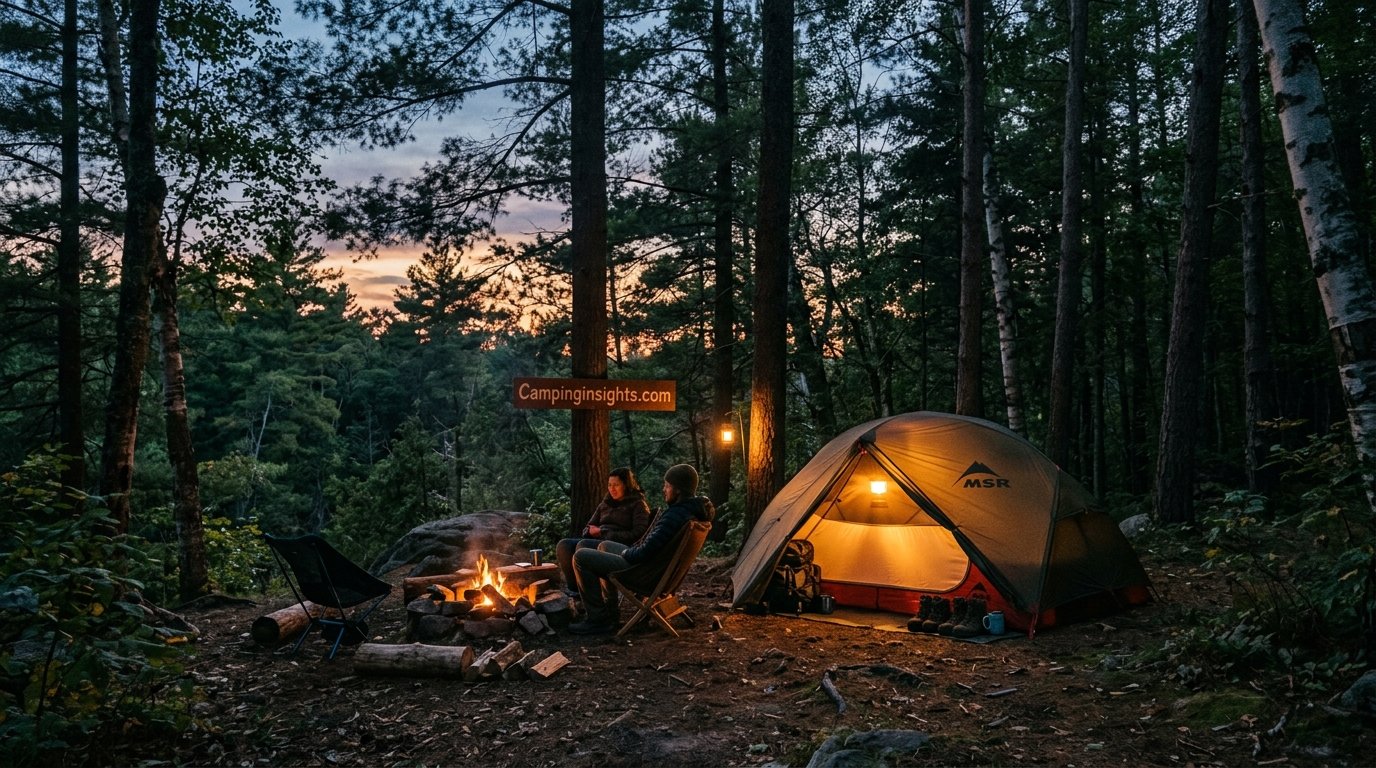

You packed the perfect gear, picked the ideal weekend, and drove three hours to reach a campsite that looks like it belongs on a postcard — only to spend the entire evening swatting mosquitoes, flicking gnats off your food, and discovering a tick on your ankle before bed.
Bugs are the single most common complaint among campers, and for good reason. They don’t just annoy you — they transmit diseases like West Nile virus, Lyme disease, and Rocky Mountain spotted fever. A single mosquito-heavy evening can turn a dream trip into an itchy, sleepless nightmare that sends people home early.
But here’s the thing: keeping bugs away while camping isn’t about one magic trick. It’s about layering multiple strategies — site selection, physical barriers, chemical and natural repellents, food management, and smart clothing choices — so that each technique compounds the effectiveness of the others. A citronella candle alone won’t save you. A citronella candle combined with permethrin-treated clothing, a screened tent, proper food storage, and a site positioned away from standing water? That changes everything.
This guide walks through every proven method to keep bugs away while camping, organized from the biggest-impact strategies down to the fine-tuning details. Whether you’re planning a family camping trip or heading into deep backcountry, the techniques below will give you the upper hand against the six-legged locals.
1. Why Bugs Swarm Your Campsite (And What That Means for Your Strategy)
Before you can effectively keep bugs away while camping, you need to understand why they’re attracted to your campsite in the first place. Bugs aren’t random — they follow specific cues, and if you know what those cues are, you can either eliminate them or redirect them elsewhere.
What Attracts Mosquitoes
Mosquitoes are the primary offender at most campsites, and their attraction system is disturbingly sophisticated. They detect carbon dioxide from your breath from over 150 feet away. They sense body heat through infrared detection. They’re drawn to lactic acid, uric acid, and ammonia in your sweat. And they can smell the bacteria that accumulate on your skin — which is why some people seem to get bitten relentlessly while others sitting right next to them remain relatively unscathed.
Dark-colored clothing makes you more visible to mosquitoes. Alcohol consumption increases your attractiveness to them (your skin chemistry changes when you metabolize beer). Pregnancy, higher body mass, and Type O blood have all been correlated with higher bite rates in research studies.
What Attracts Flies and Gnats
Black flies, deer flies, horse flies, and no-see-ums each have slightly different preferences, but they share a common weakness: they’re drawn to moisture, carbon dioxide, dark colors, and strong scents. Gnats and no-see-ums are particularly problematic near water sources and during calm, humid evenings when there’s no wind to disperse the CO2 plume that trails behind you.
What Attracts Ticks
Ticks use a completely different strategy called “questing” — they climb to the tips of grass blades and low shrubs and wait with outstretched legs for a host to brush past. They detect body heat, carbon dioxide, ammonia, and vibration. Ticks don’t fly or jump; they rely entirely on you walking through their territory. Tall grass, leaf litter, and the edges between forest and meadow are their preferred ambush zones.
The Campsite Multiplication Effect
A campsite amplifies bug attraction in several ways: campfires produce CO2 and heat. Cooking food generates powerful scent plumes. Trash and food scraps attract flies and ants. Standing water in buckets, tarps, and tire tracks creates mosquito nurseries. Sweat from physical activity throughout the day creates a target that’s visible from hundreds of feet away.
Understanding these attraction mechanisms is the foundation of every strategy that follows. Each technique in this guide either reduces an attractant, creates a physical barrier, or introduces a deterrent that overwhelms the signals bugs are tracking.

Thermacell MR300 Portable Mosquito Repeller
Creates a 15-foot zone of protection using allethrin — no open flame, no spray, no odor. The single most effective portable bug deterrent for campsites.
View on Amazon2. How to Choose a Campsite That Minimizes Bugs
Where you pitch your tent is arguably the single most impactful decision you’ll make regarding bugs. No amount of repellent can overcome a campsite that’s sitting in the middle of a mosquito nursery. Smart campsite selection eliminates the problem at its source.
Step 1: Avoid Standing Water — But Not All of It
Mosquitoes breed in standing water, and their larvae can develop from egg to adult in as little as seven days in warm weather. The general rule is to camp at least 200 feet from stagnant water sources — ponds, marshes, puddles, slow-moving creek backwaters, and water-filled tire ruts. However, fast-moving streams and rivers are generally fine; the current disrupts mosquito egg-laying and larvae development.
Step 2: Seek Out Breeze and Elevation
Wind is one of the most underrated bug deterrents. Mosquitoes are weak fliers — anything above 1 mph of wind significantly disrupts their ability to locate and land on you. Ridge tops, exposed hilltops, and open clearings with natural airflow will always have fewer bugs than sheltered valleys and dense forest floors where air stagnates.
That said, you also need to balance wind exposure against comfort. A fully exposed ridgeline can be miserable in sustained 30 mph gusts. Look for sites that catch moderate cross-breezes — the edge of a treeline facing open terrain, or a slightly elevated bench above a lake or river.
Step 3: Check the Ground and Vegetation
Tick habitat is easy to identify once you know what to look for. Tall grass, dense undergrowth, leaf litter, and the transition zone between forest and field are all prime tick territory. For tick safety, choose a campsite with short or mowed grass, sandy ground, or well-worn gravel pads. If you’re in the backcountry, clear leaf litter from your tent area and sit on logs or rocks rather than directly on the ground.
Step 4: Observe Before You Commit
Arrive at your potential campsite 30 minutes before sunset — peak mosquito emergence time — and simply stand there. If you’re immediately swarmed, move. This simple test has saved more camping trips than any gadget on the market. Pay attention to whether the bug pressure subsides when you move 50 yards in any direction; sometimes the difference between a miserable site and a pleasant one is just a small change in elevation or exposure.
3. How to Use Natural Bug Repellents While Camping
Not everyone wants to douse themselves in DEET before dinner, and that’s a valid preference. Natural repellents have a real — if more limited — role in your bug defense strategy. They work best as part of a layered approach rather than as a standalone solution, and understanding which ones actually perform (and which are mostly wishful thinking) will save you from a frustrating evening of getting bitten through your “natural protection.”
Oil of Lemon Eucalyptus (OLE) — The Only CDC-Recognized Natural Option
Oil of lemon eucalyptus, which contains the active compound PMD (para-menthane-3,8-diol), is the only plant-based repellent recommended by the CDC. Products containing 30% OLE provide protection comparable to low-concentration DEET (10-20%) for roughly 4-6 hours against mosquitoes. It has a pleasant citrus scent and doesn’t feel greasy on skin. The synthetic version, PMD, is available in several commercial products.
One important caveat: OLE should not be used on children under three years old. For young kids, physical barriers (nets, treated clothing) are safer choices.
Citronella Oil
Citronella works — but only at close range, and only when it’s actively being dispersed. Citronella candles, torches, and diffusers create a small zone of reduced mosquito activity within about 3-4 feet of the source. Beyond that range, the concentration drops below effective levels. The oil itself, applied to skin, provides roughly 30 minutes to 2 hours of protection before needing reapplication, depending on concentration and how much you’re sweating.
Neem Oil
Neem oil has documented insecticidal and repellent properties and is widely used in agricultural pest management. As a skin-applied repellent, it’s less pleasant — it has a strong, garlicky scent and an oily texture that many people find off-putting. It works for 1-3 hours against mosquitoes but is most useful as a gear treatment (diluted in water and sprayed on tent mesh, rain flies, and chair fabric).
Essential Oils with Limited Evidence
Lavender, peppermint, tea tree, lemongrass, geranium, and rosemary oils all have some laboratory evidence of mosquito-repellent properties, but field performance is inconsistent and short-lived — typically under an hour. They’re pleasant for ambiance and may contribute marginally to your overall defense, but relying on them as your primary repellent at a buggy campsite is a recipe for disappointment.
How to Layer Natural Repellents Effectively
The best way to use natural repellents is to combine them with physical barriers and environmental management. Apply OLE to exposed skin, burn citronella candles at the perimeter of your seating area, treat clothing with permethrin (a synthetic that bonds to fabric and isn’t absorbed by skin), and use mesh screens around your cooking and sleeping areas. This “defense in depth” approach means that no single layer needs to be 100% effective — the combination is what keeps bugs away while camping.

Repel Lemon Eucalyptus Natural Insect Repellent
CDC-recommended plant-based formula with oil of lemon eucalyptus. Deet-free, pleasant scent, and up to 6 hours of mosquito protection per application.
View on Amazon4. How to Set Up a Bug-Proof Camp Kitchen
Your camp kitchen is ground zero for bug activity. Cooking food releases powerful scent plumes that attract flies, wasps, ants, and mosquitoes from a wide radius. Grease splatters, crumbs, open condiment bottles, and improperly stored trash all compound the problem. A well-organized kitchen setup can dramatically reduce the insect pressure on your entire campsite.
Step 1: Separate Kitchen from Sleeping Area
Set up your cooking area at least 100 feet downwind from your tent. This serves two purposes: it keeps food odors (and the bugs they attract) away from where you sleep, and it reduces the chance that food residue near your tent draws in raccoons, bears, or rodents overnight. If you’re planning camp meals in advance, choose recipes that minimize strong odors — grilling fish at 9 PM in a mosquito-heavy area is asking for trouble.
Step 2: Cook and Clean on a Tight Schedule
Don’t leave food out for hours. Start cooking only when you’re ready to eat, serve immediately, and clean up completely as soon as the meal is finished. Wash all dishes, wipe down surfaces, and seal leftovers in airtight containers or a cooler. Every minute that an uncovered pot of chili sits on a camp table is a minute that every fly within a quarter mile is navigating toward it.
Step 3: Use Mesh Covers and Food Tents
Pop-up mesh food covers — the kind you’d use at a backyard barbecue — are one of the cheapest and most effective pieces of bug-prevention gear you can carry. Cover every dish, every plate, every open container the moment food comes off the stove. They weigh almost nothing, fold flat, and prevent flies from landing on your dinner while you’re serving.
Step 4: Manage Trash Like a Bear Box
Keep a dedicated trash bag that seals tightly (drawstring or twist-tie). Never leave trash bags sitting open at your campsite. Hang them from a tree branch or store them in your vehicle between meals. At night, all food and trash should be locked in a car or suspended from a bear hang — not just for wildlife safety, but because rotting food scents amplify bug attraction exponentially.
Step 5: Wipe Down Surfaces with Vinegar Solution
A simple spray bottle of white vinegar and water (50/50 mix) serves as both a cleaning agent and a mild natural deterrent. Wipe down your camp table, stove area, and any surfaces where food was prepared. Vinegar’s acetic acid repels ants and some flies, and the cleaning action removes the sticky residue that attracts them in the first place.

Mesh Food Cover Tents (Set of 6)
Collapsible mesh food covers that keep flies, bees, and mosquitoes off your meals. Lightweight, packable, and essential for any camp kitchen setup.
View on Amazon5. How to Use Citronella, Torches, and Smoke to Repel Bugs
Smoke has been humanity’s oldest bug repellent for thousands of years. Every indigenous culture in mosquito-heavy regions discovered independently that burning certain plants near living areas dramatically reduced insect pressure. Modern camping versions of this strategy — citronella candles, tiki torches, mosquito coils, and campfire smoke — remain effective when used correctly.
Step 1: Place Citronella Sources at the Perimeter
The most common mistake campers make with citronella candles is placing them on the dinner table. That creates a tiny zone of protection right at face level, but does nothing for the rest of the campsite. Instead, arrange citronella candles or torches in a perimeter pattern around your seating area — roughly one candle every 4-5 feet, forming a loose ring. The goal is to create a wall of scent that bugs have to fly through to reach you.
Step 2: Use Mosquito Coils Correctly
Mosquito coils burn slowly for 6-8 hours, releasing allethrin or metofluthrin — the same synthetic compounds used in Thermacell devices. Place them on a fireproof surface (a flat rock or aluminum foil) at ground level near your seating area. One coil protects roughly a 10×10 foot area. The main drawback is the smoke itself; in a confined or poorly ventilated area, the particulate matter can irritate lungs. Use coils outdoors only, and position them upwind so the smoke drifts across your seating area.
Step 3: Maximize Your Campfire’s Bug-Repelling Power
A campfire naturally repels bugs through heat, smoke, and CO2 updraft — the rising column of hot air carries smoke upward and creates a convection current that disorients flying insects. To enhance this effect, toss a handful of fresh green pine needles, cedar fronds, or sage onto the fire. These produce aromatic smoke that bugs find particularly unpleasant. Keep the fire going through peak mosquito hours (dusk through midnight) rather than letting it die down right after dinner.
Step 4: Consider a Smudge Pot or Fire Bowl
For sustained smoke output without the heat of a full campfire, a simple smudge pot works well. Start a small fire in a metal bowl or bucket, let it burn down to coals, then add green leaves, damp wood chips, or commercial smudge materials. The goal is a steady, low-temperature smoke rather than flames. Position the smudge pot upwind of your seating area.

Coghlan’s Mosquito Coils (Pack of 4)
Each coil provides up to 7 hours of smoke-based mosquito protection for a 10×10 ft area. Includes coil holders for safe, stable placement on any surface.
View on Amazon6. How to Wear Bug-Repellent Clothing and Treat Your Gear
Your clothing is the most literal barrier between you and the bugs. The right fabric choices, colors, and treatments can reduce bite rates by 80-90% without applying a single drop of repellent to your skin. This is especially important for multi-day trips where chemical repellents accumulate, and for situations involving ticks — which clothing handles far better than any spray.
Step 1: Choose the Right Fabrics
Tightly woven fabrics — nylon, polyester, and ripstop materials — are physically harder for mosquitoes to bite through. A standard cotton t-shirt has enough space between fibers for a mosquito proboscis to penetrate easily. A tightly woven nylon hiking shirt does not. For maximum protection, look for clothing labeled “bug-proof” or “insect shield” — these use permethrin bonded directly to the fabric.
Step 2: Treat Clothing with Permethrin Before Your Trip
Permethrin is a synthetic insecticide that bonds to fabric fibers. It doesn’t absorb through skin — you’re not putting pesticide on your body. Instead, when a tick or mosquito lands on treated clothing, the permethrin disrupts their nervous system, causing them to detach, become incapacitated, or die. This is one of the most effective tools against ticks specifically, since they need extended contact time (often 24+ hours) to transmit Lyme disease — and permethrin eliminates them long before that threshold.
Treat your clothing at least 24 hours before your trip by laying items flat outdoors and spraying them evenly on both sides until damp. Allow them to dry completely (2-4 hours in open air, or a standard dryer cycle). One treatment lasts through approximately 6 washings or 6 weeks of sun exposure. Focus on pants, socks, shoes, shirt cuffs, and hat brims — the areas most likely to contact ticks and mosquitoes.
Step 3: Wear Light-Colored, Long-Sleeved Clothing
Mosquitoes are attracted to dark colors — black, navy, and dark red are the worst offenders. Light colors (khaki, white, light gray, pale green) are less attractive to mosquitoes and make it easier to spot ticks crawling on you before they reach skin. Long sleeves and long pants tucked into socks create a physical barrier that, combined with permethrin treatment, makes you an extremely difficult target.
Step 4: Protect Your Head and Neck
A wide-brimmed hat treated with permethrin protects your scalp, ears, and the back of your neck — all favorite biting targets. In heavy mosquito areas (Alaska, northern Canada, boreal forests), a head net is essential. Modern head nets are lightweight enough to wear over a hat with minimal visual impairment, and they provide absolute protection for the face and neck.
Step 5: Consider Pre-Treated Insect Shield Clothing
Several brands sell clothing with permethrin factory-bonded to the fabric. This is more durable than home treatment — lasting up to 70 washes — and ensures even, consistent coverage. For frequent campers, investing in a few key pieces (a treated long-sleeve shirt, treated pants, and treated socks) is worthwhile.

ExOfficio BugsAway Damselfly Long-Sleeve Shirt
Factory-treated with Insect Shield permethrin technology. UPF 30+ sun protection, moisture-wicking fabric, and built-in bug defense that lasts 70+ washes.
View on Amazon7. How to Seal Your Tent Against Bugs
Your tent is your last line of defense. If bugs are getting into your sleeping space, nothing else matters — you won’t sleep, and the trip is effectively over. Proper tent selection, setup, and maintenance are critical for keeping bugs out all night long.
Step 1: Choose a Tent with Fine Mesh Panels
Not all tent mesh is created equal. Standard “no-see-um” mesh has openings small enough to block even the tiniest biting midges (no-see-ums), but cheaper tents sometimes use coarser mesh that allows small insects through. When selecting from the best camping tents available, check that the mesh is rated as no-see-um compatible. For rainy camping conditions, ensure the tent has a full-coverage rainfly that extends to the ground, preventing bugs from entering through ventilation gaps.
Step 2: Inspect and Repair Before Every Trip
Before you leave home, set up your tent and inspect every seam, zipper, and mesh panel. Small tears in mesh that you didn’t notice at home become gaping entry points for mosquitoes in the field. Carry a tent repair kit with mesh patches, seam sealer, and a needle and thread. Pay particular attention to the zipper — if the teeth don’t close fully at the bottom, a single mosquito can find that gap and invite all its friends.
Step 3: Create an Airlock Entry System
When entering or exiting your tent, do it quickly and deliberately. Unzip, step in, close immediately. Don’t leave the door open while you organize gear or change clothes. If your tent has a vestibule (a covered area outside the main door), use it as an airlock — enter the vestibule, close the outer door, then open the inner door. This dramatically reduces the number of bugs that make it inside.
Step 4: Seal the Ground Perimeter
Ants and crawling insects can enter through any gap between the tent floor and the ground. After staking your tent, tuck the edges of the groundsheet tightly against the tent walls. If you use a footprint (ground tarp), make sure it doesn’t extend beyond the tent’s floor edge — exposed tarp creates a runway that channels rainwater and crawling insects directly under your tent. If you’re dealing with persistent condensation inside the tent, check our guide on how to stop condensation in your tent — excess moisture inside also attracts certain insects.
Step 5: Treat the Exterior with Permethrin
Spray the outside of your tent (not the inside) with permethrin, focusing on the lower 12 inches of the walls, the door area, and any mesh panels. This creates a chemical barrier that kills bugs on contact before they can find a way in. Allow the tent to dry completely before packing. Reapply every 6 weeks if your tent stays set up for extended periods.

Coghlan’s Tent Repair Kit
Includes mesh patches, seam sealer, fabric patches, and adhesive — everything you need to seal tears and gaps before bugs find them. Compact enough to live in your camping bin permanently.
View on Amazon8. How to Deploy Bug Zappers, Traps, and Electronic Devices
While repellents and barriers form the foundation of your bug defense, active trapping and killing devices can significantly reduce the overall insect population in your immediate area. The key is understanding what each device actually does well — and what it doesn’t.
UV Bug Zappers: Effective for Flies, Not Mosquitoes
Traditional UV bug zappers attract insects with ultraviolet light and kill them on an electrified grid. They’re devastatingly effective against moths, beetles, and certain flies. However, research consistently shows that UV zappers kill very few mosquitoes — mosquitoes are not strongly attracted to UV light. They’re attracted to CO2, body heat, and scent. A zapper at your campsite might kill hundreds of insects per evening, but the ones that are actually biting you largely ignore it.
CO2-Based Mosquito Traps: The Real Solution
Mosquito traps that emit CO2 (either from propane combustion or compressed CO2 cartridges) are far more effective at targeting mosquitoes specifically. These devices mimic human breath, drawing mosquitoes in and trapping them on adhesive boards or in vacuum chambers. The catch: they’re expensive ($150-$400), bulky, and require fuel. They’re best suited for extended base-camp situations rather than weekend car camping. Place them 30-40 feet upwind from your seating area to intercept mosquitoes approaching from that direction.
Portable Thermacell Devices
Thermacell products occupy a unique niche: they’re not traps but spatial repellent devices. A small mat infused with allethrin is heated by a butane cartridge, creating a 15-foot zone of mosquito-repellent vapor. There’s no open flame, no smell, and no skin application needed. Independent field tests consistently show 80-97% reduction in mosquito landings within the protection zone. For most campers, a Thermacell provides the best balance of effectiveness, portability, and convenience.
| Device Type | Effective Against | Range | Power Source | Best For |
|---|---|---|---|---|
| UV Bug Zapper | Moths, beetles, flies | ~30 ft (attraction) | Electric / battery | Reducing fly populations |
| CO₂ Mosquito Trap | Mosquitoes specifically | ~40 ft (attraction) | Propane / CO₂ cartridge | Extended base camps |
| Thermacell Repeller | Mosquitoes, gnats, black flies | ~15 ft (protection zone) | Butane + repellent mat | Personal zone protection |
| Fan-Based Trap | Flying insects generally | ~10 ft | Battery / USB | Tabletop / food area |
| Mosquito Coil | Mosquitoes, gnats | ~10×10 ft zone | Self-burning (lighter) | Budget perimeter defense |
Step: Positioning Devices for Maximum Effect
Place traps and repellent devices at the perimeter of your activity zone, not in the center. If you’re using a Thermacell, set it upwind so the repellent vapor drifts across your seating area. If you’re using a CO2 trap, place it 30-40 feet upwind and away from where you sit — you want it to intercept mosquitoes before they reach you, not attract them to your immediate area. UV zappers should be positioned 15-20 feet from your seating area and at least 5 feet off the ground.
Thermacell MR450 Armored Portable Repeller
Rugged, rubber-armored design built for outdoor use. Creates a 15-foot mosquito-free zone with no spray, no DEET, and no open flame. Includes 12-hour refill.
View on Amazon9. How to Eliminate Standing Water and Moisture Sources
Mosquitoes require standing water to breed. A single female can lay 100-300 eggs in a bottle cap’s worth of stagnant water, and those eggs develop into biting adults in as few as 7-10 days in warm weather. Eliminating standing water around your campsite is one of the most effective long-term strategies for reducing mosquito populations in your immediate area — and it’s completely free.
Step 1: Audit Your Campsite for Hidden Water Sources
Walk your campsite slowly and look for any object that can hold even a tablespoon of water. Common culprits include: overturned camp chairs with cupped fabric, tarps with sagging sections, fire pits that have collected rainwater, buckets left outside, coolers with melted ice water, tire ruts from the access road, holes in tree stumps, and discarded cups or cans. Each of these is a potential mosquito nursery.
Step 2: Manage Your Tarp and Rainfly Properly
A tarp or rainfly with even a slight sag collects rainwater and becomes a mosquito breeding pool within days. Always pitch tarps with a steep angle — at minimum a 30-degree slope — so water runs off immediately. Use a center ridge line and tight guylines to eliminate any low points. If you’re camped for more than a couple of days, check your tarps every morning; overnight rain can create puddles that you won’t notice until the mosquitoes appear. For tips on keeping your shelter dry, see our guide on how to make a tent waterproof.
Step 3: Drain Cooler Water Daily
Melted ice water sitting in your cooler’s drain channel or pooling under food containers is a surprisingly common mosquito attractant. Drain your cooler every morning and wipe out standing water. Don’t dump it near your campsite — pour it at least 100 feet away, ideally on gravel or bare ground where it will absorb quickly.
Step 4: Flip, Store, and Cover
When you’re not using camp chairs, kayaks, buckets, or other water-collecting items, flip them upside down. Store anything that can hold water inside your vehicle or under a sealed cover. This simple habit takes 30 seconds and prevents thousands of potential mosquito eggs from being laid at your campsite.
Step 5: Address Nearby Natural Water Sources
You can’t drain a swamp, but you can choose to camp away from one. If your campsite is near a pond or marsh, increase your reliance on other strategies (repellents, barriers, devices) and accept that mosquito pressure will be higher than at a dry, elevated site. In some areas, local authorities apply biological larvicides (Bti — Bacillus thuringiensis israelensis) to standing water; these are harmless to humans and wildlife but kill mosquito larvae. Ask the campground host if treatment is available.

Coleman 10×10 Flat Tarp with Guylines
Properly angled tarps prevent water pooling — a leading mosquito breeding source. Includes adjustable guylines for a taut, sloped setup that sheds rain immediately.
View on Amazon10. How to Create a Bug-Free Sleeping Zone
Getting a good night’s sleep is the difference between a great camping trip and a miserable one. If bugs are biting you at night, you won’t sleep — and a sleep-deprived camper is an unhappy camper who makes poor decisions on the trail. Creating a sealed, bug-free sleeping environment should be a top priority from the moment you arrive at camp.
Step 1: Set Up Your Tent Correctly
Start with a tent that has full no-see-um mesh panels and a complete rainfly. Pitch it on elevated, well-drained ground away from standing water. Stake all corners tightly so there are no gaps between the tent floor and the ground. Close all zippers fully — including vent zippers that you might leave open for airflow during the day. If you need more information on tent selection, see our guide to the best camping tents for various conditions.
Step 2: Use a Head Net Inside the Tent as Backup
If even one mosquito gets inside your tent (and statistically, one will), a head net draped over your sleeping bag’s hood area provides absolute protection for your face and neck. This is especially useful for light sleepers who wake at the faintest whine of a mosquito. Head nets weigh almost nothing and pack to the size of a golf ball — there’s no reason not to carry one.
Step 3: Keep the Tent Door Sealed at All Times
Every time you open the tent door, bugs enter. Develop the habit of opening the zipper only enough to slip through, then closing it immediately. Don’t leave the door open while you organize gear, change clothes, or read. If your tent has a vestibule, use it as an airlock — enter the vestibule, zip it shut, then open the inner tent door.
Step 4: Treat the Tent Exterior Before Your Trip
Apply permethrin to the outside of your tent walls, focusing on the lower foot of fabric and the mesh panels. This kills bugs on contact before they can find a gap. Don’t apply permethrin to the interior — the fumes in an enclosed sleeping space can cause respiratory irritation. Let the tent dry fully (at least 24 hours) before sleeping in it.
Step 5: Consider a Separate Screen Room
For extended trips or base camps, a standalone screen room (a mesh-sided canopy) creates a large bug-free living space where you can eat, play cards, and relax without being bitten. These are heavier and bulkier than a tent, but they dramatically improve quality of life on longer trips. Position the screen room’s entrance away from prevailing wind to reduce the number of bugs that get blown inside when you enter or exit.
If you’re a side sleeper and use a camping cot, make sure it fits inside your tent with enough clearance for the mesh walls to hang freely — a cot pressed against the tent wall can push the mesh open enough for bugs to enter. For cold-weather trips where bugs aren’t the primary concern but tent moisture is, check our guide on how to keep your tent warm at night.

Sea to Summit Mosquito Head Net
Ultra-fine mesh (810 holes per square inch) that blocks even no-see-ums. Weighs just 1 oz, packs into its own tiny stuff sack. The ultimate backup for a bug-free night’s sleep.
View on Amazon11. How to Choose the Best Chemical Repellents: DEET, Picaridin, IR3535, and OLE
When natural methods and physical barriers aren’t enough — and in many bug-heavy environments they won’t be — chemical repellents applied to skin are your most reliable active defense. The market is crowded with options, and the marketing claims can be confusing. Here’s what the evidence actually says about each active ingredient, how to choose the right one for your situation, and how to apply them correctly for maximum protection.
DEET — The Gold Standard
DEET (N,N-diethyl-meta-toluamide) has been in use since 1957 and remains the most widely studied and broadly effective insect repellent available. It works by blocking the olfactory receptors that mosquitoes and other insects use to detect human skin chemicals. At concentrations of 20-30%, DEET provides 6-8 hours of protection against mosquitoes, ticks, chiggers, fleas, and biting flies. Higher concentrations (up to 100%) don’t provide more protection — they provide longer protection. A 30% DEET product lasts nearly as long as 100% DEET for most users.
Advantages
- Longest-proven track record of safety and efficacy
- Effective against the broadest range of insects
- Protects against ticks (critical for Lyme prevention)
- Widely available and affordable
- Not significantly affected by sweat
Drawbacks
- Greasy feel on skin
- Strong chemical odor
- Can damage synthetic fabrics and plastics
- May cause skin irritation in sensitive individuals
- Not recommended for infants under 2 months
Picaridin — The Modern Alternative
Picaridin (also known as icaridin or KBR 3023) was developed in the 1990s as a synthetic analog of piperine, the natural compound found in black pepper plants. At a concentration of 20%, it provides 8-14 hours of protection against mosquitoes and ticks — matching or exceeding DEET’s duration. Unlike DEET, picaridin is odorless, non-greasy, and doesn’t damage plastics or synthetic materials. It’s the most popular repellent in Europe and Australia and is gaining significant market share in North America.
IR3535 (Ethyl Butylacetylaminopropionate)
IR3535 has been used in Europe for over 30 years and is the active ingredient in Avon Skin So Soft Bug Guard Plus. It provides 4-8 hours of protection against mosquitoes and is gentler on skin than DEET. It’s a good choice for people with sensitive skin or children, though its tick protection is less robust than DEET or picaridin.
Oil of Lemon Eucalyptus (OLE / PMD)
As discussed in the natural repellents section, OLE is the only plant-based repellent recommended by the CDC. At 30% concentration, it provides 4-6 hours of mosquito protection. It’s not recommended for children under 3, and its tick protection is minimal. It’s best used as a supplement to other strategies rather than your primary defense in tick-heavy areas.
| Active Ingredient | Duration (Mosquitoes) | Tick Protection | Skin Feel | Safe for Children | Damages Gear |
|---|---|---|---|---|---|
| DEET (20-30%) | 6-8 hours | Excellent | Greasy | 2+ months | Yes (synthetics) |
| Picaridin (20%) | 8-14 hours | Very good | Clean, dry | 2+ months | No |
| IR3535 (20%) | 4-8 hours | Moderate | Light | 2+ months | Minimal |
| OLE / PMD (30%) | 4-6 hours | Limited | Pleasant | 3+ years | No |
How to Apply Repellent Correctly
Most people under-apply repellent, which is why they get bitten despite “using bug spray.” The correct method: spray enough to lightly coat all exposed skin — not a mist, but enough that you can see a slight sheen. Apply to your hands first, then rub onto your face, neck, ears, and the backs of your hands. Don’t apply under clothing (it wastes product and increases skin absorption). Reapply after swimming, heavy sweating, or after the recommended duration has elapsed. Never apply repellent to cuts, wounds, or irritated skin.
Combining Repellents with Clothing Treatment
The strongest bug defense combines skin-applied repellent (on exposed areas) with permethrin-treated clothing (covering everything else). This two-layer approach means that any bug that lands on your clothing is killed by permethrin, and any bug that navigates to exposed skin encounters the topical repellent. There’s essentially no entry point left. Add a Thermacell running nearby for spatial protection, and you’ve created an environment where bugs simply cannot reach you.

Sawyer Products 20% Picaridin Insect Repellent
Up to 12 hours of protection against mosquitoes and ticks. Odorless, non-greasy, and safe for all gear and fabrics. Available as lotion or spray.
View on Amazon12. How to Treat Bug Bites and Manage Allergic Reactions in the Field
Even with the best prevention strategy, some bites are inevitable. Knowing how to treat them properly — and recognizing when a bite requires more than basic first aid — is essential knowledge for any camper. The goal is to reduce itching and swelling quickly, prevent infection, and identify warning signs of serious reactions.
Step 1: Clean the Bite Immediately
As soon as you notice a bite, wash the area with soap and water or an antiseptic wipe. This removes any residual saliva, venom, or bacteria from the bite site and significantly reduces the risk of secondary infection. Pat dry — don’t scratch. Scratching breaks the skin and introduces bacteria, which can turn a minor mosquito bite into a painful infected wound within 24 hours.
Step 2: Apply Cold to Reduce Swelling
Cold constricts blood vessels and slows the release of histamine at the bite site, which is what causes itching and swelling. Apply a cold pack, a bag of ice wrapped in cloth, or a cold water bottle directly to the bite for 10-15 minutes. If you don’t have ice, soak a bandana in cold stream water and press it against the bite. Repeat as needed throughout the day.
Step 3: Apply Anti-Itch Medication
Over-the-counter hydrocortisone cream (1%) applied to the bite reduces inflammation and itching within 20-30 minutes. Oral antihistamines (diphenhydramine/Benadryl or cetirizine/Zyrtec) reduce the histamine response systemically and are especially useful when you have multiple bites. Topical antihistamines, calamine lotion, and After Bite (ammonia-based) provide temporary relief but need frequent reapplication.
A field-expedient remedy that works surprisingly well: a hot spoon. Heat a metal spoon in hot water (not boiling — about 140-150°F) and press the convex side firmly against the bite for 30-60 seconds. The heat denatures the proteins in the venom/saliva that trigger the itch response. This works especially well for mosquito and fly bites.
Step 4: Watch for Serious Reactions
Most bug bites are harmless beyond the itch. But some require immediate medical attention:
- Anaphylaxis: Difficulty breathing, swelling of the face or throat, rapid pulse, dizziness after a sting (bees, wasps, hornets). Use an epinephrine auto-injector if available and seek emergency care immediately.
- Lyme disease: A bullseye-shaped rash (erythema migrans) appearing 3-30 days after a tick bite, often accompanied by fever, fatigue, and joint pain. Requires antibiotic treatment.
- Infection: Increasing redness, warmth, swelling, or pus at the bite site. Red streaks extending from the bite indicate a spreading infection that needs medical evaluation.
- Tick-borne illness: Fever, headache, muscle aches, or rash appearing days to weeks after a tick bite. Rocky Mountain spotted fever, anaplasmosis, and other tick-borne diseases require prompt treatment.
Step 5: Know How to Remove a Tick Properly
If you find an attached tick, remove it immediately using fine-tipped tweezers. Grasp the tick as close to the skin as possible and pull upward with steady, even pressure. Don’t twist, squeeze, or burn the tick — these methods can cause the tick to regurgitate infected fluid into the bite. Clean the area afterward with soap and water or an antiseptic, and save the tick in a sealed bag if you want it identified or tested later.

Camping First Aid Kit
Compact first aid kit with bandages, antiseptic, tweezers, and medications — a perfect base for adding bug-bite-specific supplies. Waterproof DryFlex bag keeps everything dry.
View on AmazonFrequently Asked Questions About Keeping Bugs Away While Camping
The most effective approach combines multiple strategies: choose a campsite away from standing water with good airflow, apply a CDC-recommended repellent (DEET 20-30% or picaridin 20%) to exposed skin, wear permethrin-treated clothing, and run a Thermacell device at your seating area. No single method is 100% effective, but layering these together provides near-complete protection. The Thermacell alone typically reduces mosquito landings by 80-97% within its 15-foot zone.
Yes, DEET can damage certain synthetic materials — particularly rayon, spandex, and vinyl. It can also cloud plastic watch faces, sunglasses, and painted surfaces. It does not damage cotton, wool, or nylon when applied properly and allowed to dry. If you’re concerned about gear damage, switch to picaridin, which is equally effective against mosquitoes and ticks but won’t harm any synthetic material. Alternatively, apply DEET only to skin that will be exposed (not under clothing), minimizing contact with gear.
Citronella candles work — but only within a small radius of about 3-4 feet from the flame. They reduce mosquito landings within that zone by roughly 40-50%, which is meaningful but not sufficient as a standalone defense. To maximize their effectiveness, arrange multiple citronella sources in a perimeter around your seating area rather than relying on one candle at the center of the table. Combine them with skin-applied repellent and treated clothing for comprehensive coverage.
Wear light-colored clothing — white, khaki, light gray, or pale green. Mosquitoes are visually attracted to dark colors like black, navy blue, and dark red. Light colors are also more practical for spotting ticks crawling on you before they reach your skin. This applies to both daytime and evening wear at camp. Combine light colors with tightly woven, long-sleeved garments for the best defense.
Cover all food with mesh food tents or lids immediately after preparation. Cook and eat quickly — don’t leave food sitting out for extended periods. Seal leftovers in airtight containers or a cooler. Clean all dishes, surfaces, and crumbs immediately after meals. Keep trash bags sealed and stored away from your sleeping area. Position your cooking area at least 100 feet downwind from your tent. These steps dramatically reduce the scent plumes that attract flies, wasps, and ants to your dining area.
Yes. Permethrin bonds to fabric fibers and does not absorb through skin when worn. It’s been used by the U.S. military on uniforms for decades and is EPA-registered for clothing application. The key is to treat clothing while it’s off your body, allow it to dry completely (24 hours), and then wear it. Do not apply permethrin directly to skin — it’s designed for fabric treatment only. One application lasts through approximately 6 washings or 6 weeks of sun exposure.
Tick prevention requires a specific approach: treat all clothing (especially pants, socks, and shoes) with permethrin before your trip. Wear long pants tucked into socks when walking through grass or brush. Apply a DEET or picaridin repellent to ankles, legs, and the waistband area. Choose campsites with short grass or bare ground, avoiding tall vegetation and the forest-meadow transition zone. Do a full-body tick check every evening, paying special attention to the hairline, armpits, groin, and behind the knees.
Traditional UV bug zappers are effective at killing moths, beetles, and certain flies, but they attract and kill very few mosquitoes. Mosquitoes aren’t drawn to UV light — they track CO2, body heat, and scent. For mosquito-specific control at a campsite, a Thermacell repeller or a CO2-based trap is far more effective. UV zappers still have value for reducing overall flying insect populations (especially near lights), but they shouldn’t be your primary mosquito defense.
Only one essential oil derivative — oil of lemon eucalyptus (OLE) — is recommended by the CDC, and it provides 4-6 hours of protection at 30% concentration. All other essential oils (lavender, peppermint, tea tree, citronella) have very short protection windows (under an hour) with inconsistent field performance. If you prefer to avoid DEET, picaridin is a better alternative than essential oils — it’s synthetic but odorless, non-greasy, and provides 8-14 hours of protection.
Smoke from a campfire naturally repels most flying insects, but bugs may still be present at the edges of the smoke plume where it’s thinner. Boost the effect by throwing on fresh, green material — pine needles, cedar fronds, or rosemary — to produce thick, fragrant smoke. Keep the fire burning through peak bug hours (dusk to midnight) rather than letting it die after dinner. If the campfire alone isn’t enough, supplement with a Thermacell or citronella candles around the perimeter of your seating area.
For mild local reactions (swelling, redness, itching beyond the bite site), take an oral antihistamine and apply cold compresses. Monitor for escalation. For severe reactions — difficulty breathing, swelling of the face or throat, rapid heartbeat, dizziness, or hives spreading beyond the bite — this is anaphylaxis, a medical emergency. Use an epinephrine auto-injector (EpiPen) if you carry one, call 911 or your local emergency number, and get to a hospital immediately. If you have known severe insect allergies, always carry two auto-injectors when camping.
Final Thoughts: Build Your Bug Defense Layers
Keeping bugs away while camping isn’t about finding one perfect solution — it’s about stacking multiple strategies so that each layer catches what the previous one missed. Start with the biggest-impact decisions: choose a campsite away from standing water with good airflow, and arrive early enough to observe the bug pressure before committing. Then layer on permethrin-treated clothing, a skin-applied repellent (DEET or picaridin), a Thermacell device at your seating area, and smart food management that minimizes scent plumes.
Seal your tent meticulously, eliminate standing water from your campsite, and keep a basic bite-treatment kit in your first aid supplies. None of these steps is difficult or expensive on its own — but combined, they transform a potentially miserable, bite-riddled trip into one where you barely notice the bugs at all.
The difference between campers who come home covered in bites and those who don’t is rarely luck. It’s preparation.