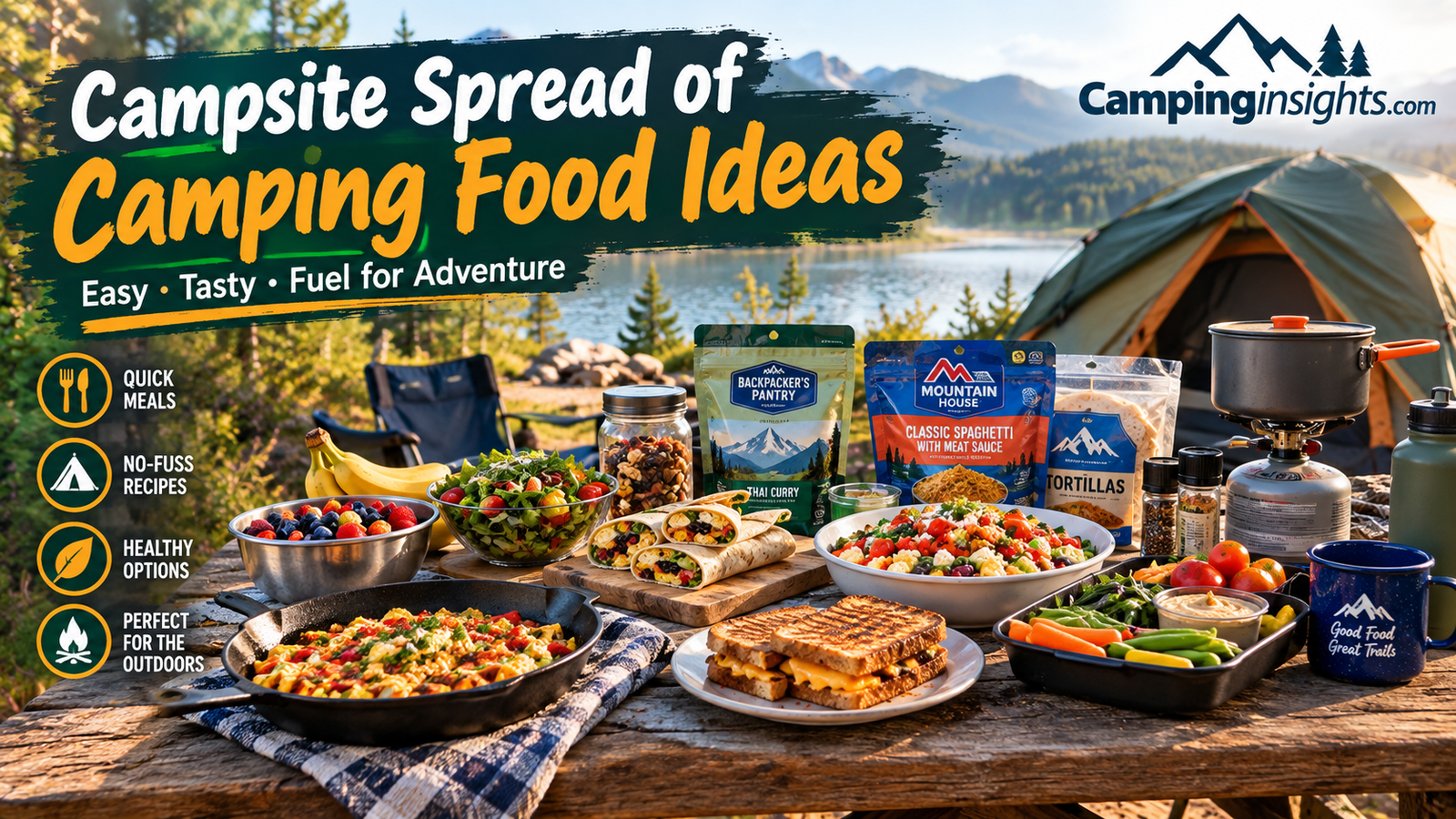
50+ Camping Food Ideas: Easy Meals, Snacks & Campfire Recipes for Every Trip
From no-cook lunches to one-pot dinners and backpacking-friendly trail food, here’s every camping food idea you need to eat well at the campsite — without the stress.
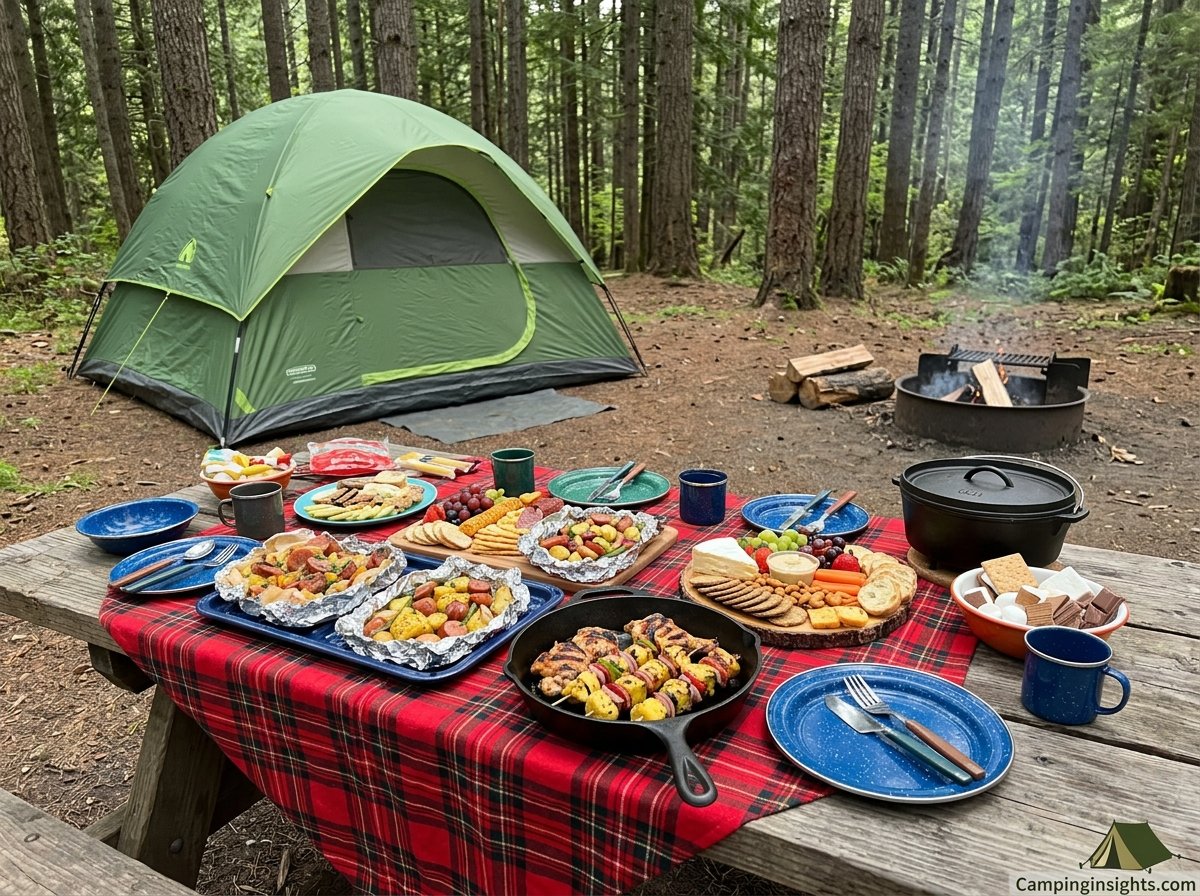
Good camping food doesn’t need to mean sad sandwiches or bland trail mix for three days straight. With a little planning, a cooler, and one or two pieces of gear, you can eat better at a campsite than you might expect — hot breakfasts, foil packet dinners, campfire desserts, and snacks that survive the drive without turning into mush. Whether you’re heading out for a single overnight or planning a full camping trip with the whole family, this guide walks through camping food ideas for every meal, every skill level, and every type of trip — from car camping with a full cooler to backpacking with a stove the size of your fist. We’ve grouped everything by cooking method and occasion, so whether you’re staring at an empty meal plan the night before a trip or just looking for one or two new ideas to break up the usual rotation, you can jump straight to what’s useful.
The season you’re camping in also shapes which camping food ideas actually make sense. Hot summer trips favor lighter meals, more no-cook options, and extra care around keeping the cooler cold, since ice melts faster and food safety windows shrink in the heat. Cooler shoulder-season and fall trips open the door to heartier, longer-cooking meals like stews and Dutch oven dishes, since the outside temperature itself helps keep perishables safer for longer. Winter camping trips flip the priority again — calorie-dense, warming meals matter more than variety, and keeping fuel canisters and water from freezing becomes as important as the food itself.
Food is also one of the few parts of a camping trip that’s almost entirely within your control. You can’t control the weather, and you can’t always control how a campsite is laid out, but you can absolutely control what’s in the cooler and how it’s organized. That’s worth taking seriously, because a bad meal plan doesn’t just mean a mediocre dinner — it means more trips to the car, more dishes, more fuel burned, and more decision fatigue at exactly the point in the day when everyone’s tired and hungry. If this is one of your first trips, it’s worth pairing your meal plan with a broader camping checklist for beginners so food, gear, and safety items don’t get overlooked. And because what you can realistically cook depends a lot on where you’re staying, take a look at our guide on how to choose a campsite before you lock in a spot — proximity to water, fire restrictions, and even wind exposure all affect what’s practical to cook.

Start with the right cooler. A high-retention cooler is the single biggest factor in whether your camping food ideas actually work — it keeps proteins safe, produce crisp, and drinks cold for days instead of hours.
Shop Camping Coolers →1. Planning Camping Meals the Smart Way
Before getting into specific camping food ideas, it helps to have a simple system. Most camping cooking disasters come from the same three mistakes: bringing food that needs more prep than the trip allows, packing perishables in the wrong order in the cooler, and forgetting a single tool that makes everything else possible (a can opener, a cutting board, a lighter). A little structure up front solves all three, and it turns meal planning from a source of stress into something you can knock out in twenty minutes at the kitchen table.
Build a Meal Grid, Not a Grocery List
Instead of shopping first and figuring out meals later, sketch a grid: rows for each day, columns for breakfast, lunch, dinner, and snacks. Fill in one camping food idea per box before you buy anything. This does two things — it stops you from over-buying ingredients you’ll only use once, and it surfaces gaps early, like realizing you have four dinners planned but zero breakfast ideas. It also makes shopping faster, because you’re working from a finished plan instead of wandering the aisles trying to remember what a “camping meal” should look like.
Pack Food in “Use-By-Day” Order
Cooler space is limited, so pack meals in reverse order of when you’ll eat them — the food for day one goes in last, on top, and food for the final day goes in first, at the bottom. This avoids the classic problem of digging through three days of food to find tonight’s dinner, which lets warm air into the cooler every single time. It also means the food most likely to spoil first — usually fresh meat and dairy — gets used earliest, which is exactly when it should be eaten anyway.
Match Meals to Your Cooking Setup
Car camping with a two-burner stove and a full cooler supports very different camping food ideas than backpacking with a canister stove and a bear canister. Before you plan meals, decide honestly what you’re carrying and cooking on — a good camping stove genuinely expands what’s realistic, from pancakes to full skillet dinners, so it’s worth choosing one before finalizing your menu rather than after. Trying to force a recipe onto equipment that can’t handle it is one of the most common reasons camping dinners run late or fall apart halfway through.
Budget Fuel and Time, Not Just Ingredients
Every camp stove runs on a limited fuel supply, and every cook has a limited amount of daylight and patience after a day of hiking or setting up camp. When you’re mapping out meals, note roughly how long each one takes and how much fuel it needs — a fifteen-minute one-pot pasta and a ninety-minute Dutch oven stew are both great camping food ideas, but they don’t belong on the same tired Tuesday-night schedule. Save the longer, more involved meals for a layover day when there’s nowhere else to be.
Do a Grocery Pass by Category, Not by Meal
Once your meal grid is filled in, go through it a second time and group ingredients by category — proteins, produce, dry goods, dairy, condiments — rather than shopping meal by meal. This catches overlap (three meals all calling for onions, for example) so you buy the right total quantity instead of three separate small bags, and it makes the actual shopping trip faster since you’re moving through the store in one direction instead of backtracking between aisles for every recipe.
Adjust Camping Food Ideas for Trip Length
A one or two-night trip can lean heavily on fresh ingredients since there’s no real risk of a cooler running out of cold before you’re home again. Once a trip stretches past three or four nights, it’s worth shifting the back half of the meal grid toward shelf-stable and freezer-friendly options — canned goods, dried pasta, cured meats, and dehydrated meals — so you’re not depending on ice holding out for a week straight. A simple rule of thumb: plan the first half of the trip around what needs to be eaten soonest, and the second half around what can survive being forgotten at the bottom of a dry bag.
Budgeting for Camping Food
Camping food doesn’t have to cost more than a normal week of groceries, but it’s easy to overspend by buying convenience items — pre-made kebabs, individually packaged snacks, name-brand freeze-dried meals — at a premium. A middle-ground approach works well for most trips: splurge on the one or two meals you’re most looking forward to (a good steak for kebabs, a proper Dutch oven cobbler) and keep the rest of the menu built around cheaper staples like beans, rice, pasta, and eggs. Buying spices and condiments in small reusable containers rather than travel-sized packets also saves money over repeated trips, even if the upfront cost is slightly higher.
Signs Your Meal Plan Is Realistic
- Every dinner needs 3 steps or fewer at the campsite
- You can name the exact pan or tool each meal needs
- Perishables are used earliest in the trip
- At least one meal per day needs zero cooking
- Fuel and cook time roughly match the energy you’ll have that day
Signs Your Meal Plan Needs Work
- Two dinners need the same single pan back-to-back
- You’re relying on ice lasting more than 3 days
- Every meal needs chopping, marinating, or long cook times
- You haven’t accounted for weather or wind affecting the stove
- Nothing on the plan can be eaten cold if the stove fails
Weather matters more than most people expect — cooking in a downpour with a single-burner stove and no cover is a different experience than cooking under a clear sky. Our camping in the rain tips guide covers ways to keep a cook space dry, which is worth reading before you commit to meals that need a lot of stove time. It’s a good idea to always have at least one backup meal that needs no cooking at all, just in case the weather or a fuel shortage takes the stove off the table for a night.
2. Camping Breakfast Ideas
Breakfast sets the tone for the day, and it’s also where camping food ideas tend to split into two camps: quick-and-simple for early starts, or slow-and-hearty for lazy mornings around the fire. Here are options for both, along with a few in-between choices that work either way.
Foil Packet Breakfast Hash
Diced potatoes, peppers, onion, and sausage wrapped in a foil packet and set on coals or a grate for 20–25 minutes makes a full hot breakfast with a single pan to clean — none, actually, since the foil is disposable. Crack an egg into the packet in the last five minutes for a one-packet breakfast that covers protein, starch, and vegetables in one go. Because everything can be pre-chopped and bagged at home, the only job at camp is sealing the foil and finding a bed of coals.
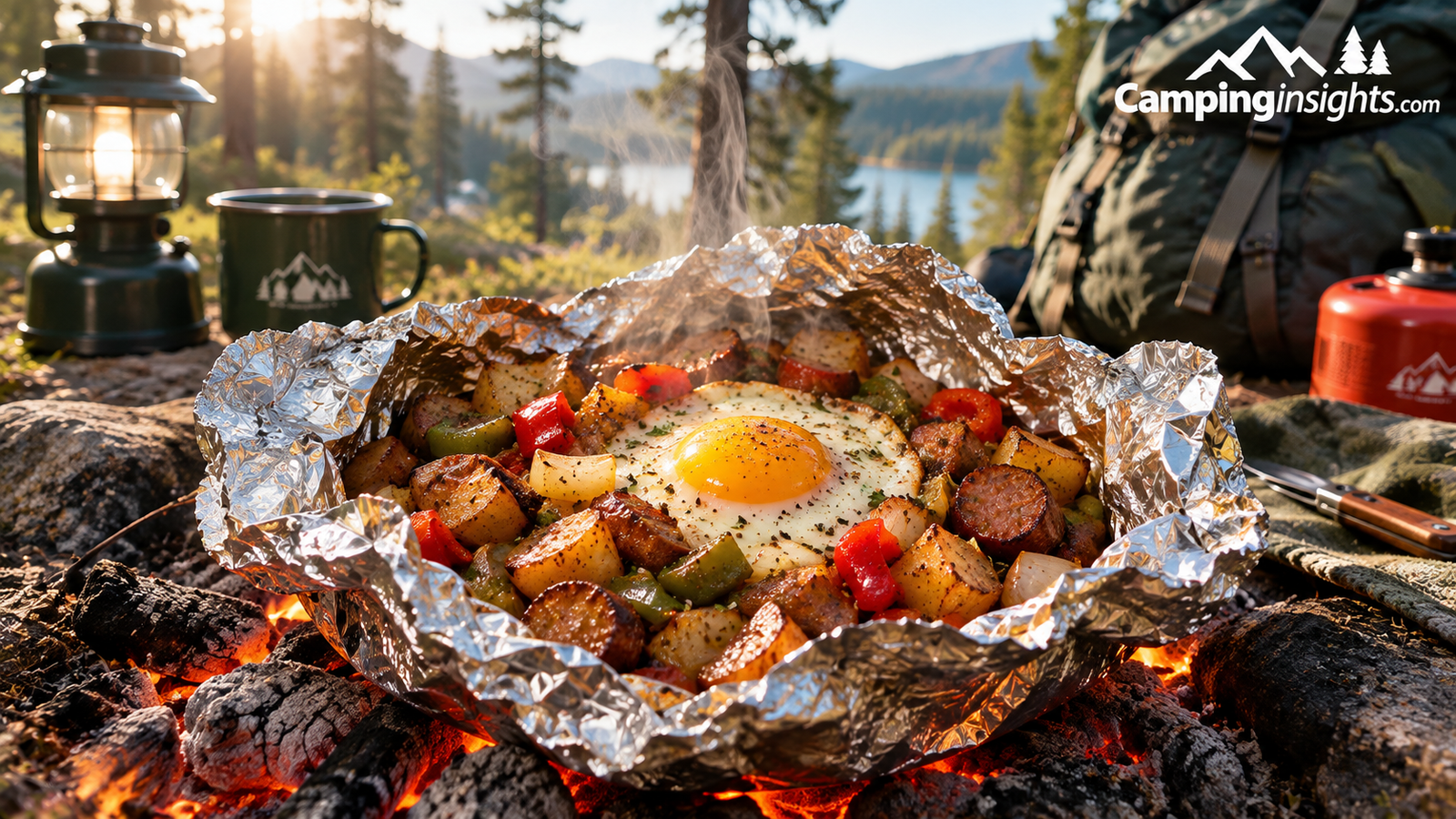
Idea: foil packet breakfast hash
Campfire Pancakes from a Bottle
Pre-mixed pancake batter in a squeeze bottle (just add water at camp) turns pancakes into a two-minute prep job. Pour directly onto a hot griddle, and pack mini chocolate chips or dried fruit separately so kids can customize their own. This is one of the fastest hot breakfasts on this whole list, and the bottle doubles as mess-free storage since there’s no bowl or whisk involved.
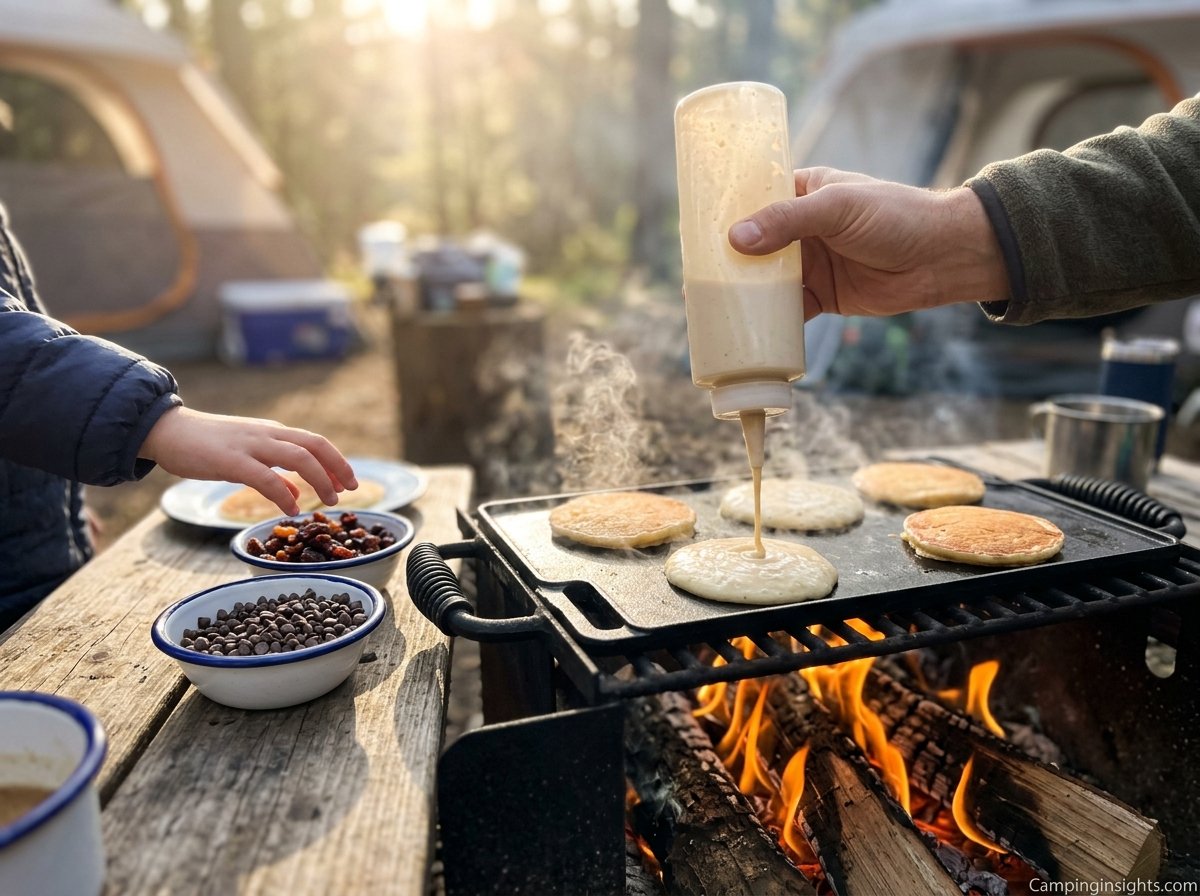
Idea: squeeze-bottle pancake mix
Overnight Oats in a Jar
Zero cook time required. Oats, milk (or a shelf-stable alternative), a spoonful of yogurt, and toppings sit in a mason jar overnight in the cooler and are ready to eat cold at sunrise — ideal for early hikes when you don’t want to wait on a stove. Make three or four jars at home the night before you leave, and breakfast for the first couple of mornings is already handled before you’ve even pitched a tent. Swap in different toppings for each jar — berries, granola, cinnamon and apple, a spoon of nut butter — so it doesn’t feel like the same breakfast on repeat.
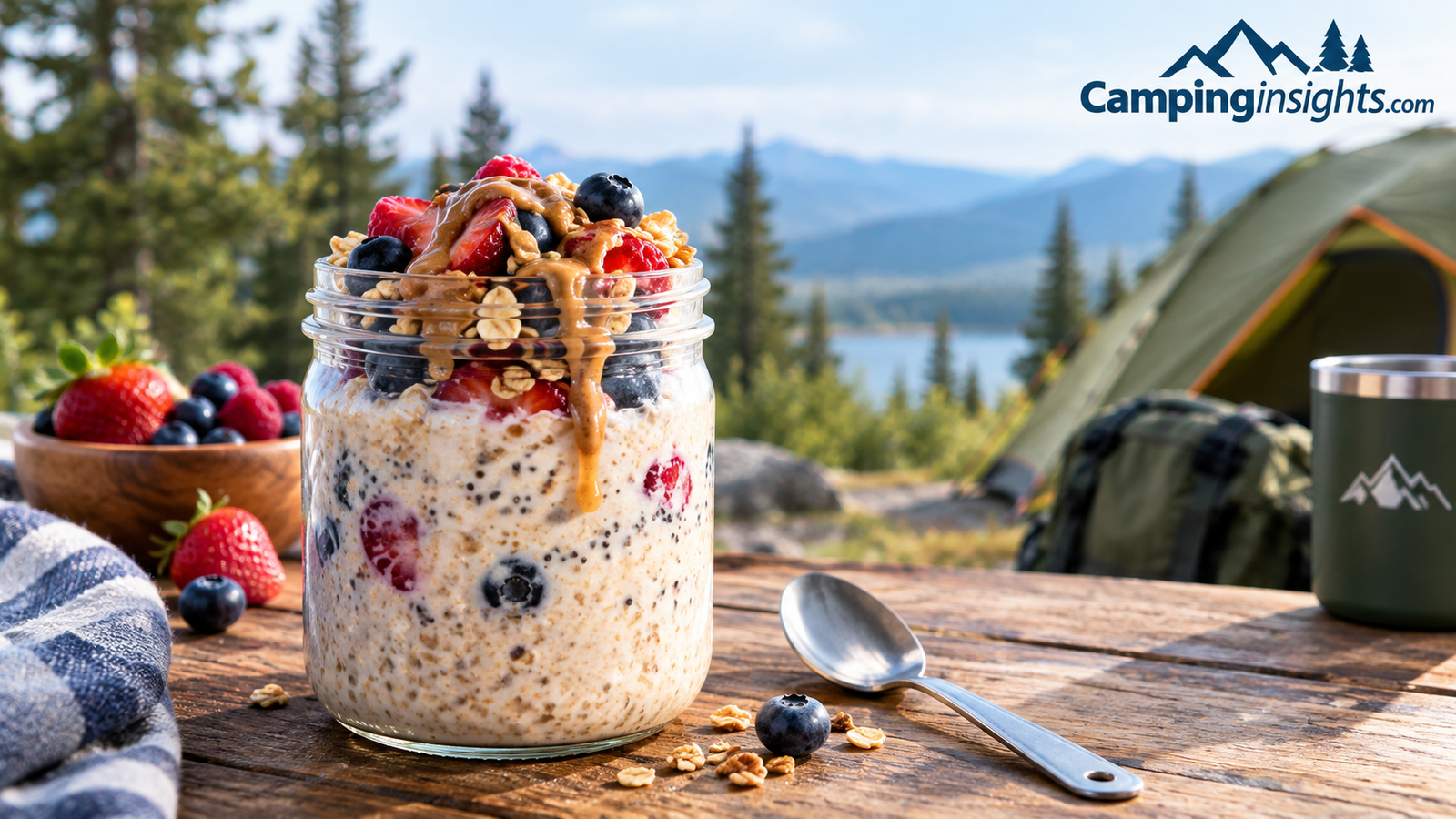
Idea: overnight oats in a jar
Breakfast Burritos, Pre-Rolled and Frozen
Scramble eggs with cheese and cooked sausage at home, roll into tortillas, and freeze individually wrapped in foil. They double as ice packs on day one and reheat directly on a grate or in the foil over coals by day two. By day three, once they’ve thawed fully, they’re one of the fastest hot breakfasts on the trip since all the cooking work already happened back in your own kitchen.
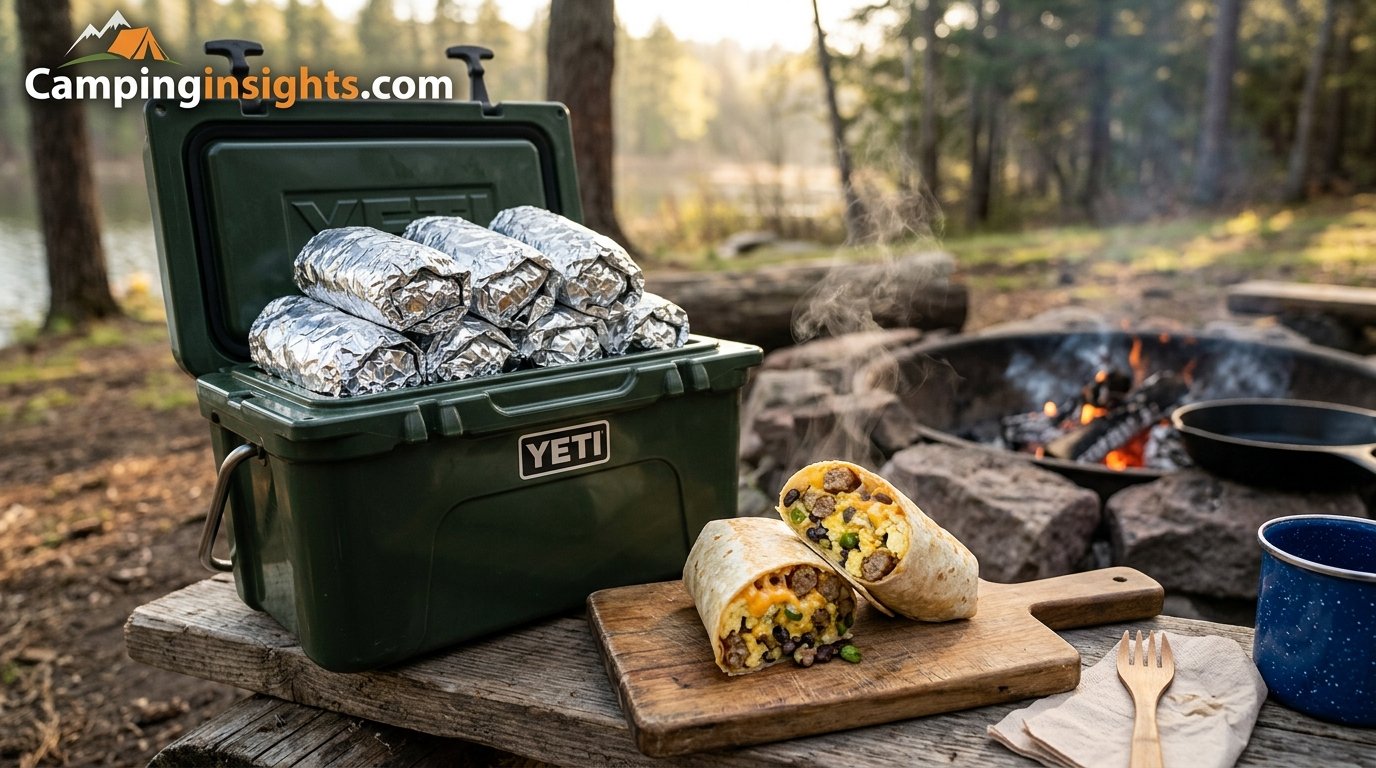
Idea: pre-frozen breakfast burritos
Instant Grits or Oatmeal Cups
Single-serve cups that only need boiling water are close to weightless, need no cleanup beyond the cup, and work equally well car camping or backpacking. Add nuts, dried fruit, or a spoon of peanut butter to make them more filling, especially on mornings before a longer hike where you’ll need more staying power than the cup alone provides.
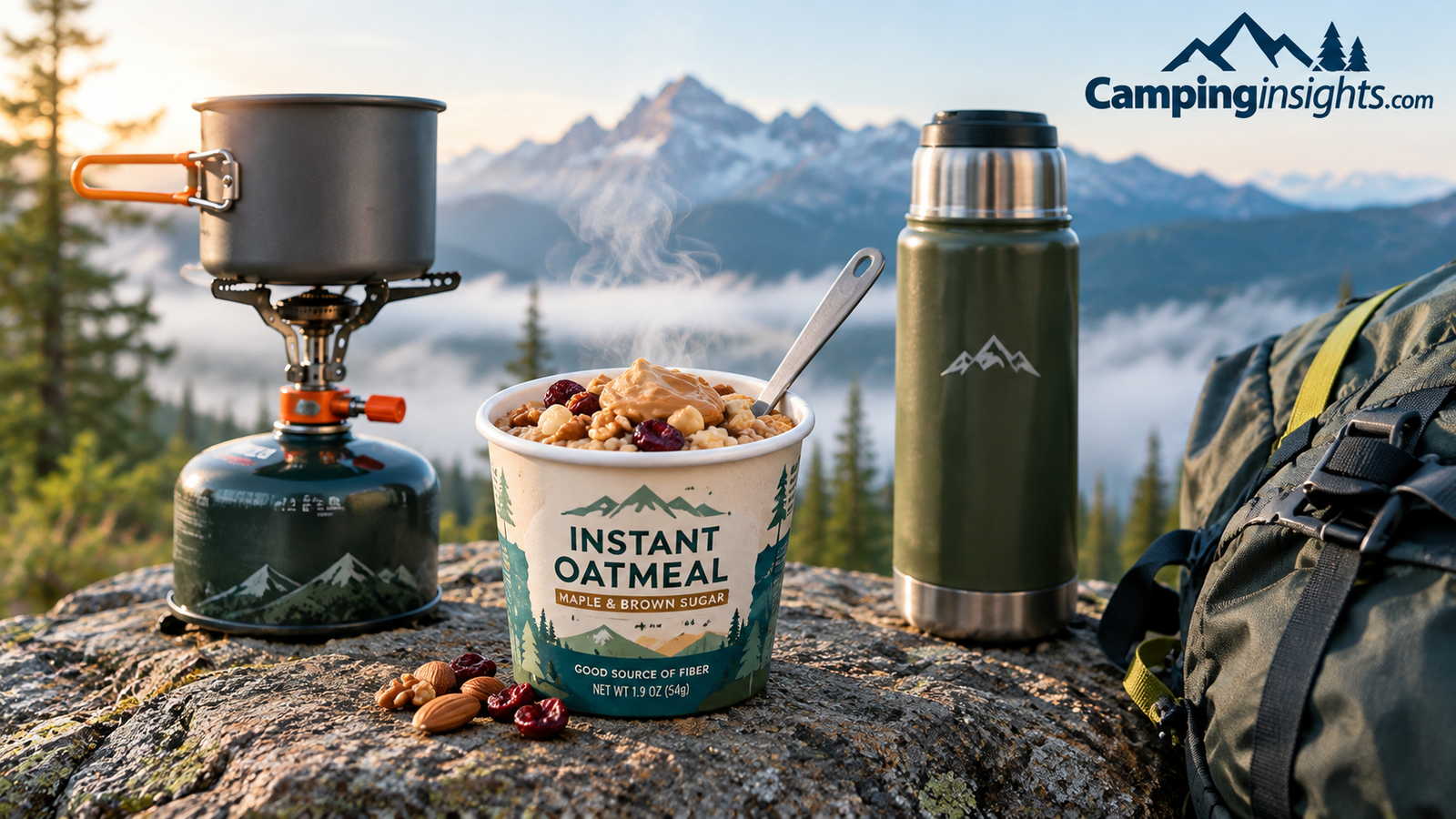
Idea: instant oatmeal or grits cups
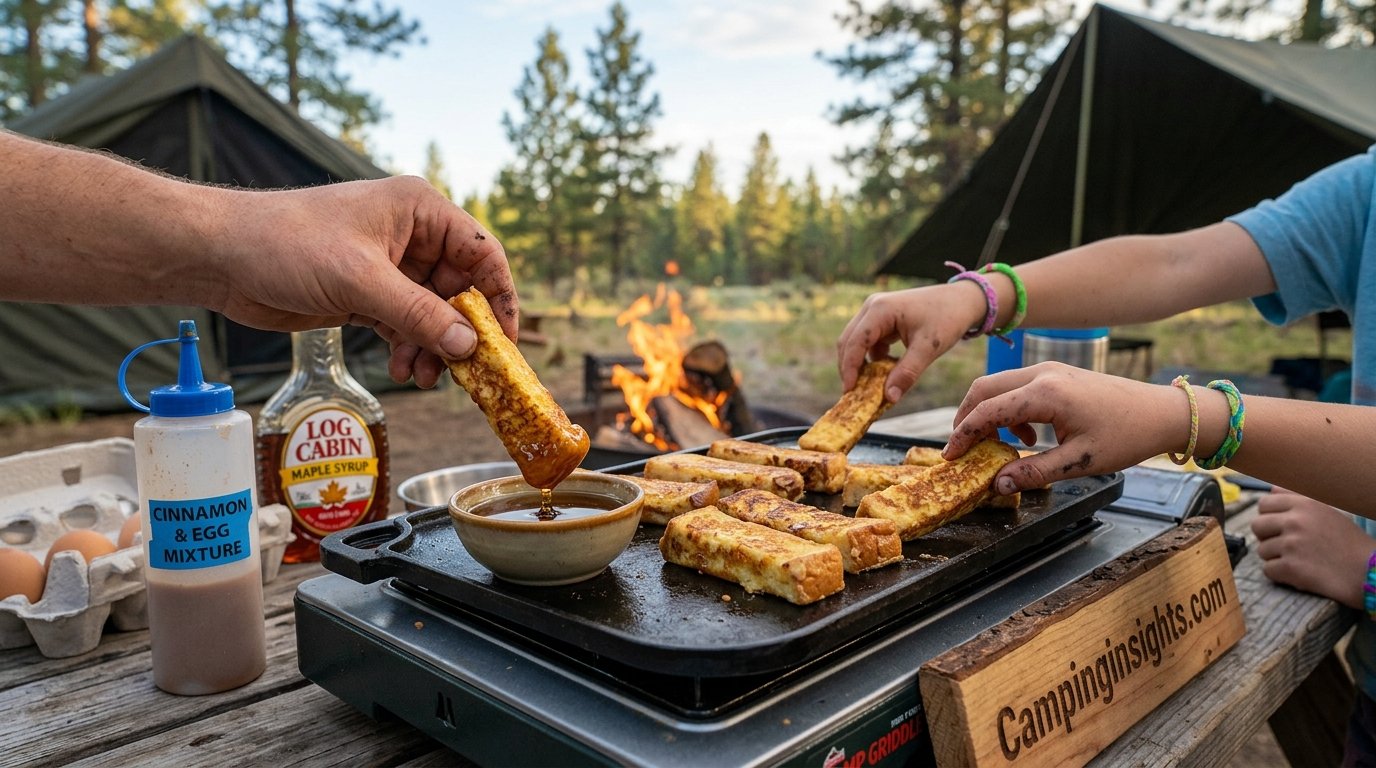
Campfire French Toast Sticks
Thick bread dipped in an egg-and-cinnamon mix (pre-mixed and carried in a leakproof bottle), cooked on a griddle, and cut into sticks for easy dipping in syrup. A fun option for a slower morning when the fire is already going, and the stick shape makes it easy for kids to eat without needing a plate balanced on their knees.
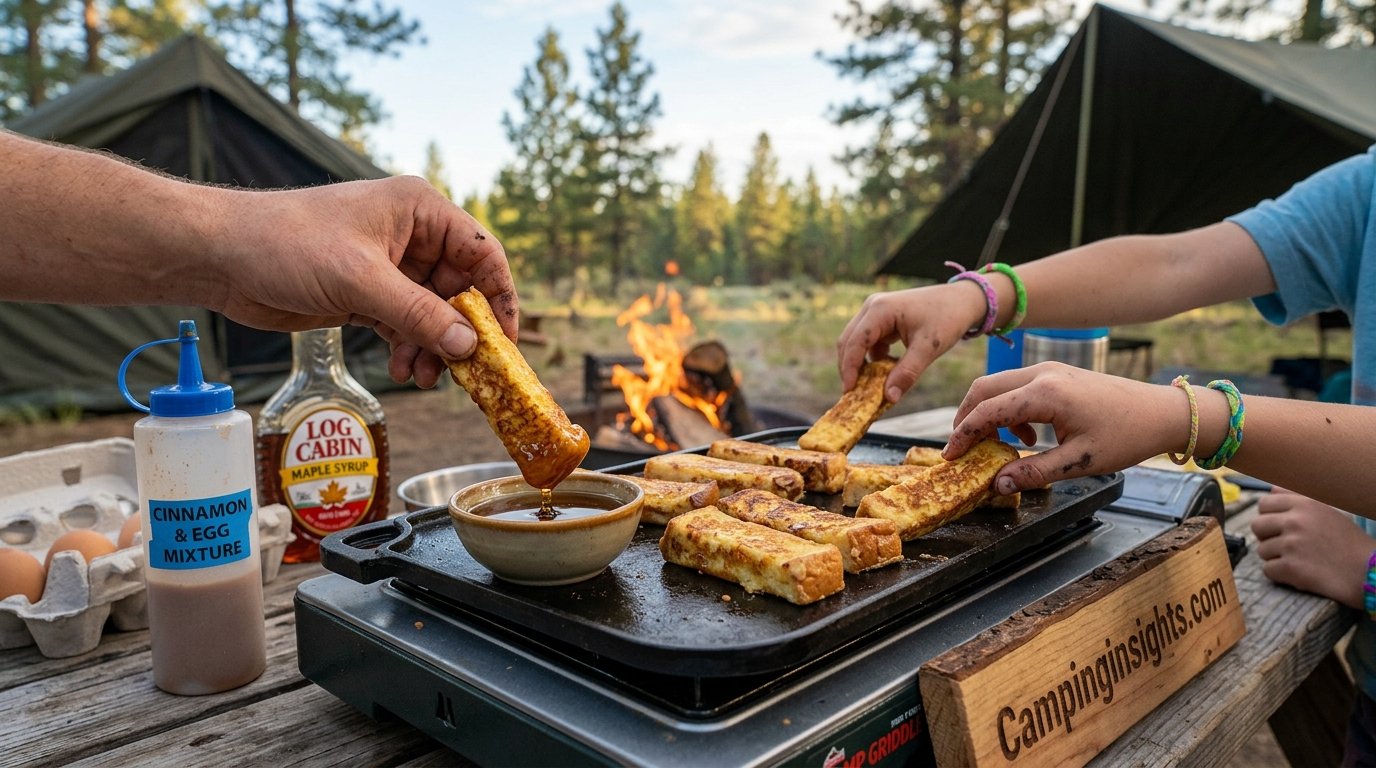
Idea: campfire French toast sticks
Breakfast Skillet Hash Browns
Frozen shredded hash browns fried in a cast iron skillet with a little oil, seasoned simply with salt, pepper, and paprika, then topped with a fried egg. It’s a heartier alternative to the foil packet hash for mornings when you’re cooking directly on a stove burner rather than over coals, and it comes together in under ten minutes.
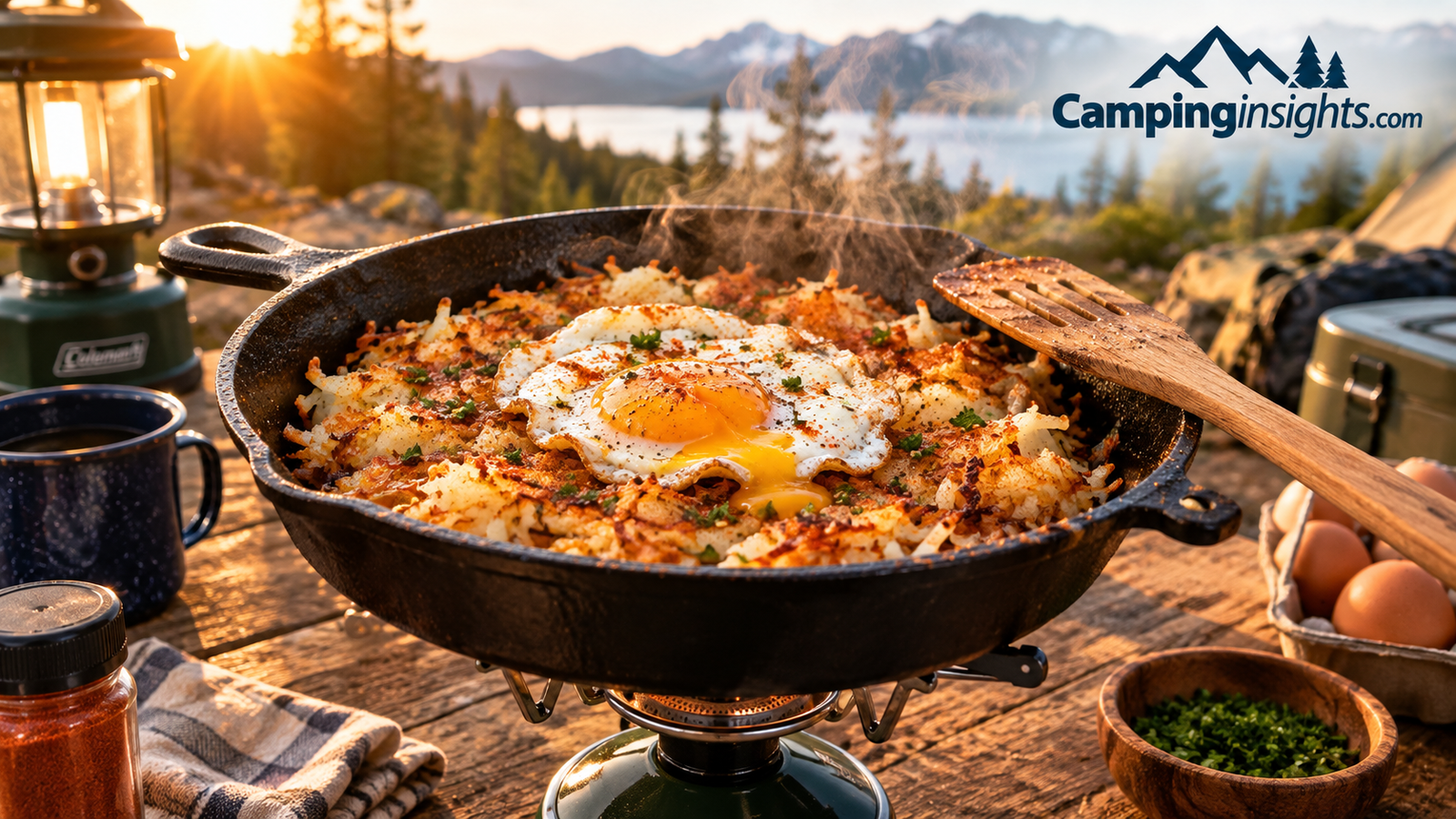
Idea: skillet hash browns and eggs
Yogurt and Granola Parfait Cups
Individual cups layered with yogurt, granola, and dried or fresh fruit, assembled the night before and kept cold in the cooler. There’s genuinely nothing to cook, nothing to clean beyond a spoon, and it’s a lighter option for mornings that lead straight into a hike rather than a lazy day at camp.
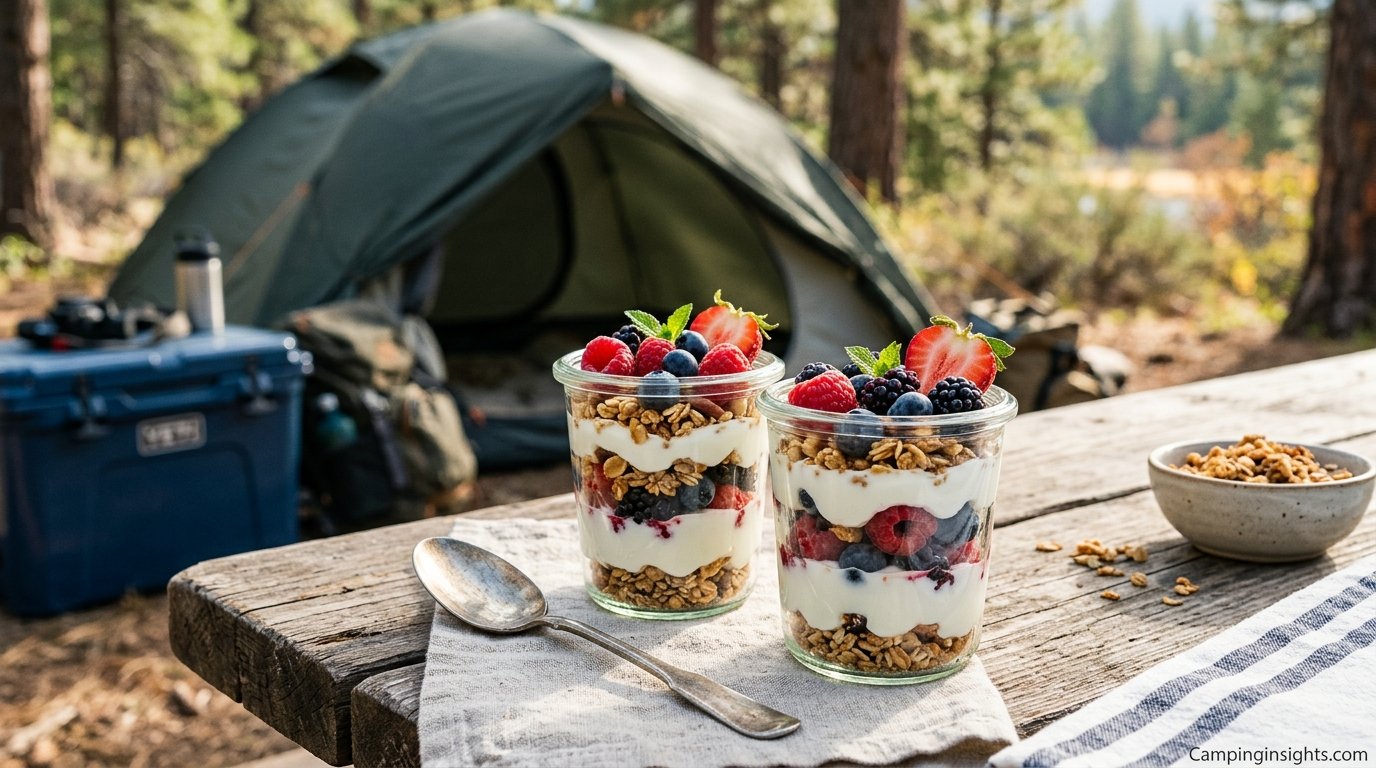
Idea: yogurt and granola parfait cups
Breakfast Sandwich Sliders
Small dinner rolls or biscuits split, filled with scrambled egg, cheese, and a sausage patty, then wrapped in foil and warmed together as a batch. Making a dozen at once means everyone grabs one and there’s no individual assembly line holding up breakfast while people wait their turn.
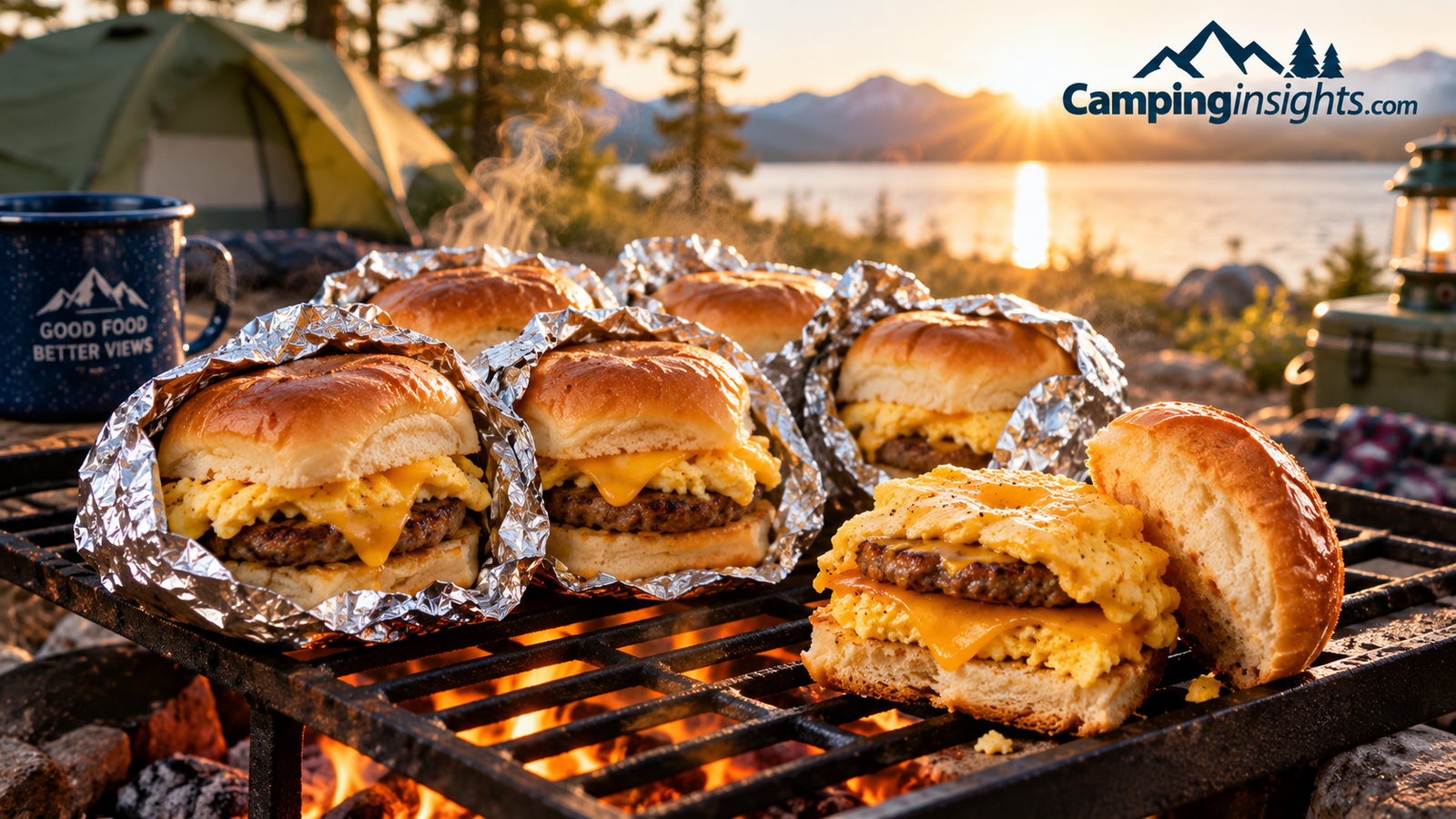
Idea: breakfast sandwich sliders
Cold Cereal with Powdered Milk
A box of cereal and a small bag of powdered milk take up almost no space and need only cold water to mix, making them one of the simplest possible breakfast fallbacks for a trip where you’d rather not deal with cooking at all on a travel day or a slow morning packing up camp.
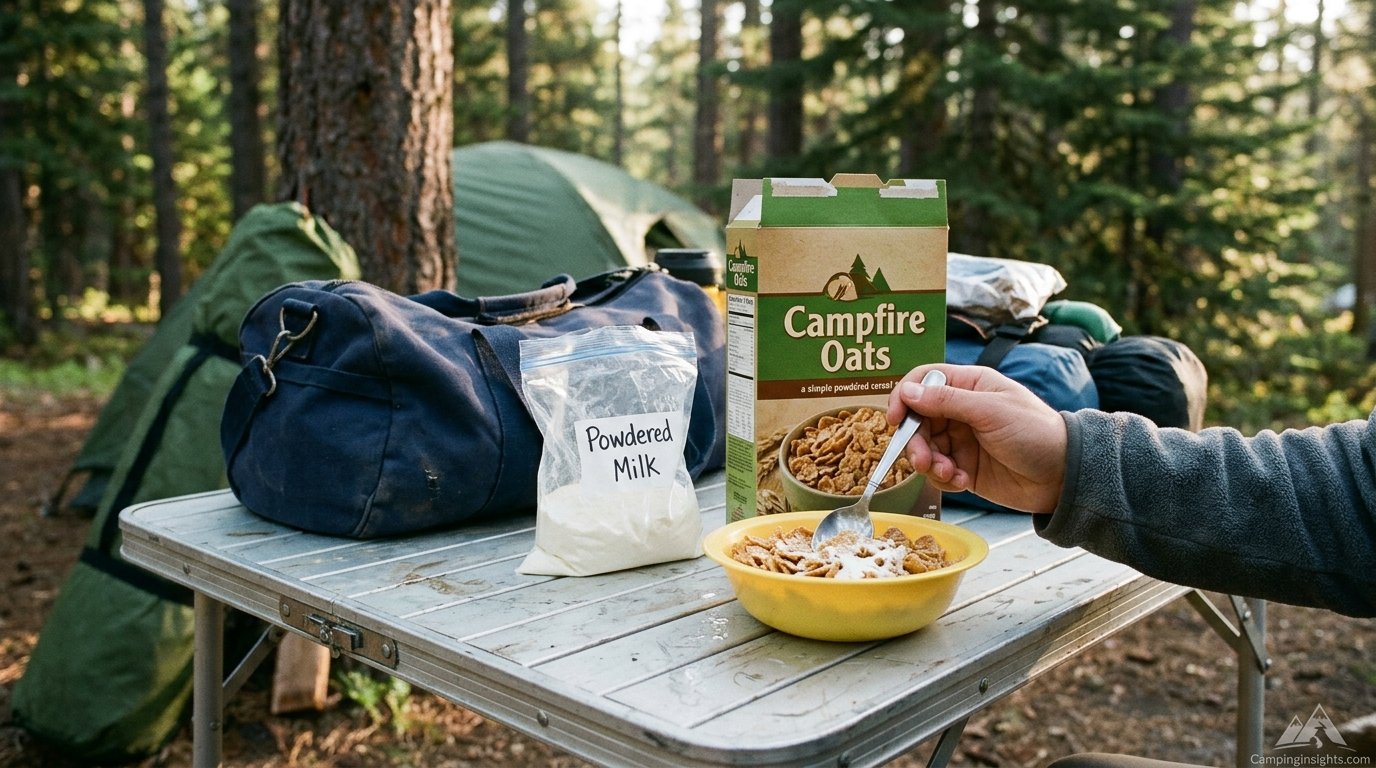
Idea: cereal with powdered milk
Campfire Breakfast Quesadillas
Scrambled eggs, cheese, and diced ham folded into a tortilla and toasted on a skillet or grate until crisp on both sides. It’s a faster, less messy alternative to a full hash and works well as a one-handed breakfast for anyone who’s eager to hit the trail early.
Idea: campfire breakfast quesadillas

A flat-top griddle handles pancakes, hash, French toast, and eggs without the flare-ups you get on an open grate — one piece of gear covers most breakfast ideas above.
Shop Camp Griddles →3. No-Cook Camping Snacks & Lunches
Not every meal needs a flame. No-cook camping food ideas are essential for hot afternoons, midday hikes, or trips where you’d rather not deal with a stove at lunch — and they’re also the fastest way to feed a hungry group the moment you roll into camp, before the stove is even set up.
Charcuterie Cooler Box
Sliced meats, hard cheese, crackers, and grapes packed in one flat container — open the lid and lunch is served.
Tortilla Wrap Bar
Tortillas, deli meat, cheese, and condiments laid out so everyone builds their own wrap in under a minute.
Tuna or Chicken Pouches
Foil pouches (not cans) eaten straight over crackers — no can opener, no fridge required before opening.
Hummus & Veggie Cups
Pre-portioned single-serve cups with carrot and celery sticks packed separately to stay crisp.
Trail Mix, Custom Blend
Nuts, dried fruit, and a small amount of chocolate mixed at home in snack-sized bags for grab-and-go energy.
Fruit That Travels Well
Apples, oranges, and grapes handle a cooler and a bumpy drive far better than soft berries or bananas.
Cold Pasta Salad
Made the night before at home, dressed in oil rather than mayo so it holds up without refrigeration issues.
Peanut Butter & Banana Roll-Ups
Tortillas spread with peanut butter, rolled around a banana, and sliced — filling and mess-free.
Caprese Skewers
Cherry tomatoes, mozzarella balls, and basil on a toothpick with a drizzle of balsamic packed separately.
Cold Fried Chicken
Cooked at home and chilled, it’s a classic road-trip and campsite lunch that needs no reheating to taste good.
Deviled Eggs, Pre-Made
Made the morning you leave and packed flat in an egg carrier so the filling doesn’t shift in transit.
Bagel Sandwiches
Bagels hold up to a cooler far better than soft sandwich bread and don’t get crushed as easily.
Hard-Boiled Eggs
Boiled and peeled at home, they’re a compact, protein-heavy grab-and-go snack that needs no utensils.
Cheese and Cracker Stacks
Pre-sliced cheese and a sleeve of crackers packed together for an easy, mess-free midday snack.
Cold Rotisserie Chicken
A store-bought rotisserie chicken, chilled and portioned into pieces, is an easy protein source for the first day or two of a trip.
Overnight Cucumber Salad
Sliced cucumber, vinegar, and a little sugar marinated overnight in a jar for a crisp, refreshing side that needs no reheating.
Building a full no-cook lunch box the night before you leave means the first meal at camp — often the most chaotic one, right after setting up — is already handled without anyone needing to touch the stove.
No-cook meals are also the easiest way to keep everyone fed on a rainy afternoon, which pairs well with the setup ideas in our camping in the rain tips article — a dry spot to eat matters as much as the food itself when the weather turns. Building at least one full no-cook lunch box at home before you leave means there’s always a backup plan on hand, whether that’s because the stove is acting up, the fire won’t catch, or everyone’s simply too hungry to wait twenty minutes for something to cook.

Stackable, leakproof containers make no-cook meals far less messy in a cooler — no more soggy crackers from a leaking hummus cup.
Shop Food Containers →4. Foil Packet Camping Dinners
Foil packet meals are one of the most reliable camping food ideas because they need almost no equipment, produce almost no dishes, and are genuinely hard to mess up. Everything goes into a double layer of heavy-duty foil, gets sealed, and sits on coals or a grate for 20–30 minutes, which frees you up to sit by the fire instead of standing over a pan.
Classic Foil Packet Sausage & Veggies
Sliced sausage, potatoes, bell pepper, and onion tossed with oil and seasoning, sealed, and cooked over medium coals. Flip once halfway through for even cooking, and cut the potatoes small so they finish at the same rate as the rest of the ingredients rather than coming out undercooked.
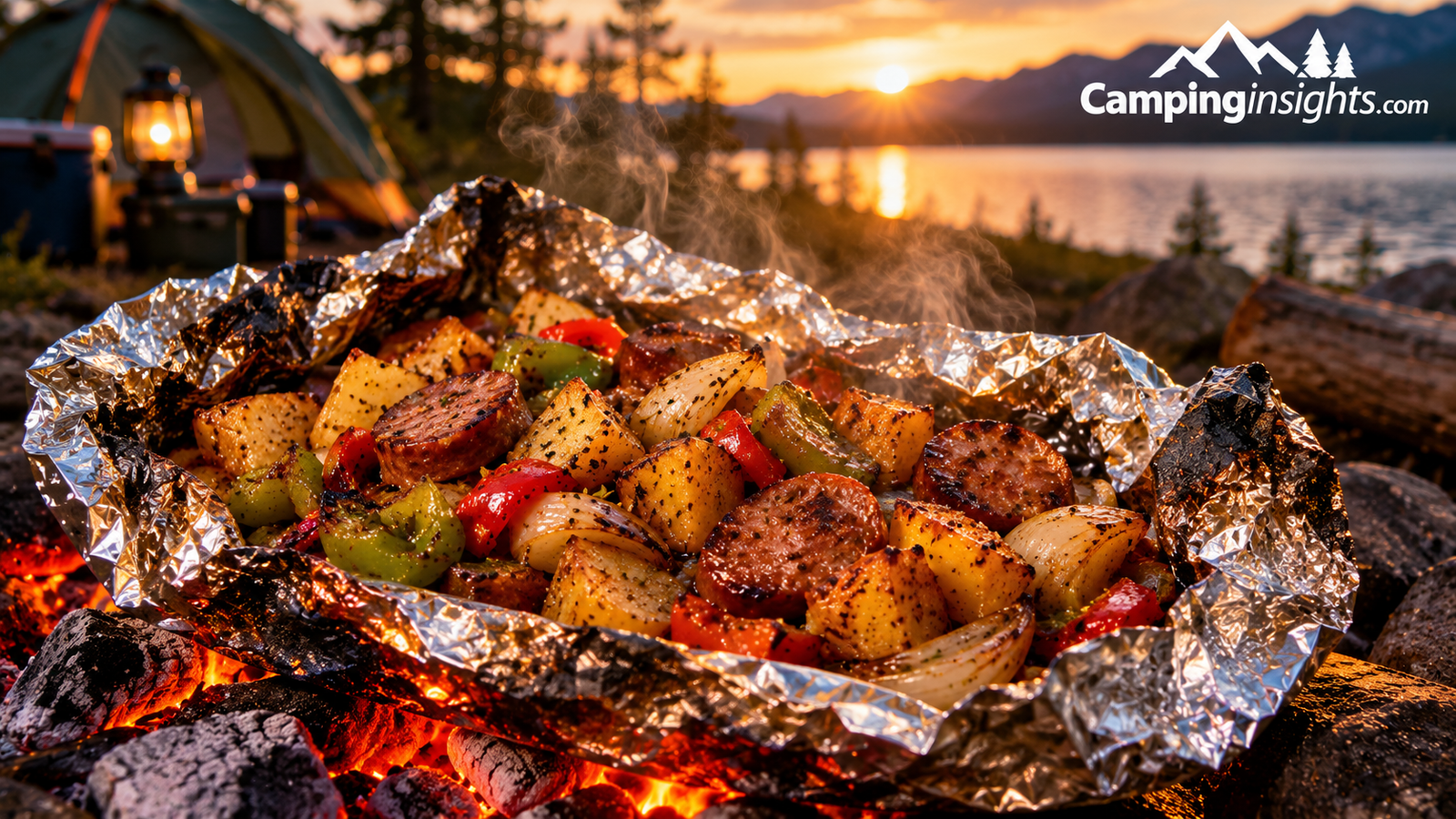
Idea: sausage and veggie foil packet
Foil Packet Shrimp Boil
Shrimp, corn, sausage, and small potatoes with Cajun seasoning and a pat of butter, sealed tight. A camp version of a backyard shrimp boil with zero pots to scrub, and it comes together fast since shrimp cooks in only a few minutes once the packet is hot. Pre-cook the potatoes slightly at home if they’re cut into larger chunks, since raw potato takes noticeably longer than shrimp and can leave the packet unevenly cooked otherwise.
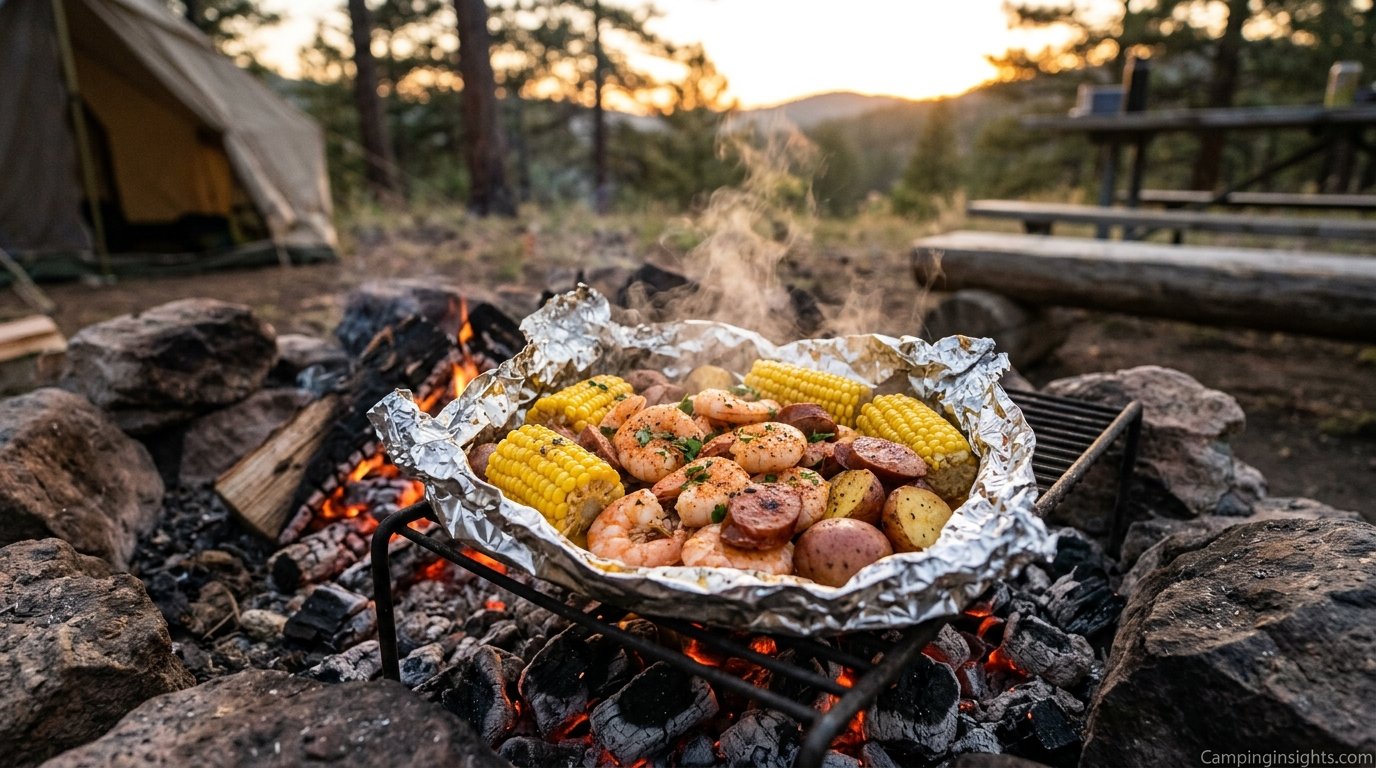
Idea: foil packet shrimp boil
Foil Packet Fajitas
Sliced chicken or steak, peppers, and onion with fajita seasoning, cooked in the packet and served straight into warm tortillas at the fire. Set out toppings like shredded cheese, salsa, and lime wedges separately so everyone can build their own plate.
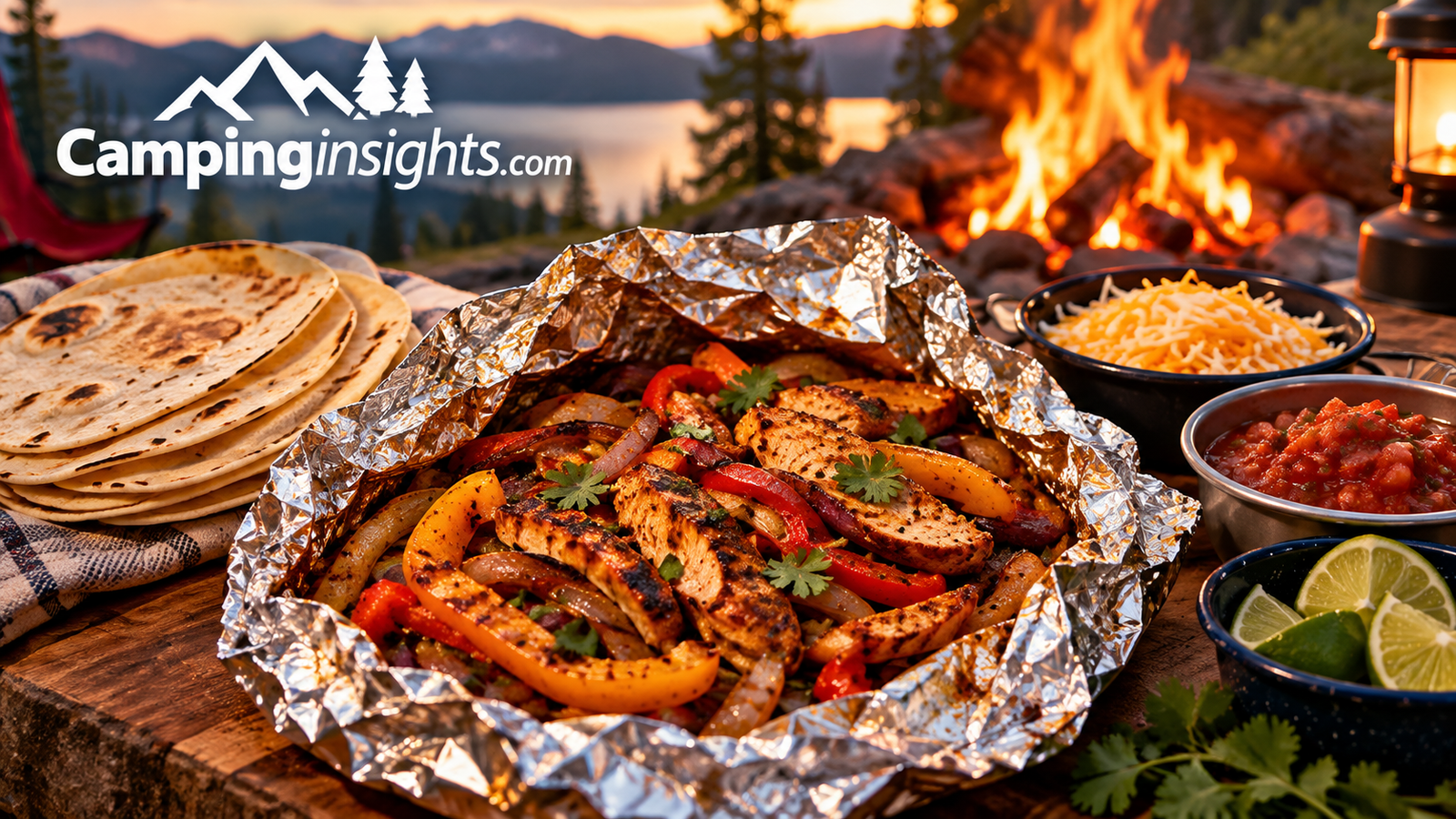
Idea: foil packet fajitas
Foil Packet Salmon with Lemon
A fillet of salmon with lemon slices, a little butter, and fresh dill, sealed and cooked gently — one of the few camping dinners that still feels like a treat. Salmon cooks faster than most other proteins in this list, so keep an eye on it after the fifteen-minute mark to avoid drying it out. Pair it with a foil packet of asparagus or green beans cooked alongside it for a complete, restaurant-style dinner with almost no cleanup.
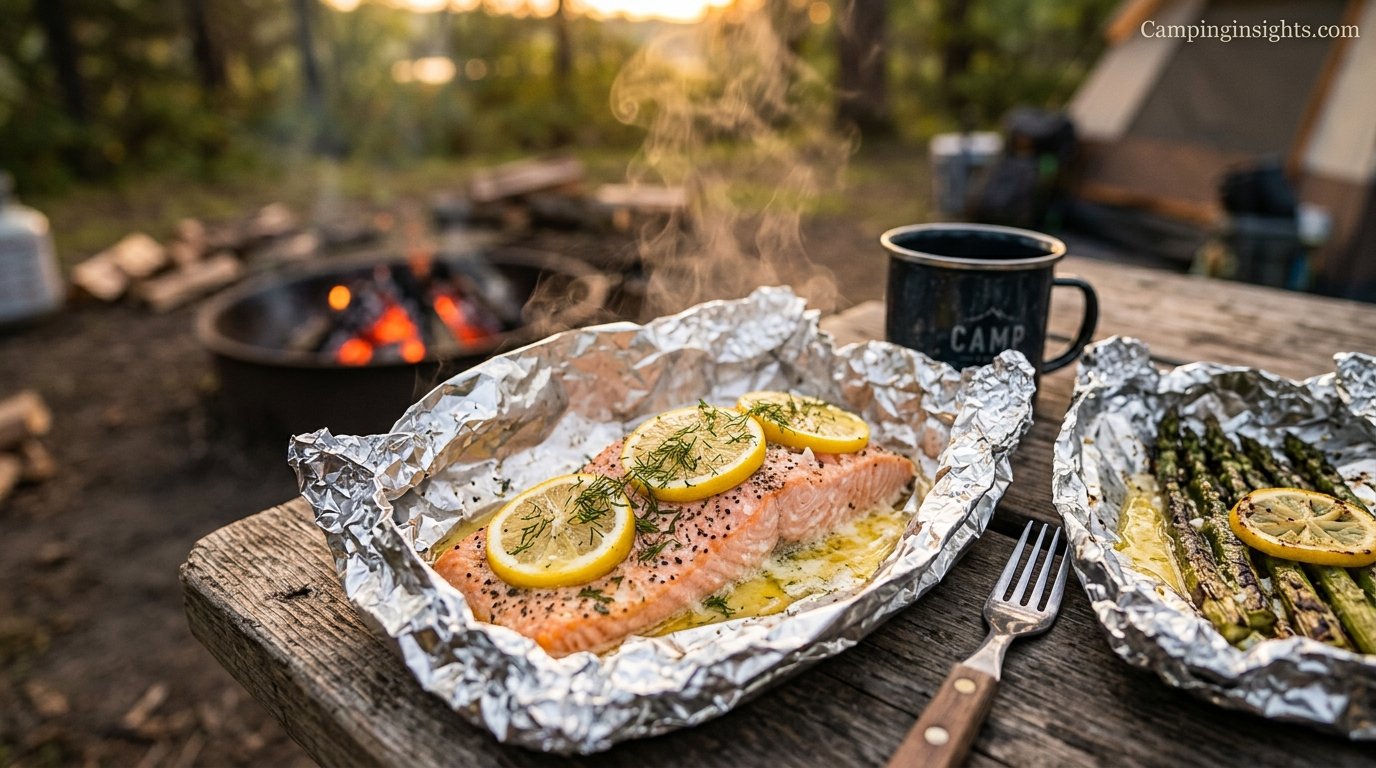
Idea: foil packet lemon salmon
Foil Packet Meatball Sub Filling
Frozen meatballs, jarred marinara, and shredded mozzarella sealed together and warmed through over coals, then spooned into sub rolls at the fire. It’s an easy way to turn a handful of pantry staples into a dinner that feels far more substantial than the effort it takes.
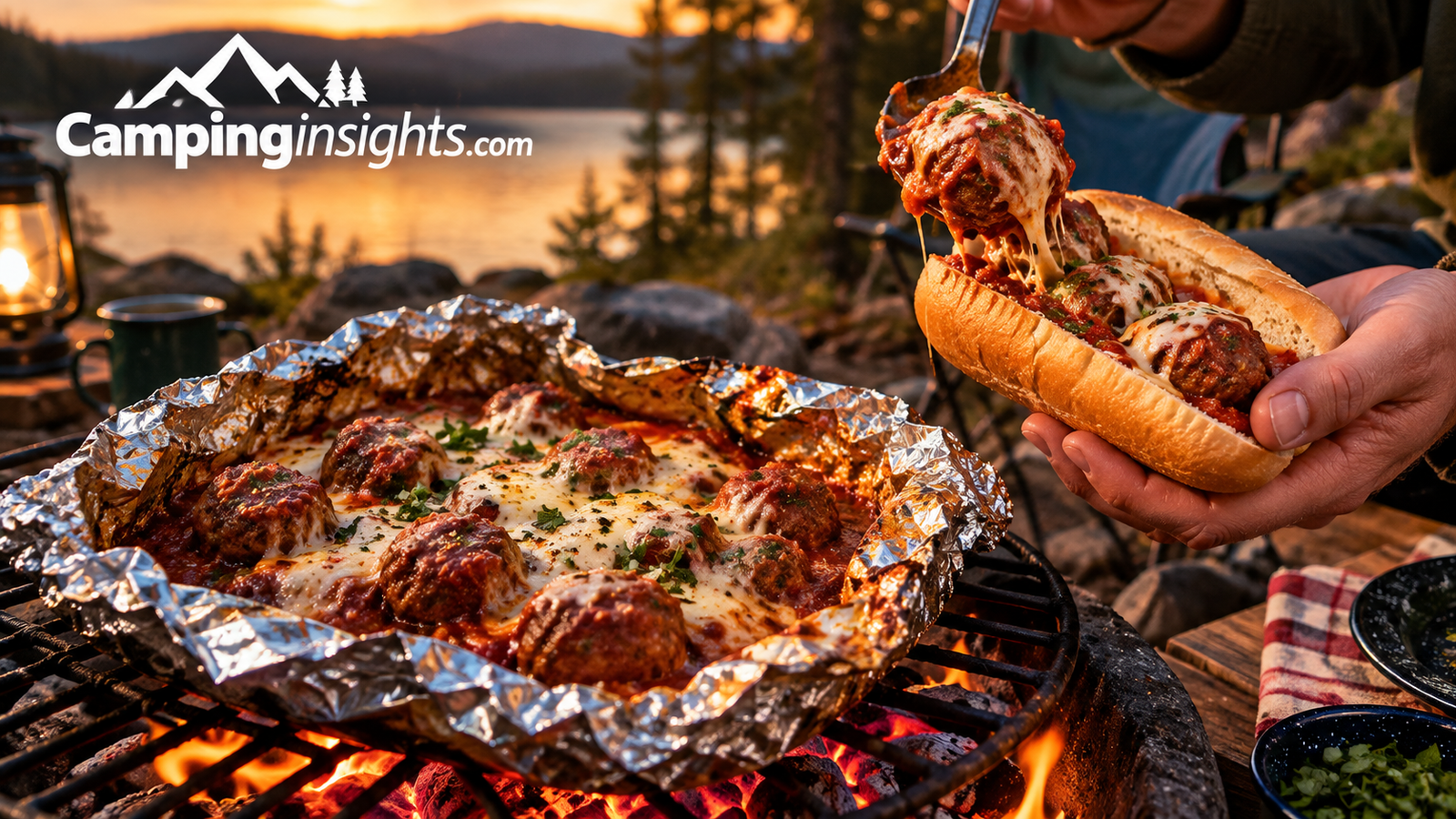
Idea: foil packet meatball sub filling
Foil Packet Teriyaki Chicken and Rice
Diced chicken thigh, pre-cooked rice, broccoli florets, and a splash of teriyaki sauce sealed together and warmed until the chicken is fully cooked and the rice is heated through. Using pre-cooked rice rather than raw rice is the key here, since raw rice needs more moisture and time than a foil packet can reliably provide.
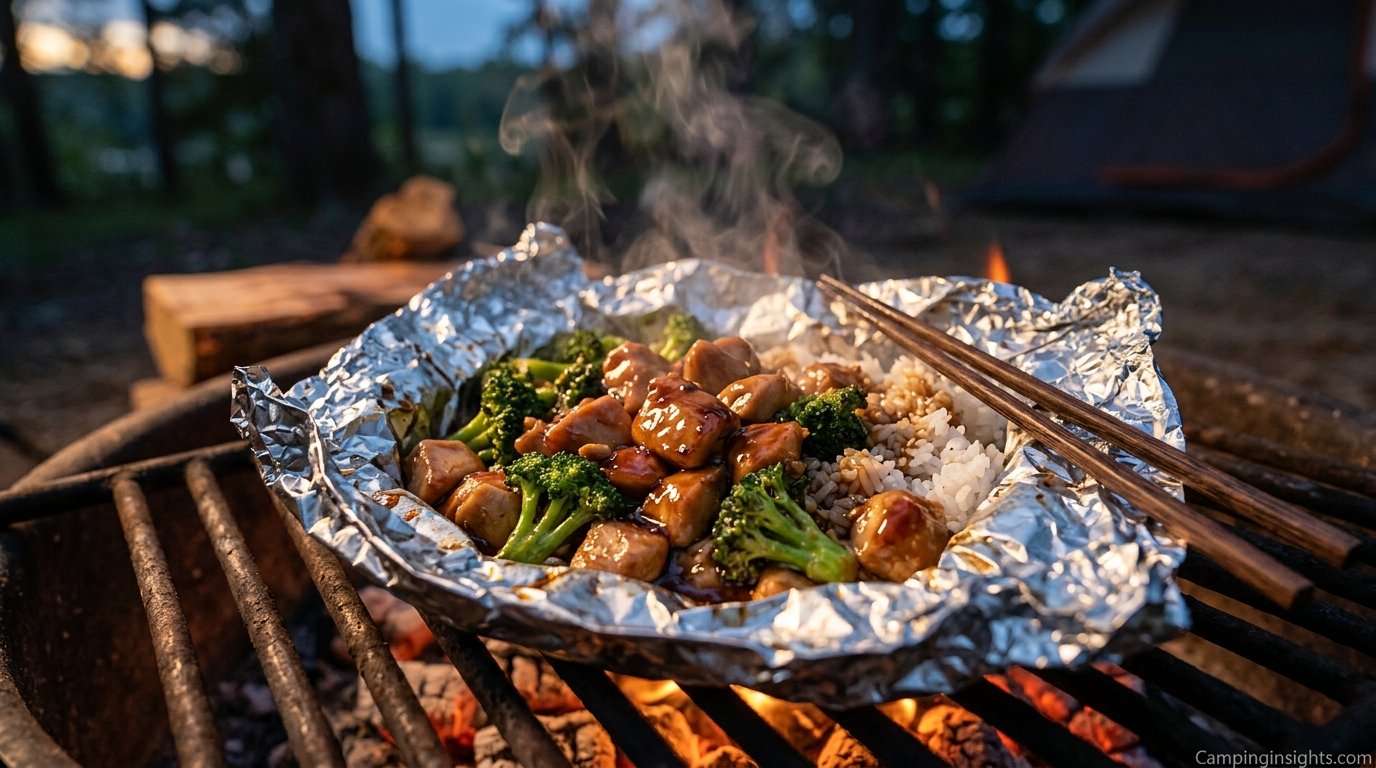
Idea: teriyaki chicken and rice foil packet
Foil Packet BBQ Chicken and Sweet Potato
Diced chicken thigh tossed with barbecue sauce, cubed sweet potato, and a little red onion, sealed and cooked over medium coals until the chicken is fully cooked through and the sweet potato has softened. The sauce caramelizes slightly against the foil, giving it a flavor closer to grilled barbecue than a typical steamed packet meal.
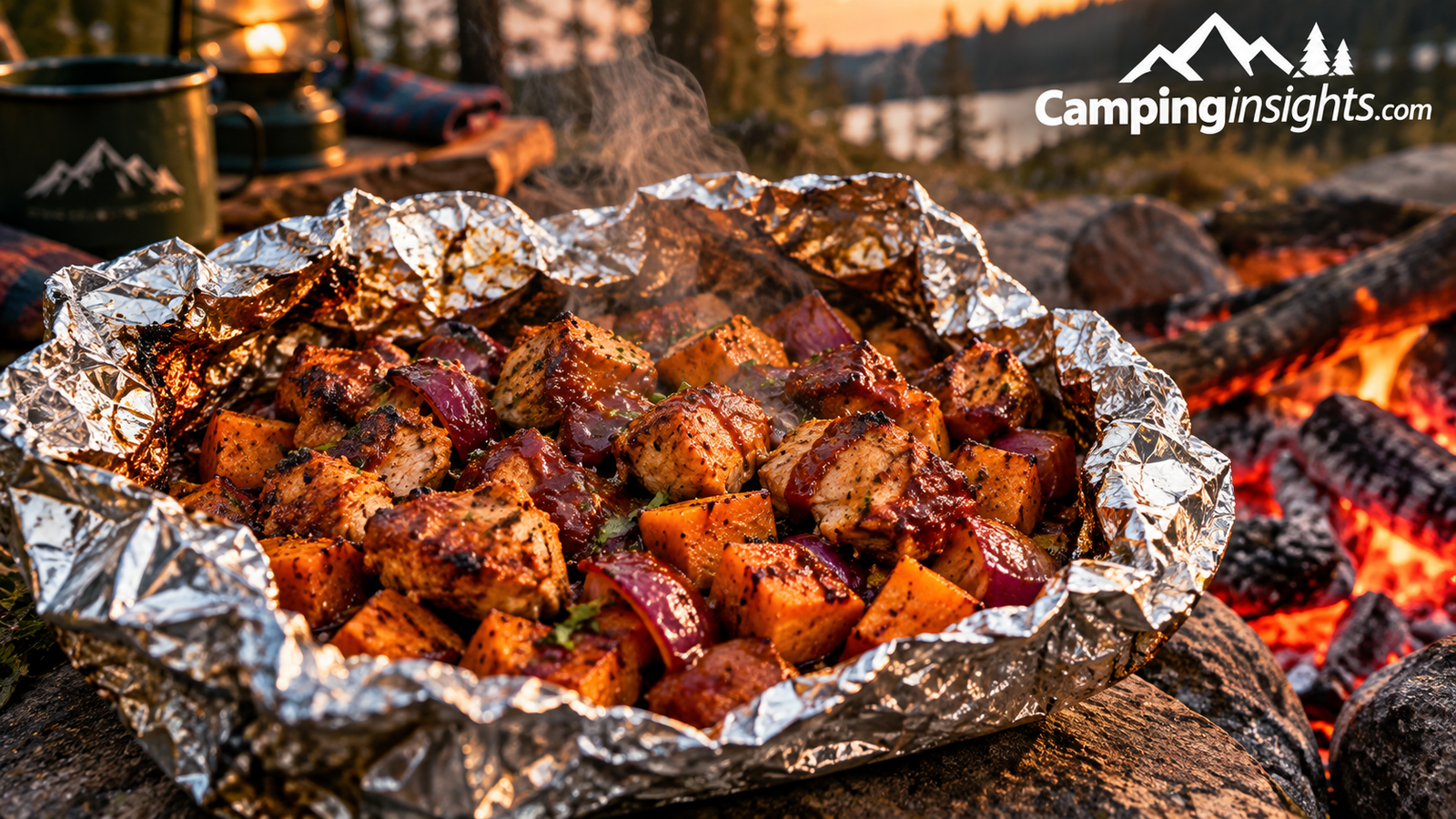
Idea: BBQ chicken and sweet potato foil packet
Foil Packet Pierogies and Kielbasa
Frozen pierogies and sliced kielbasa tossed with butter, onion, and a little garlic, sealed and cooked until the pierogies are tender. It’s an easy way to turn two freezer-aisle staples into a filling dinner without needing to boil a pot of water first.
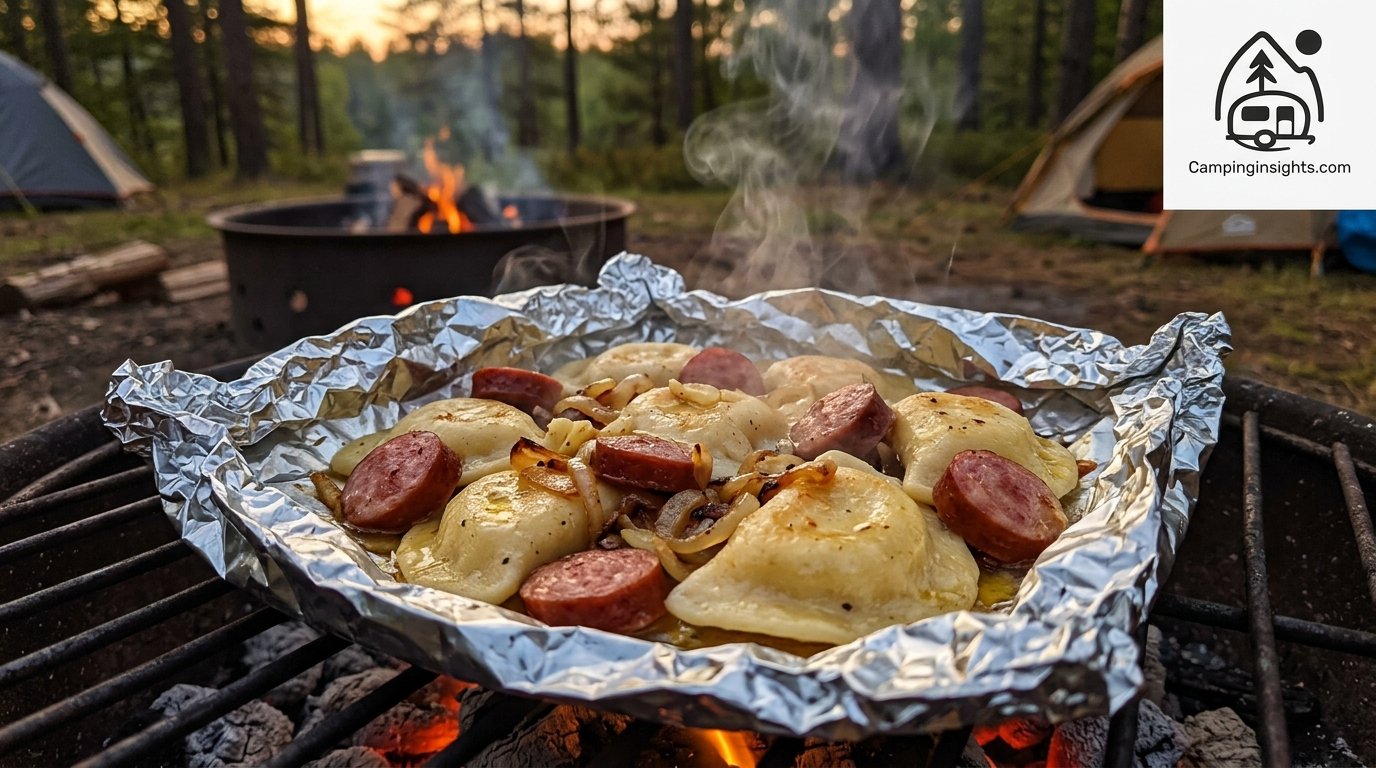
Idea: foil packet pierogies and kielbasa
Why Foil Packets Work So Well
- Almost no cleanup — the foil is the dish
- Prep can happen entirely at home the night before
- Everyone can build their own custom packet
- Works over coals, a grate, or even a camp stove burner
- Scales easily for a group by simply adding more packets
Where They Fall Short
- Cook time is uneven without checking periodically
- Needs a real bed of coals, not just open flame
- Thin foil tears — always double-layer it
- Not ideal in high fire-restriction areas with no coals allowed
- Hard to tell doneness without opening and losing heat
5. One-Pot Camping Meals
One-pot meals are the backbone of car camping dinners: everything cooks in a single pot on a two-burner stove, which means one thing to wash and one thing to watch. A dependable camping stove is really the only piece of equipment these ideas require, which makes them a great fit for family trips where the last thing anyone wants after dinner is a stack of dishes.
Campsite Chili
Pre-cooked ground beef, canned beans, and canned tomatoes simmered together with chili seasoning. Almost everything can be prepped and pre-browned at home, then just reheated and combined at camp, which turns a normally hour-long recipe into a fifteen-minute job at the campsite.
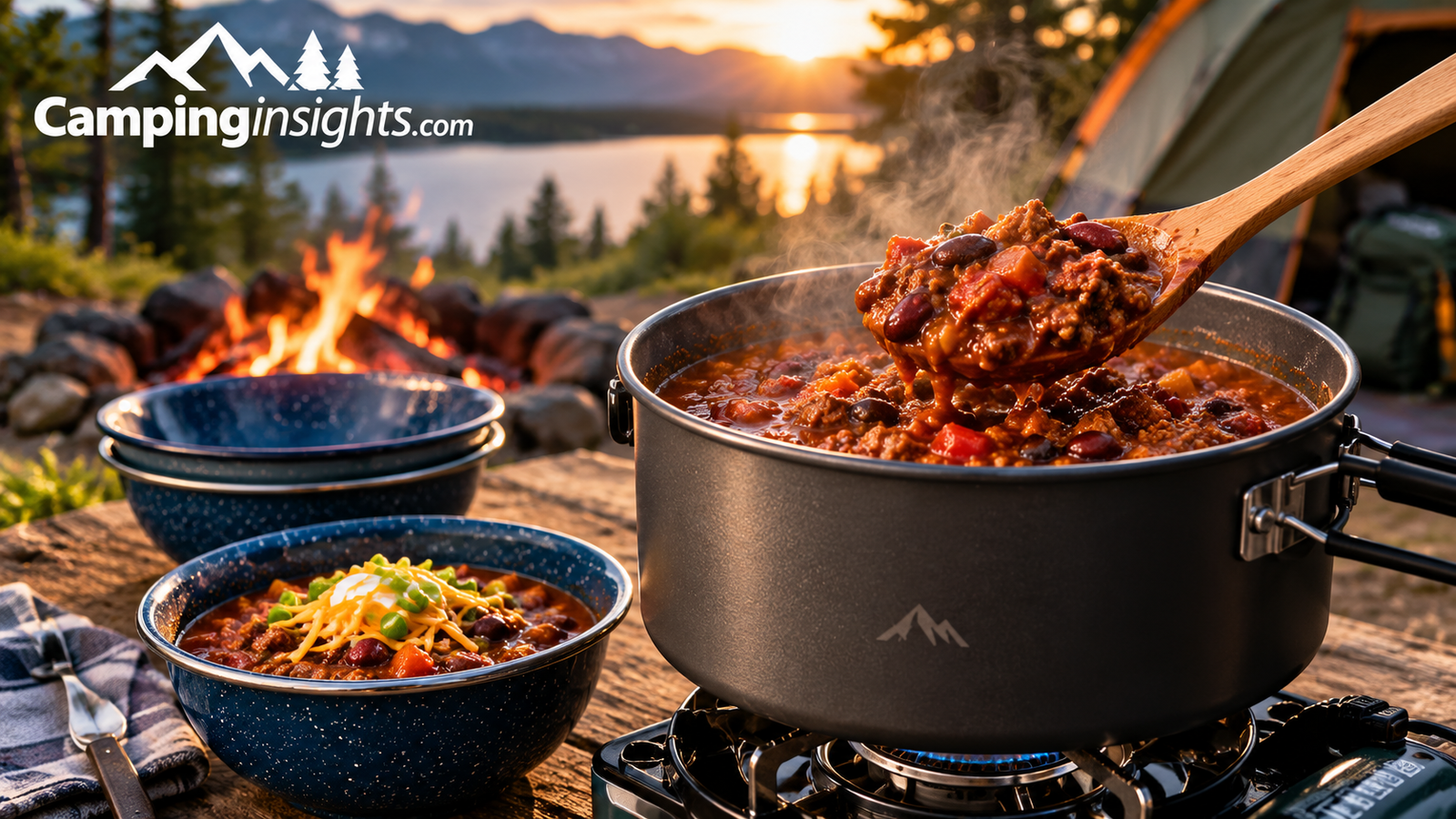
Idea: one-pot campsite chili
One-Pot Pasta with Sausage
Pasta cooked directly in seasoned broth with sliced sausage and spinach added in the last few minutes — the starch from the pasta thickens the sauce as it cooks, so there’s no separate sauce pan. It’s filling enough to satisfy a group after a long hiking day without needing a side dish.
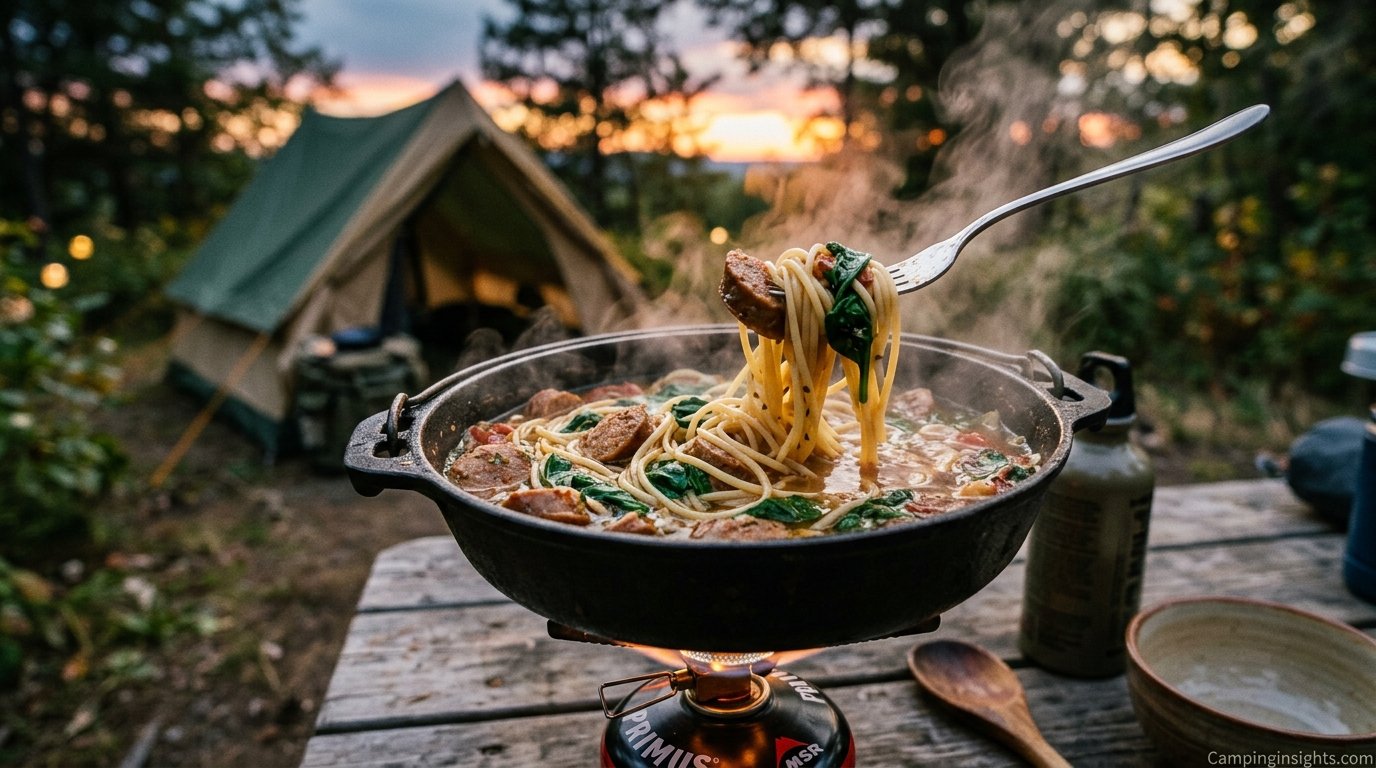
Idea: one-pot sausage pasta
Dutch Oven Camp Stew
Stew meat, potatoes, carrots, and onion browned then simmered low and slow in a Dutch oven — a good option for a longer evening when there’s no rush to eat. Start it early in the afternoon so it has time to fully tenderize, and let the fire do the work while you set up the rest of camp. A splash of red wine or beef broth added partway through deepens the flavor without adding any real extra effort.
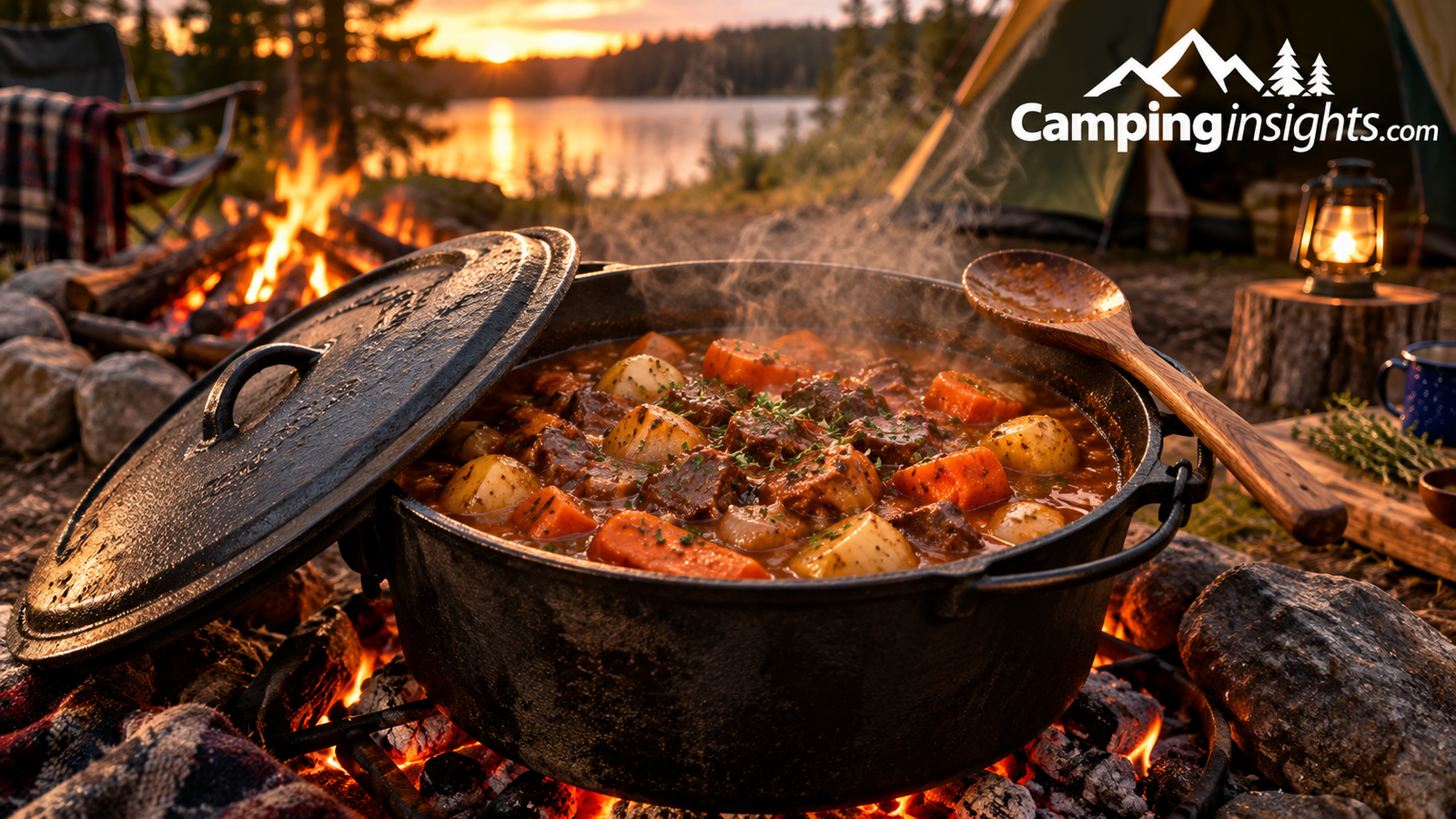
Idea: Dutch oven camp stew
Camp Skillet Fried Rice
Day-old rice, scrambled egg, frozen mixed vegetables, and soy sauce fried together in a single skillet — a fast way to use up leftover rice from a prior night’s dinner. Bring a small bottle of soy sauce and sesame oil specifically for this meal, since they go a long way toward making it taste intentional rather than thrown together.
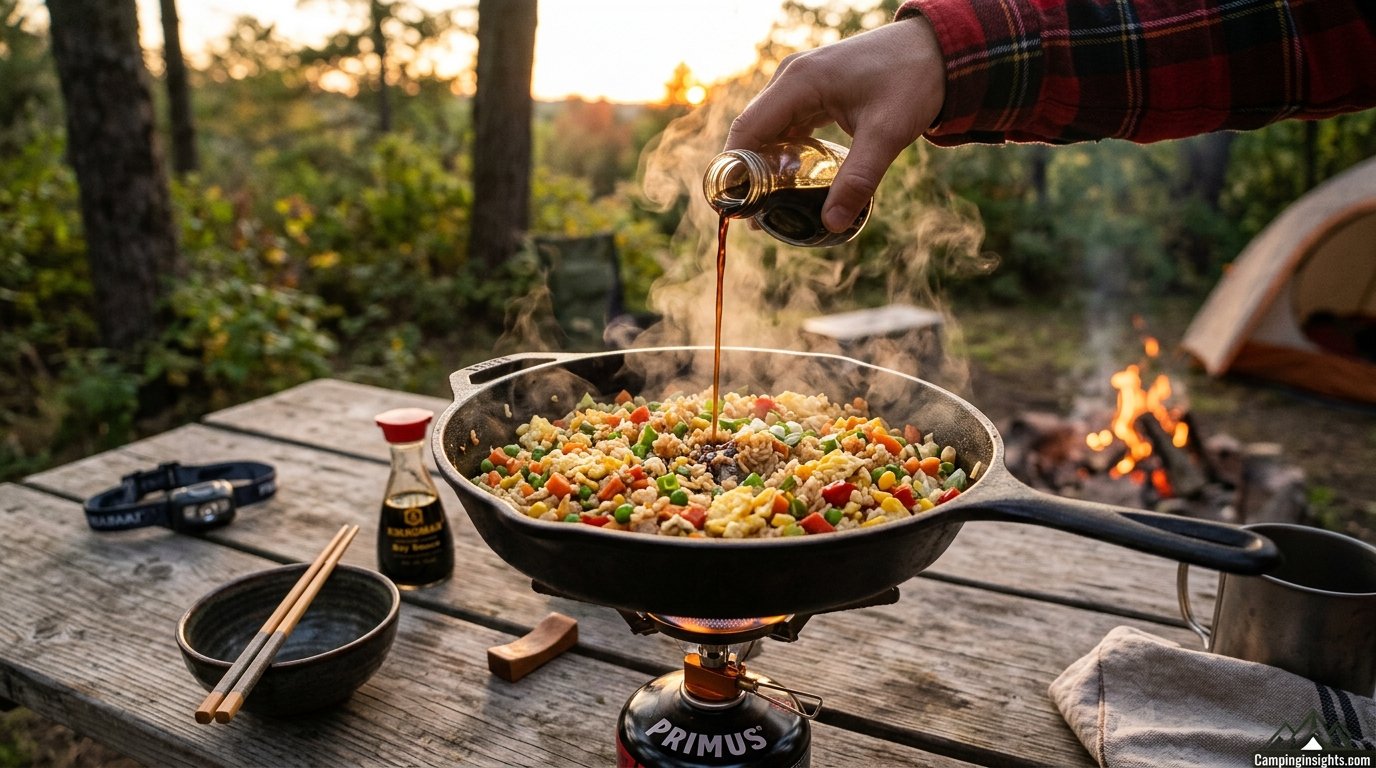
Idea: skillet fried rice
One-Pot Curry with Rice
A jarred or packet curry base simmered with chickpeas, vegetables, and coconut milk, served over rice cooked in the same pot in stages. It’s an easy way to add real variety to a camping menu that otherwise leans heavily on the same few flavors night after night.
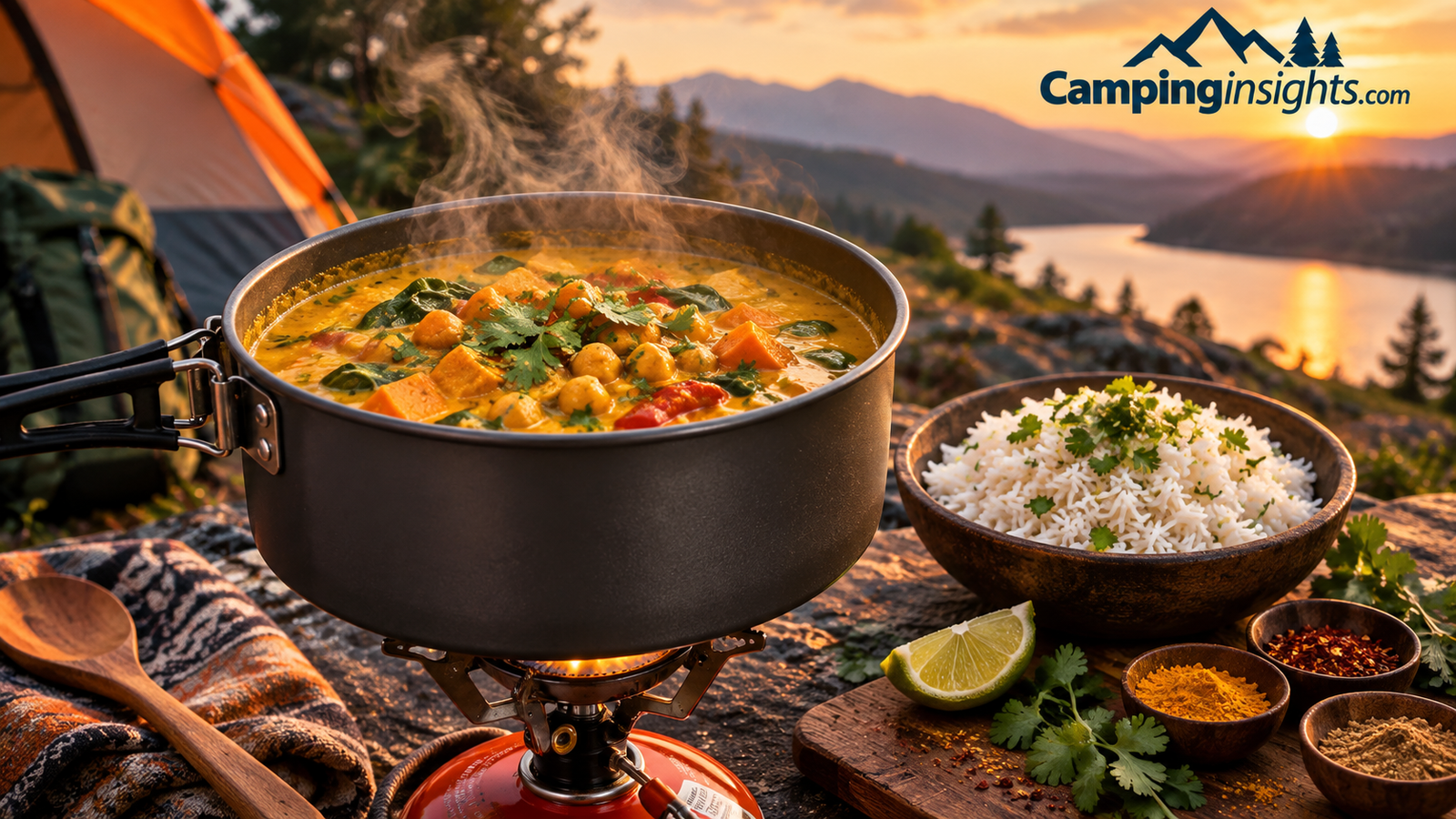
Idea: one-pot curry and rice
One-Pot Cheesy Tortellini
Cheese tortellini simmered directly in a can of diced tomatoes and a splash of cream or milk until the sauce thickens and the pasta is tender. It’s a fast, kid-approved dinner that needs almost no seasoning beyond salt, pepper, and a handful of grated parmesan at the end.
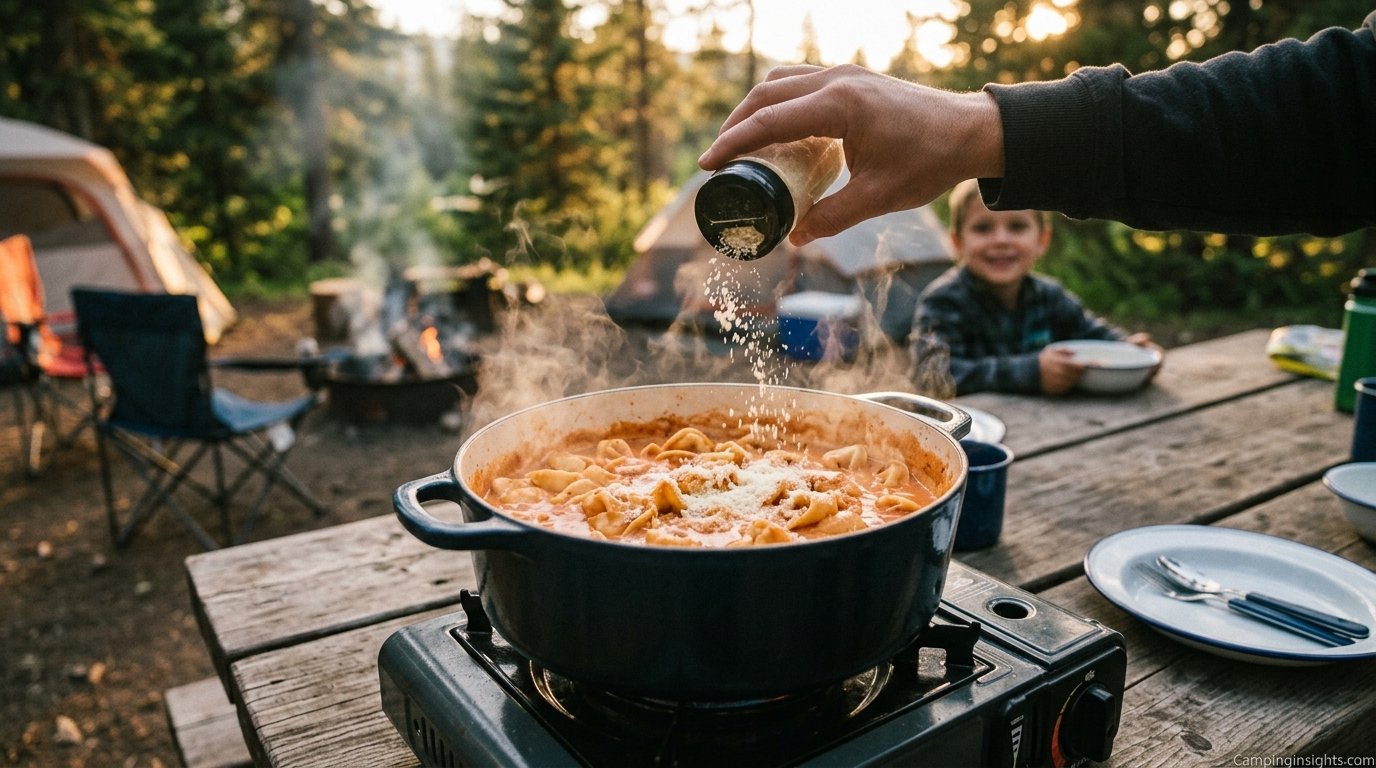
Idea: one-pot cheesy tortellini
One-Pot Sausage and White Bean Soup
Sliced sausage browned first, then simmered with canned white beans, chicken broth, and chopped kale or spinach until everything is warmed through and the greens have wilted. It’s a good option for a colder evening when a lighter pasta dish doesn’t feel like enough.
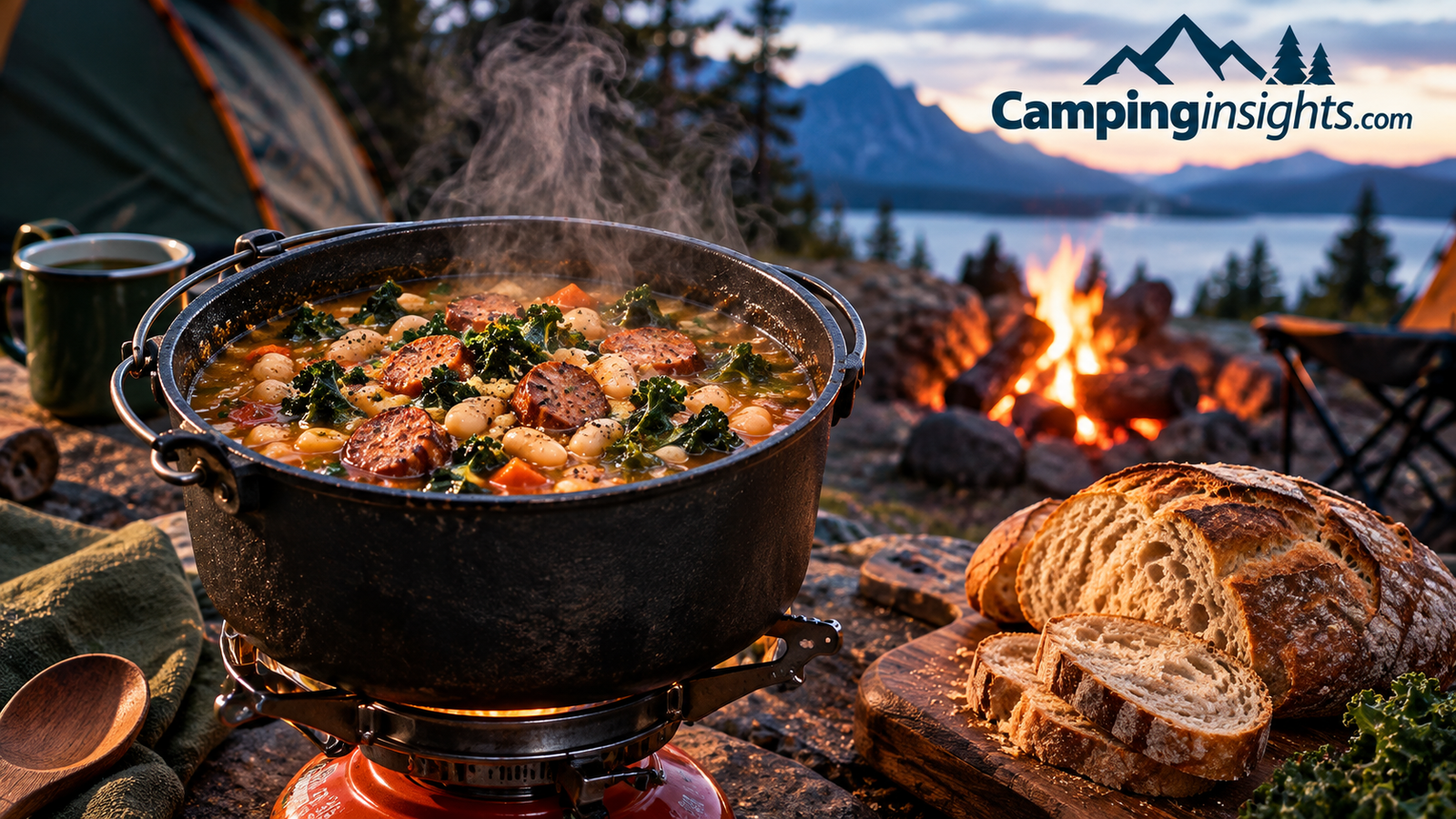
Idea: one-pot sausage and white bean soup
One-Pot Camp Mac and Cheese
Elbow pasta simmered directly in milk and a little extra water until tender, then stirred with shredded cheese off the heat until it melts into a sauce. Stir in cubed ham or crumbled bacon for a heartier version, or keep it simple for a fast, kid-approved dinner.
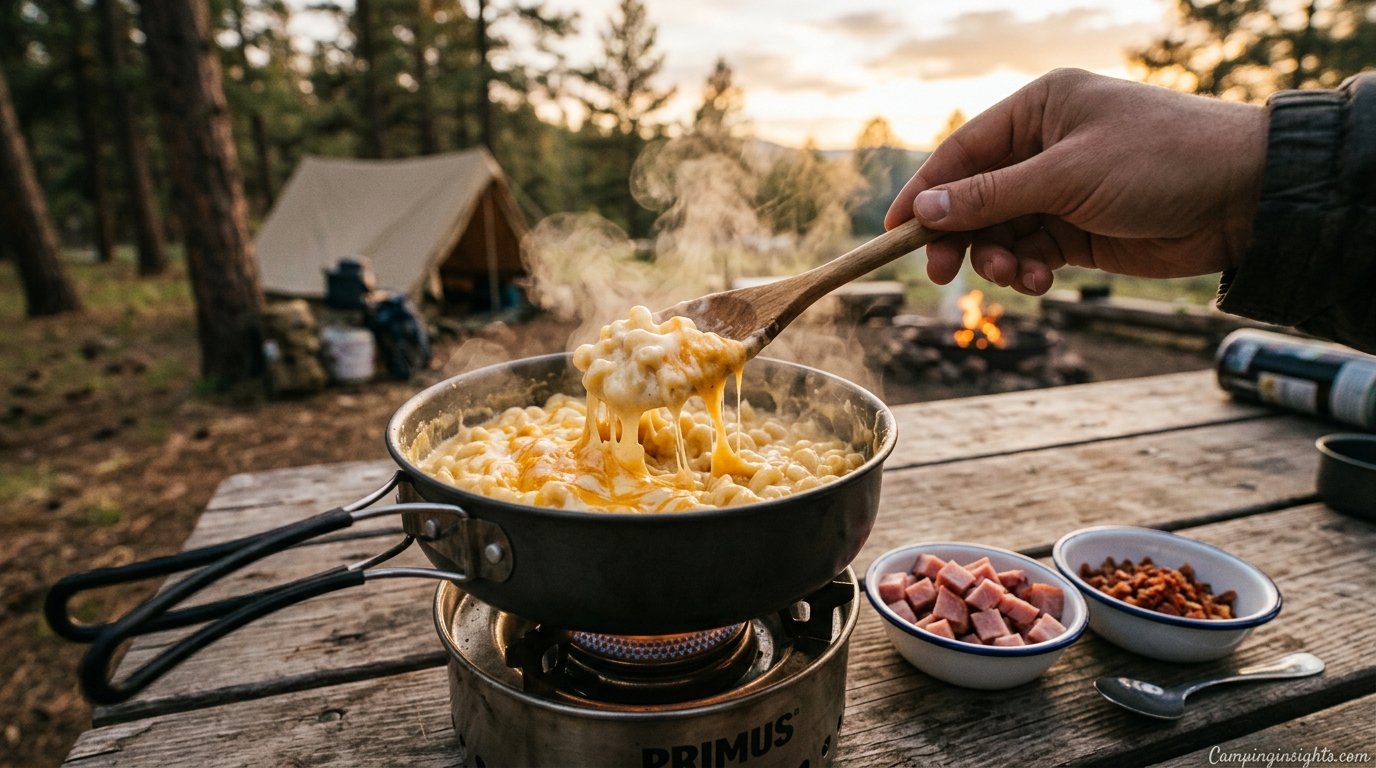
Idea: one-pot camp mac and cheese
One-Pot Jambalaya
Rice simmered with sausage, diced chicken, bell pepper, onion, and a Cajun-style seasoning blend until the rice is tender and everything has absorbed the flavor of the broth. It’s a one-pot meal that tastes like it took far longer than it actually did, which makes it a good choice for a night you want dinner to feel a little special.
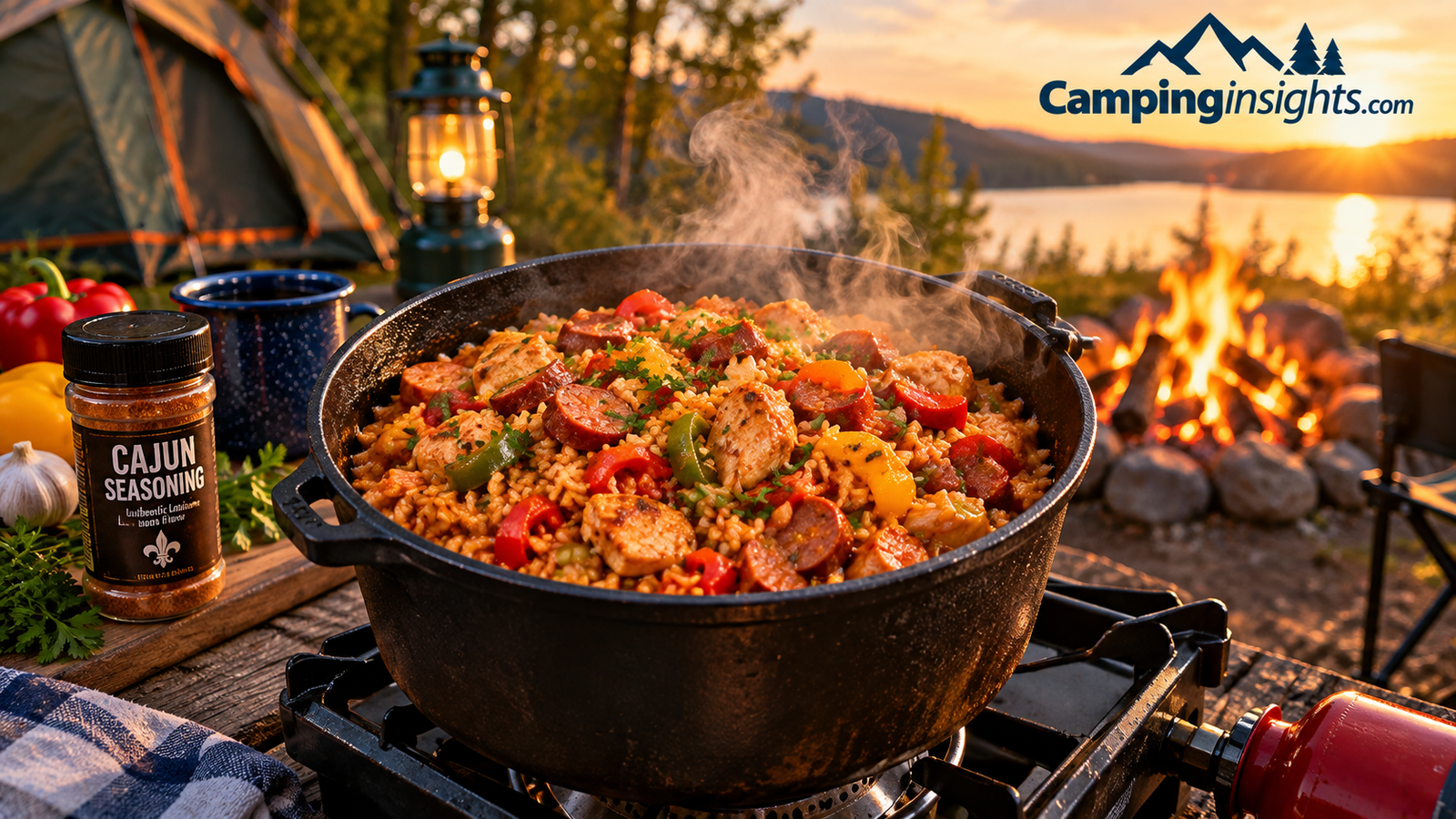
Idea: one-pot jambalaya
One-pot meals also make it far easier to feed a large group, since scaling up usually just means a bigger pot and slightly more of everything rather than adding extra cookware or cook time. That’s part of why they show up so often on group camping trips and family reunions at the campground.
| Cooking Method | Best For | Cleanup | Gear Needed |
|---|---|---|---|
| Foil packets | Simple, hands-off dinners | Minimal — foil is disposable | Coals or grate, heavy-duty foil |
| One-pot stove meals | Hearty dinners, any weather | One pot to wash | Two-burner stove, one pot |
| Campfire/skewer cooking | Interactive, social meals | Low — mostly skewers | Established fire, skewers or grate |
| No-cook meals | Lunches, hot days, rainy days | None | Cooler only |

A cast iron Dutch oven covers chili, stew, and even camp bread in one piece of gear — it’s the single most versatile pot for one-pot camping meals.
Shop Dutch Ovens →6. Backpacking & Lightweight Trail Food
Backpacking food ideas answer a different question than car camping food: not “what tastes good” but “what’s worth the weight.” Every ounce matters when it’s on your back for miles, so these camping food ideas lean on dehydrated, freeze-dried, and calorie-dense options that pack small. If you’re planning a longer trail trip, make sure your camping backpack has room and weight capacity budgeted for food, not just gear, since a few days of meals can add more bulk than people expect.
Freeze-Dried Meal Pouches
Just-add-boiling-water meals that pack flat and weigh almost nothing. Not gourmet, but reliable, shelf-stable, and fast after a long day of hiking — and the pouch itself serves as the bowl, which means one less thing to pack and one less thing to wash.
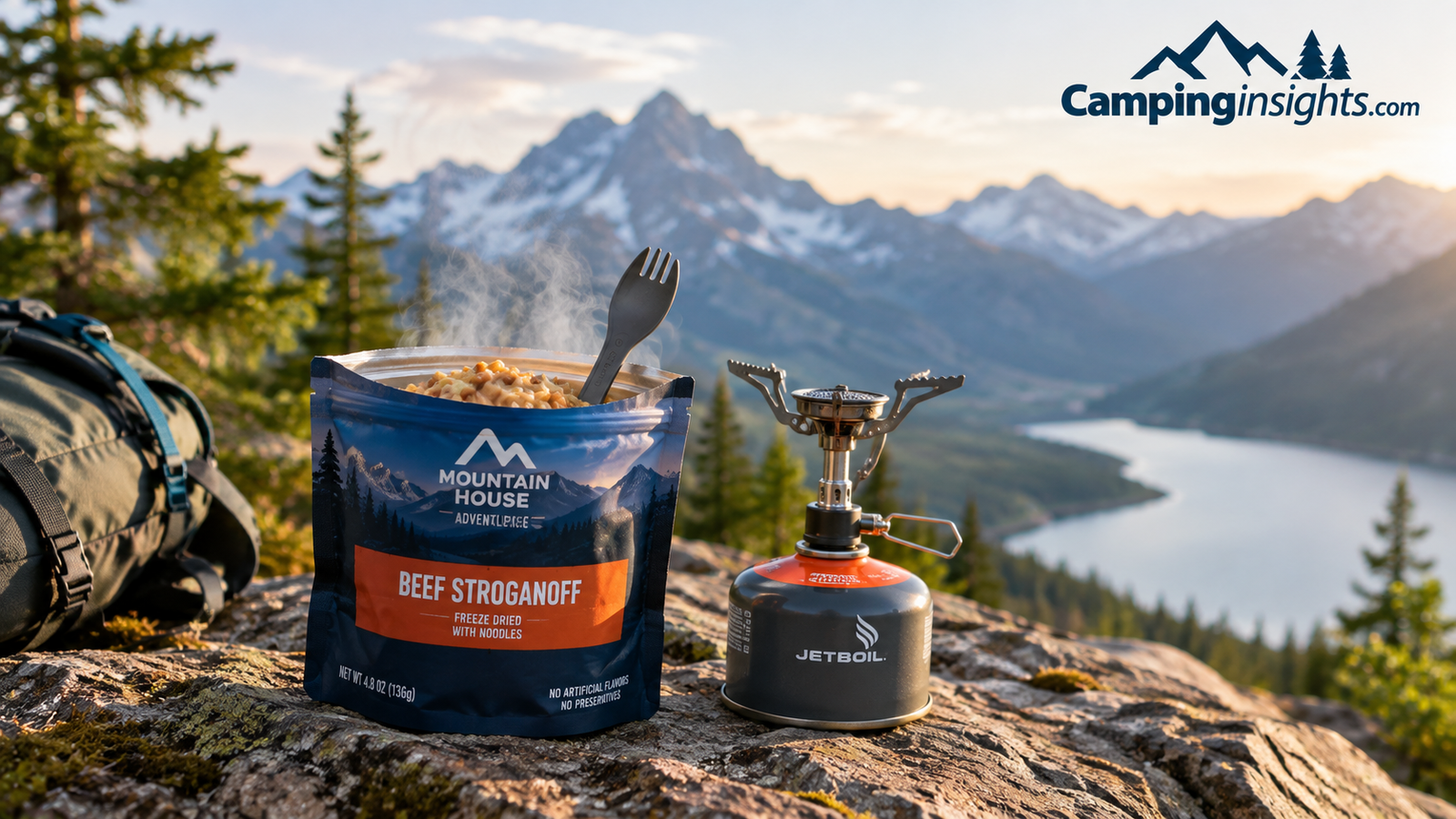
Idea: freeze-dried meal pouches
Instant Ramen, Upgraded
A basic ramen brick becomes a real meal with the addition of dehydrated vegetables, a spoon of peanut butter, and a packet of tuna — all lightweight, all shelf-stable. The peanut butter sounds unusual but adds fat and protein that plain ramen is otherwise missing entirely.
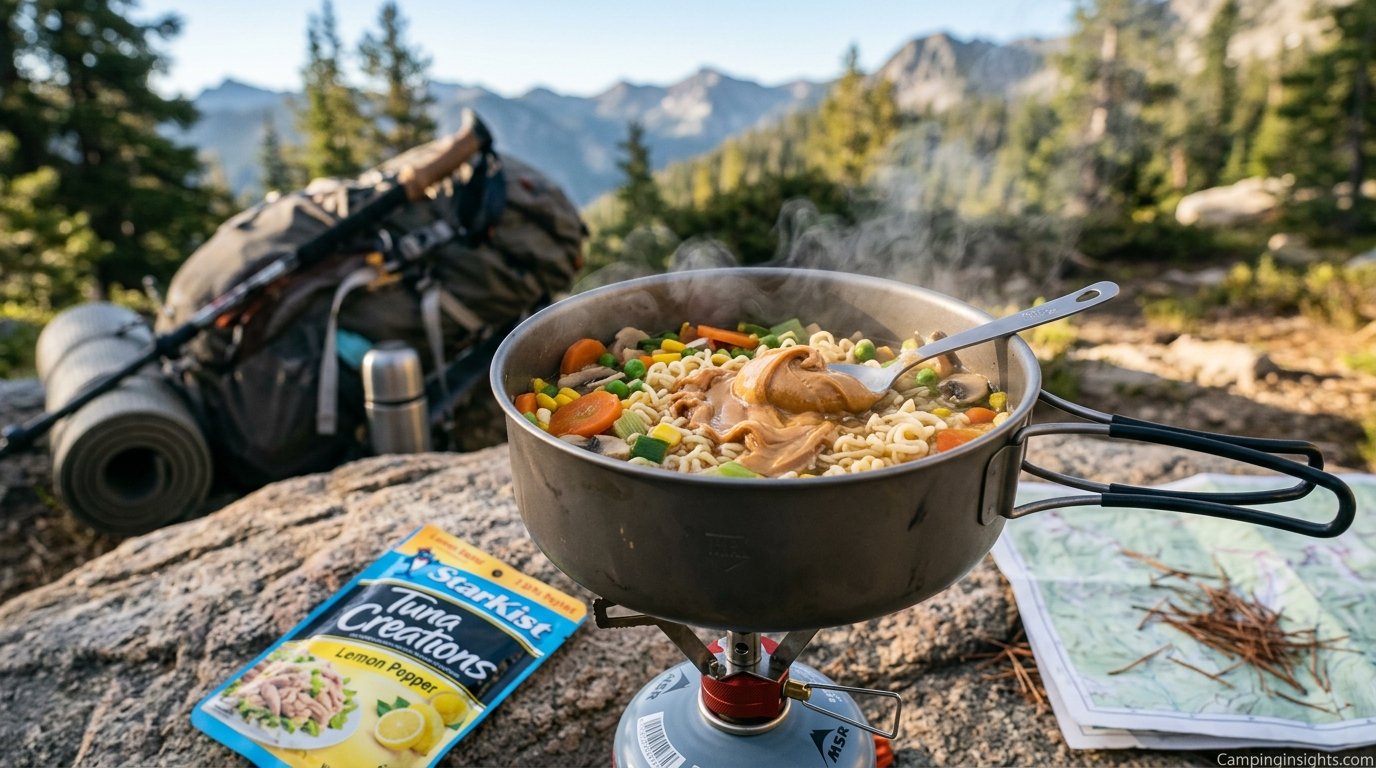
Idea: upgraded instant ramen
Tortillas Instead of Bread
Tortillas don’t crush the way bread does. Filled with peanut butter, jerky, or shelf-stable cheese, they make a fast lunch that survives being packed at the bottom of a bag, and they hold up for several days on the trail without going stale the way sliced bread does.
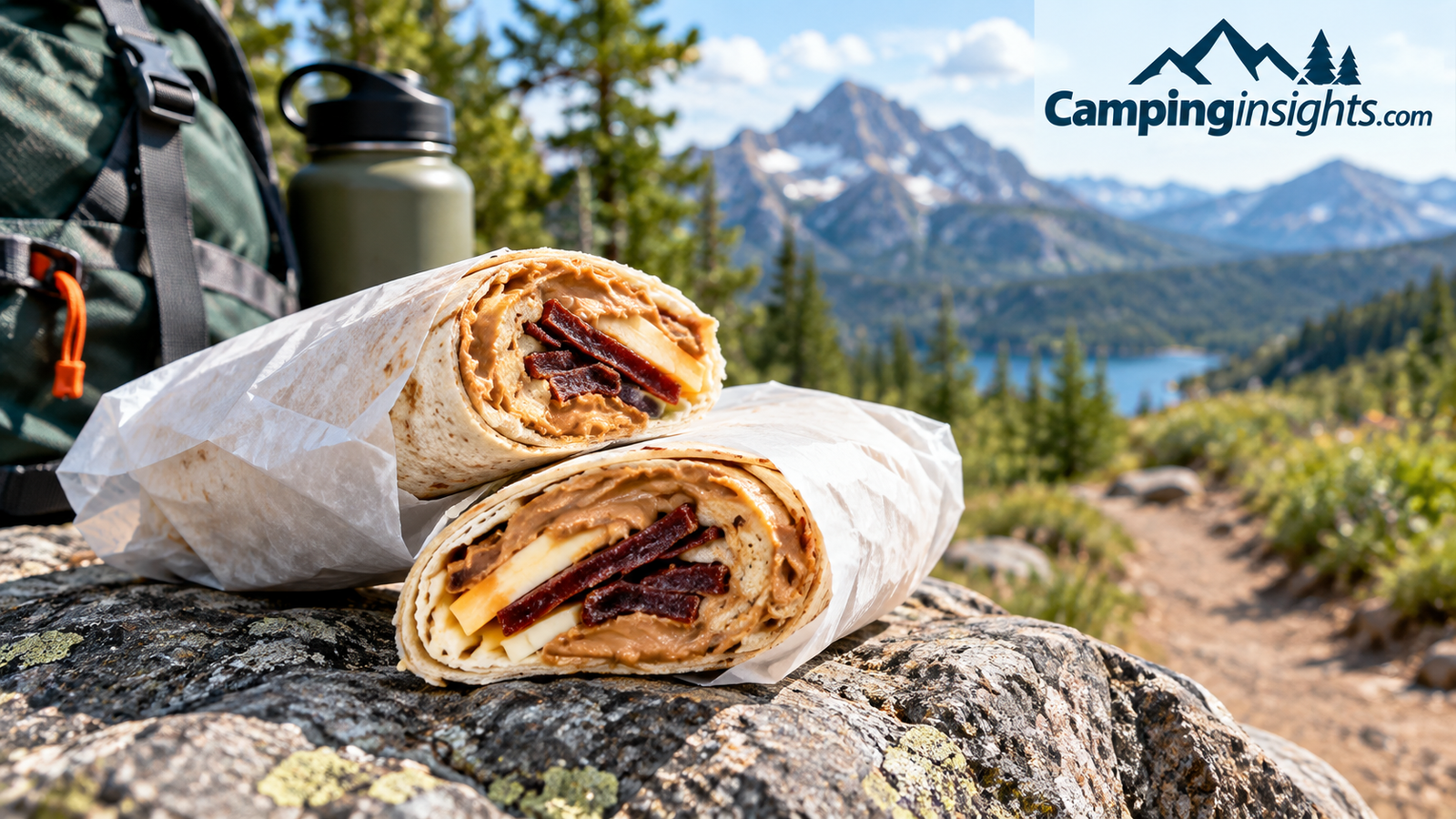
Idea: tortilla trail wraps
Energy Bites, Homemade
Oats, peanut butter, honey, and mini chocolate chips rolled into balls at home and carried in a bag — dense, filling, and needs no cooking or water at all. They hold up well in a warm pack for several days, making them one of the most convenient trail snacks to prep in bulk before a trip.
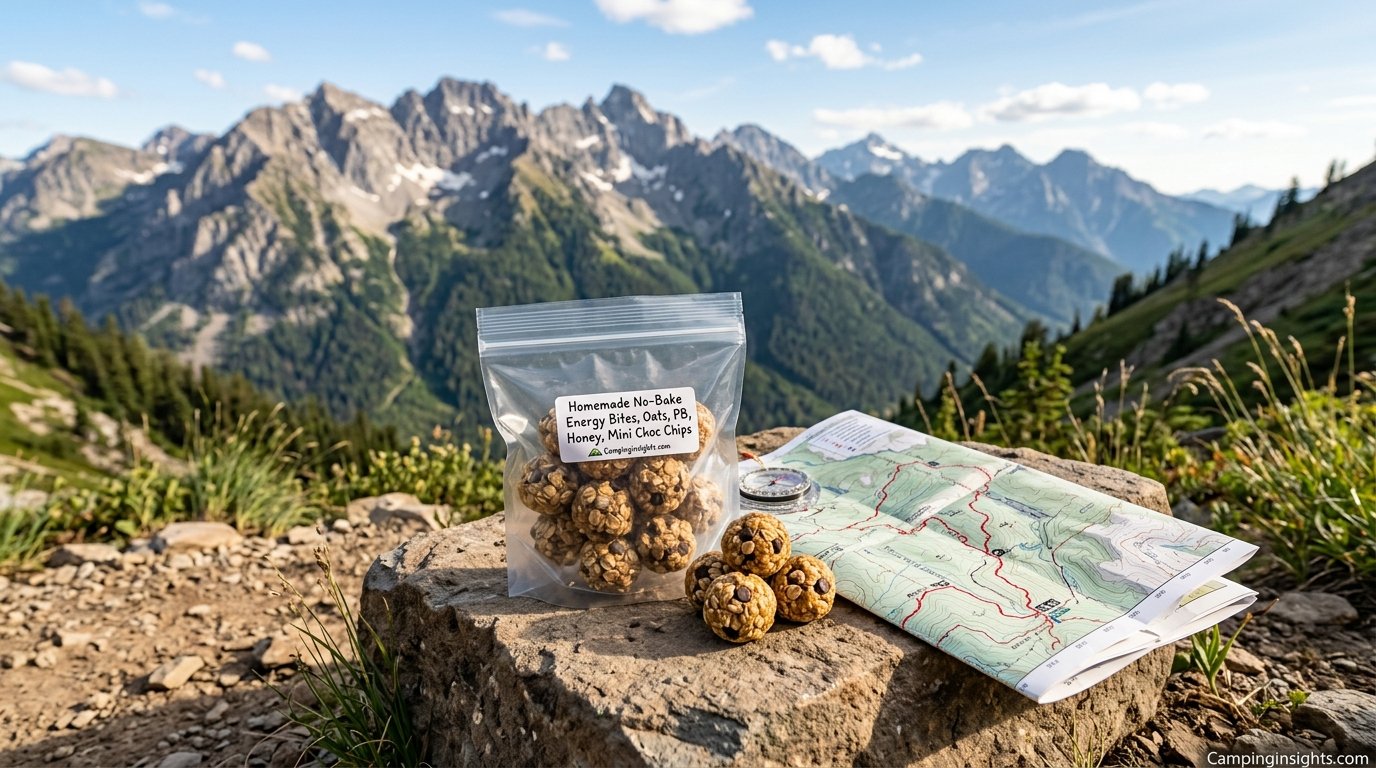
Idea: no-bake energy bites
Instant Mashed Potatoes with Bacon Bits
Instant potato flakes rehydrate in minutes with hot water and pack real-food comfort into almost no weight — add shelf-stable bacon bits and dried chives for flavor. It’s one of the most satisfying trail dinners for the amount of pack space it takes up.
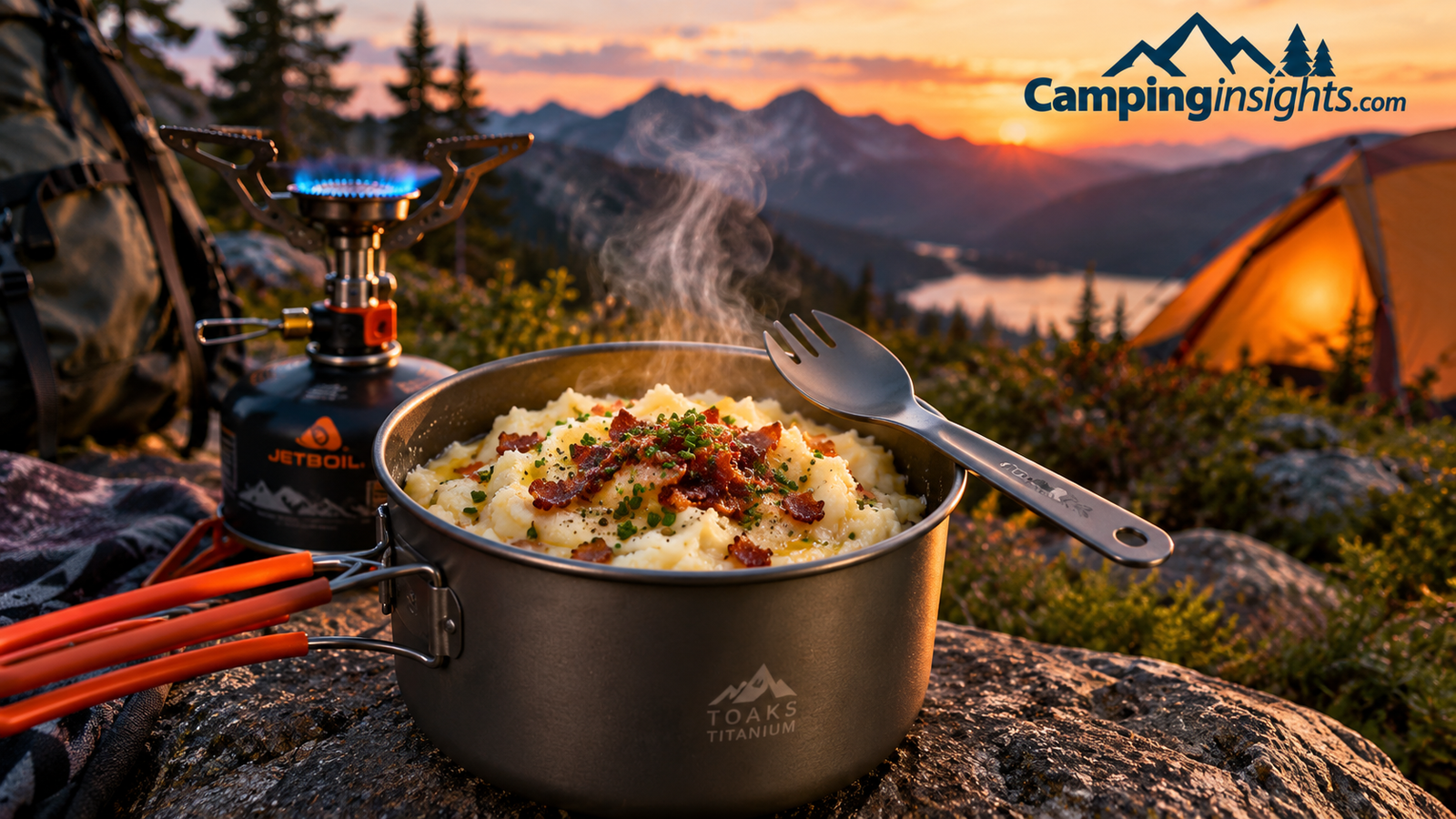
Idea: instant mashed potatoes
Dehydrated Refried Beans and Cheese Burrito
Dehydrated refried bean flakes rehydrate with hot water in a few minutes and, spread onto a tortilla with a handful of shelf-stable cheese, make a filling and protein-heavy trail dinner. It travels well since the dehydrated beans weigh a fraction of their canned equivalent, and the tortilla holds up far better in a pack than bread would over several days.
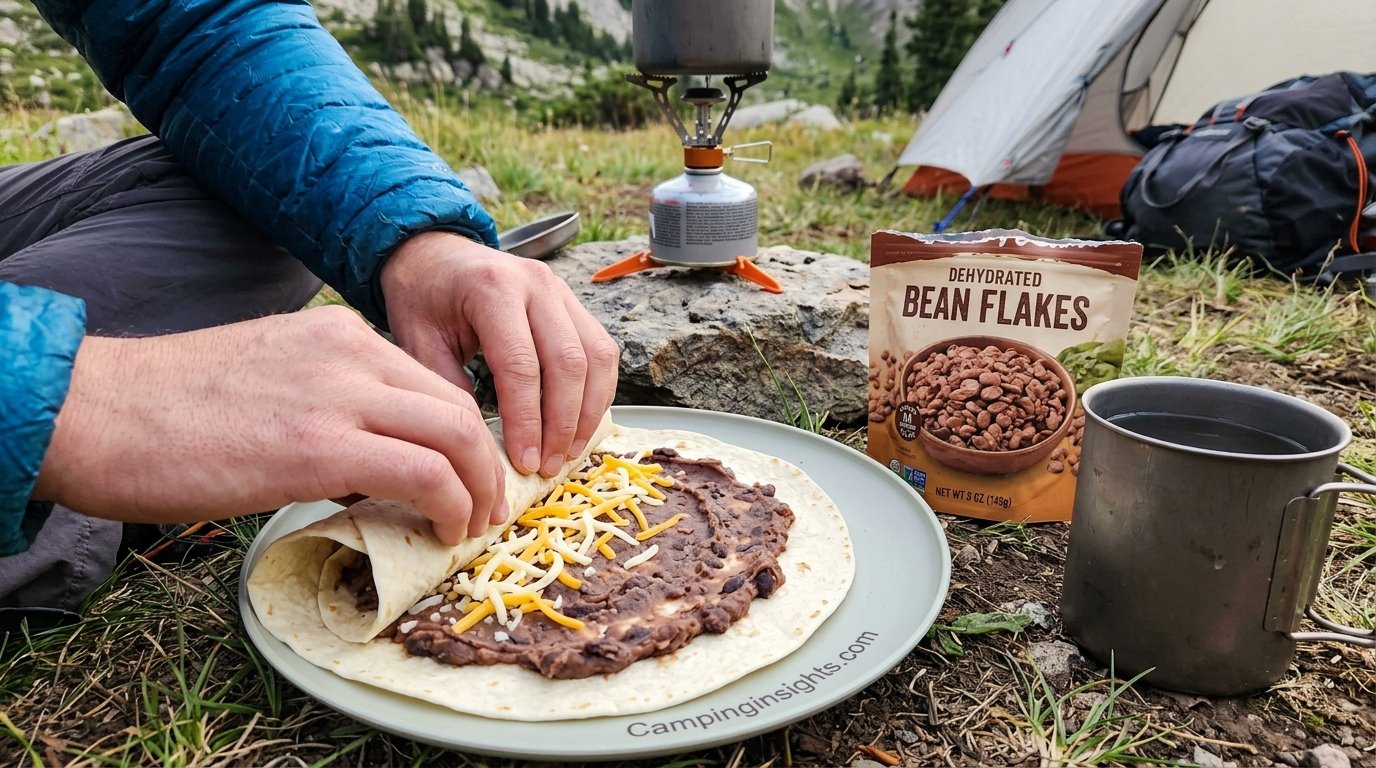
Idea: dehydrated refried bean burrito
Jerky and Dried Fruit Mix
A simple combination of beef or turkey jerky with dried apricots, mango, or apple rings gives a good balance of protein, sugar, and salt for sustained trail energy. It needs zero preparation and can be portioned into daily bags before the trip so you always know exactly how much is left.
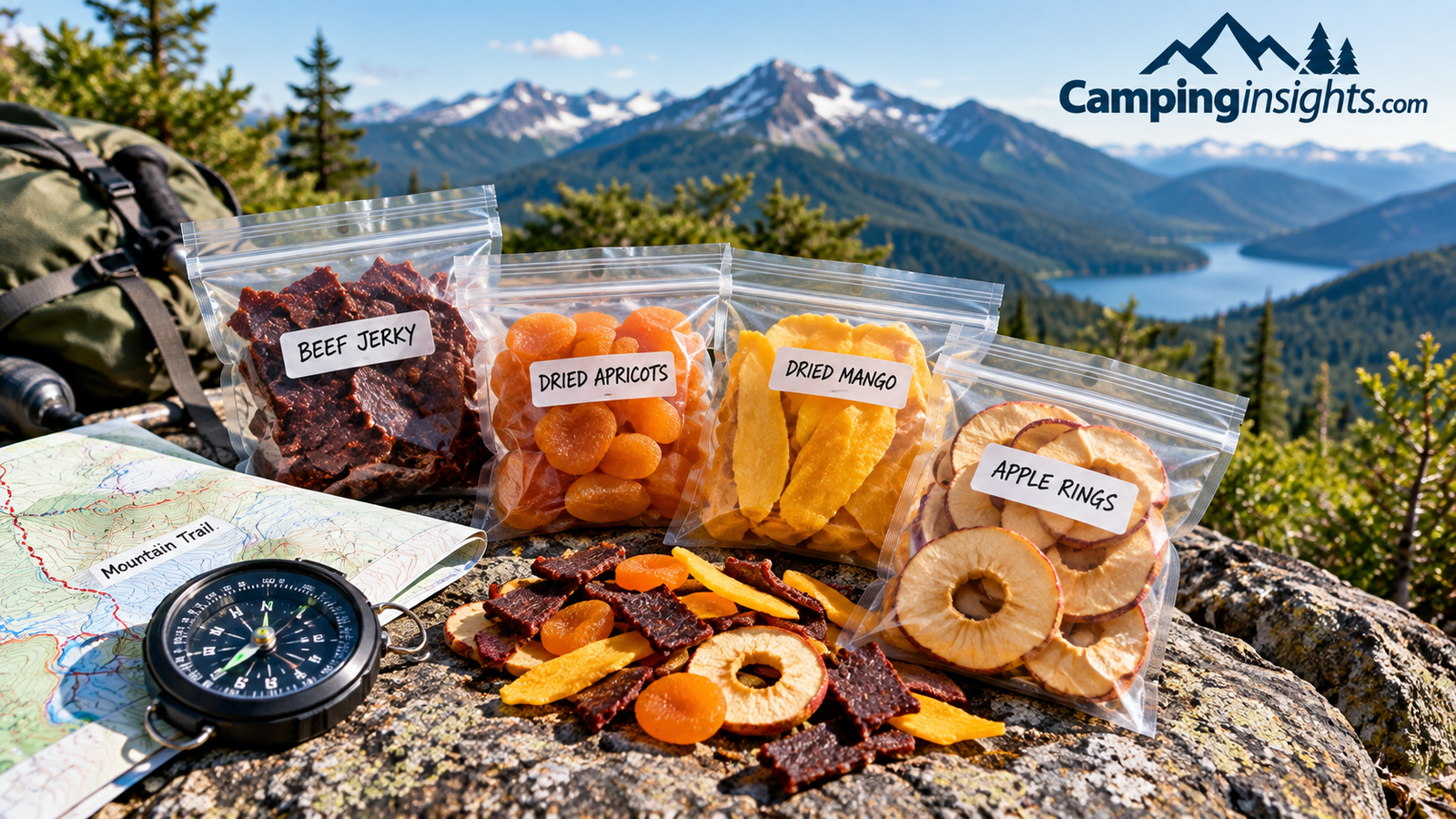
Idea: jerky and dried fruit mix
Couscous with Olive Oil and Sun-Dried Tomato
Couscous rehydrates almost instantly in boiling water, unlike rice, which makes it one of the fastest hot trail dinners available. Stirring in a little olive oil, chopped sun-dried tomato, and a pinch of parmesan turns a plain starch into something that actually tastes intentional after a long day on the trail.
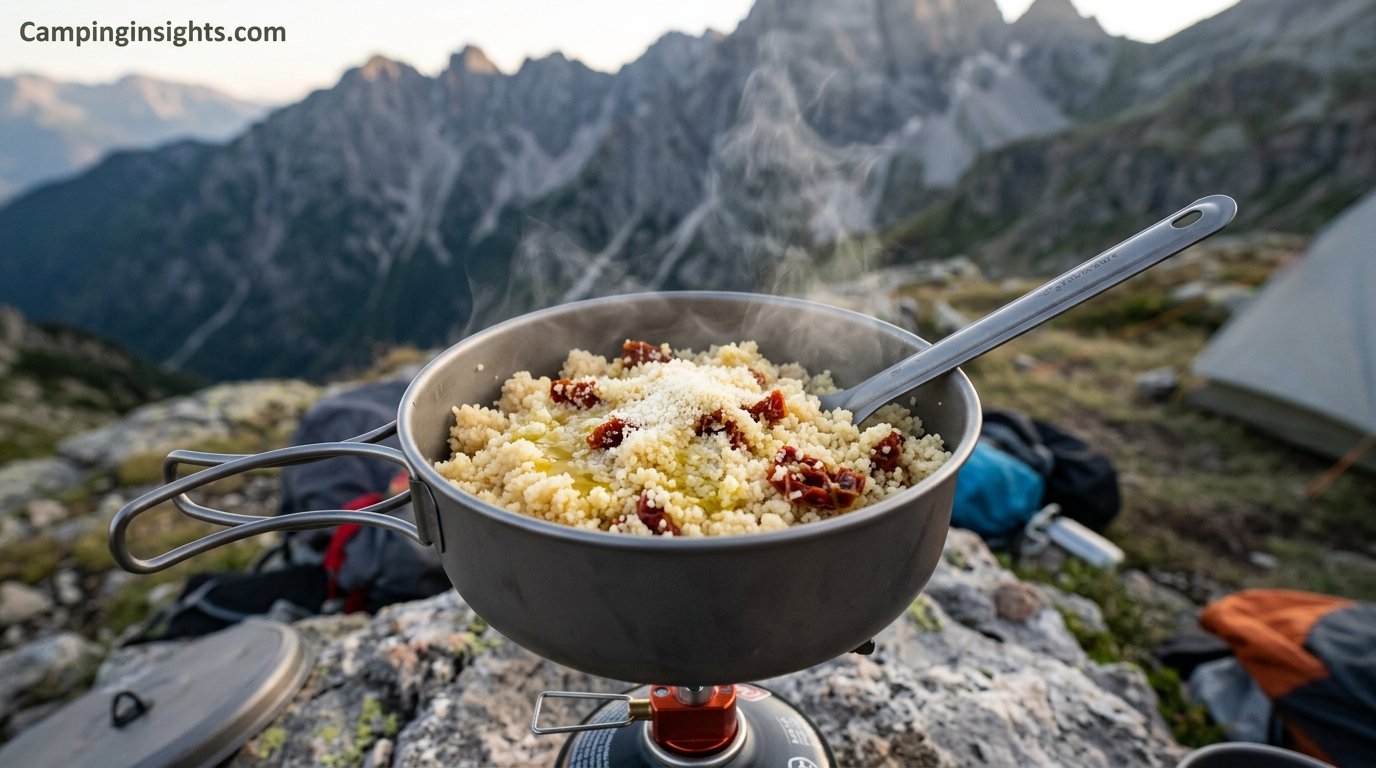
Idea: couscous with sun-dried tomato
Peanut Butter and Honey Tortilla Wraps
A trail lunch staple for a reason — peanut butter and honey spread on a tortilla and rolled tight travels well, needs no refrigeration, and delivers a dense mix of protein, fat, and quick sugar exactly when a midday energy dip tends to hit.
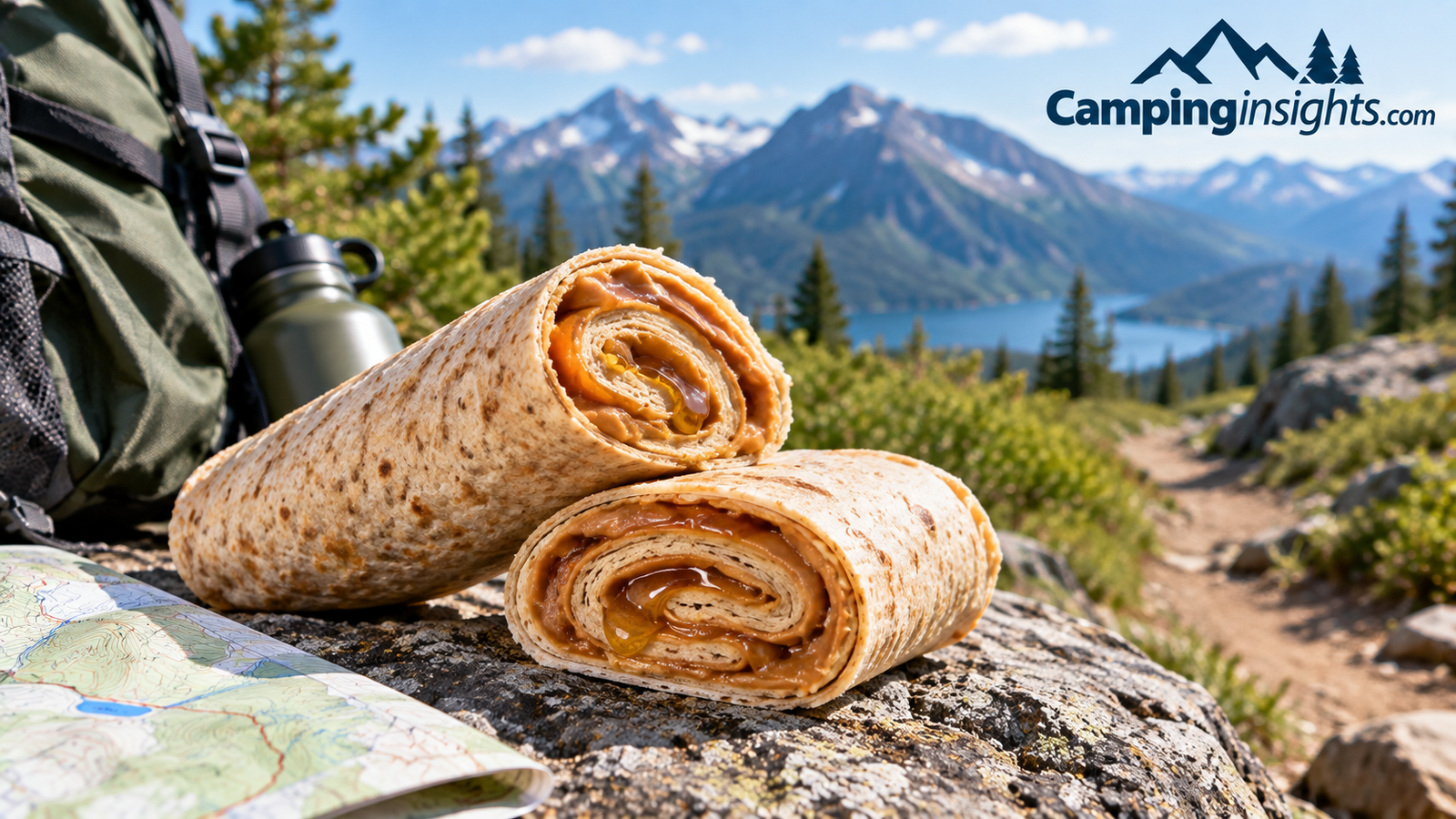
Idea: peanut butter and honey wraps
Calorie density matters as much as weight on longer backpacking trips — a food that’s light but low in calories doesn’t actually solve the problem, since you’ll need to carry more of it to cover the same energy needs. Nut butters, dried meats, and anything with a meaningful fat content tend to offer the best calories-per-ounce ratio, which is why they show up so often in the ideas above.
Repackage Everything Before You Leave
Store-bought packaging is rarely built with pack weight or space in mind — cardboard boxes, excess plastic, and half-empty bags all add bulk you don’t need. Before a backpacking trip, transfer meals and snacks into lightweight resealable bags, labeled with a permanent marker for the meal name and any cook instructions. This single habit typically saves more pack space than any individual food swap, and it also means less trash to carry out at the end of each meal.

A lightweight canister stove boils water in under two minutes, which is really all most backpacking food ideas above actually need.
Shop Backpacking Stoves →7. Campfire & Skewer Cooking Ideas
Some of the best camping food ideas aren’t really about the food at all — they’re about the activity of cooking together around a fire. Skewer meals fit that role perfectly since everyone builds and cooks their own, turning dinner into part of the evening’s entertainment rather than a chore to get through before the fun starts.
Classic Campfire Kebabs
Cubed meat, bell pepper, onion, and mushroom threaded onto skewers and rotated over coals — pre-cube everything at home so assembly at camp takes minutes. Rotating the skewers regularly is the real key to even cooking, since one side left too long over hot coals will scorch before the rest catches up. Marinating the meat overnight in the cooler before the trip adds flavor without any extra work once you’re actually at the campsite.
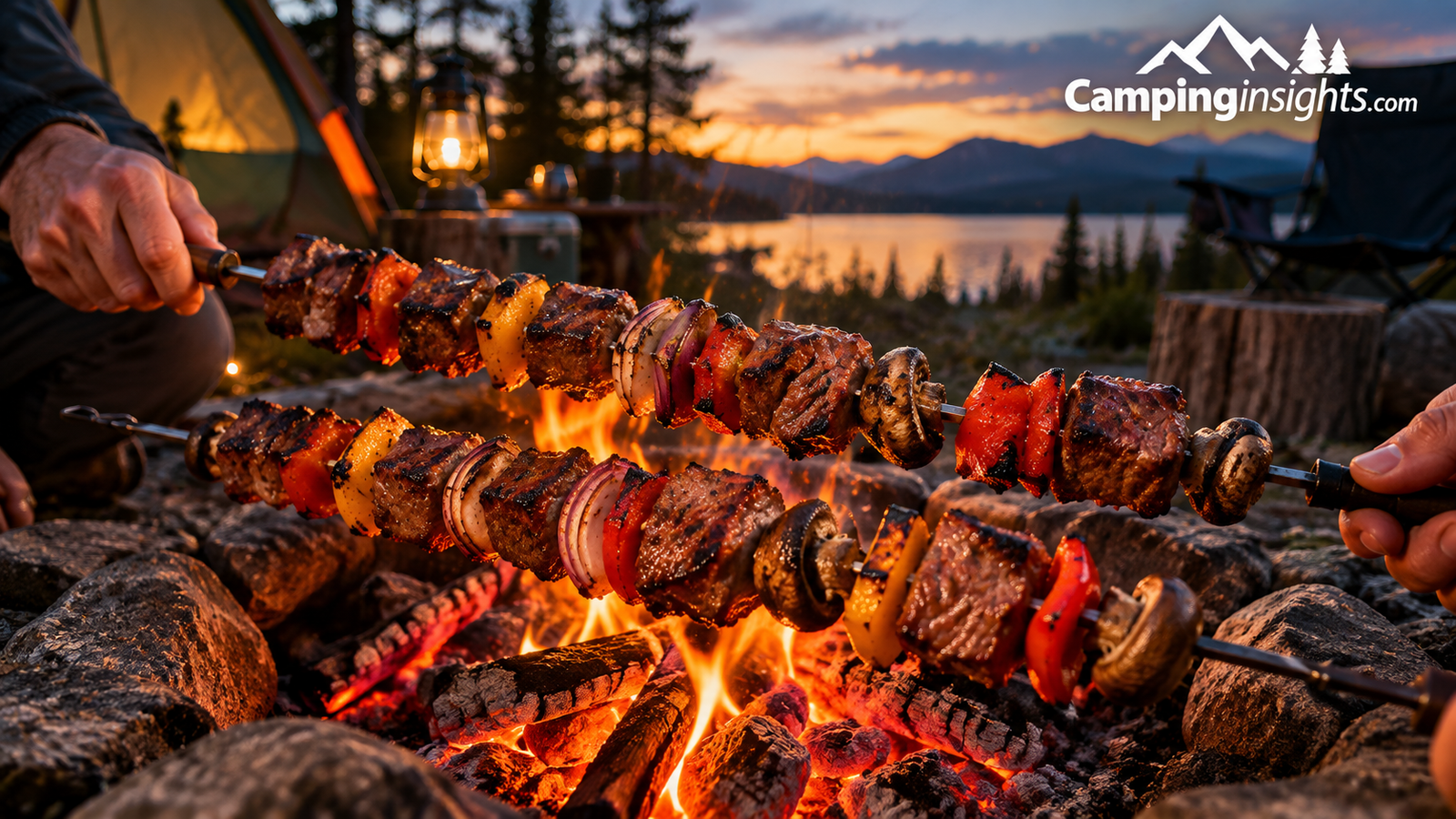
Idea: campfire kebabs
Hot Dogs and Sausages Two Ways
The camping classic still earns its place — but split a batch between plain roasted and a foil-wrapped “explosion dog” stuffed with cheese and wrapped in bacon for variety. The bacon-wrapped version needs slightly longer over the coals to render the bacon properly, so give it a few extra minutes compared to a plain hot dog.
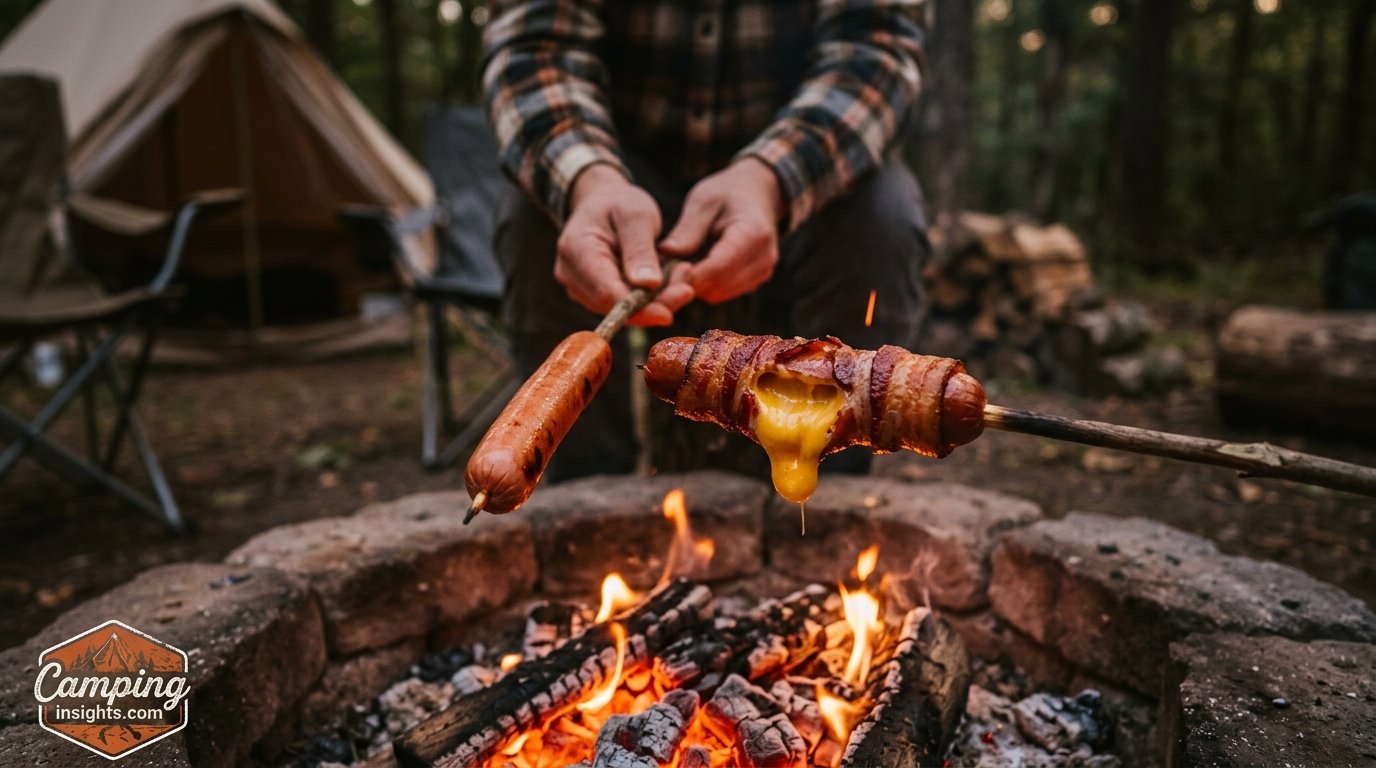
Idea: campfire hot dogs, two ways
Campfire Nachos
A foil tray layered with chips, cheese, and pre-cooked beans or meat, set near the coals until the cheese melts, then topped with salsa and sour cream straight from the cooler. Keep the tray slightly away from direct flame so the chips underneath don’t burn before the cheese on top has fully melted.
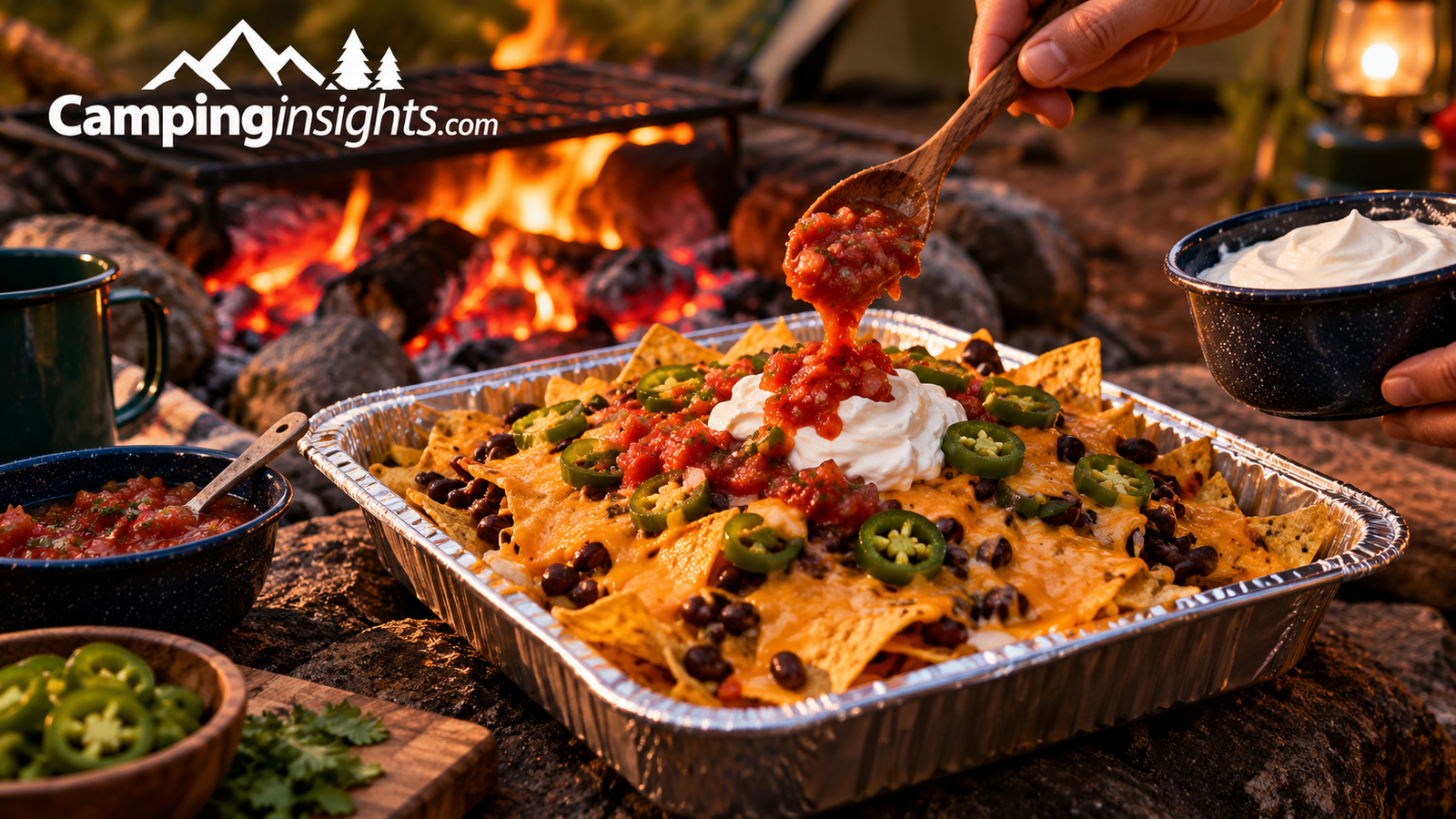
Idea: campfire nachos
Grilled Corn on the Cob
Corn in its husk, soaked briefly in water, then set directly on the coals for 15 minutes — the husk steams the corn from the inside and peels away easily once cooked. A finishing brush of butter and a pinch of chili powder or lime salt turns a simple side into something people remember.
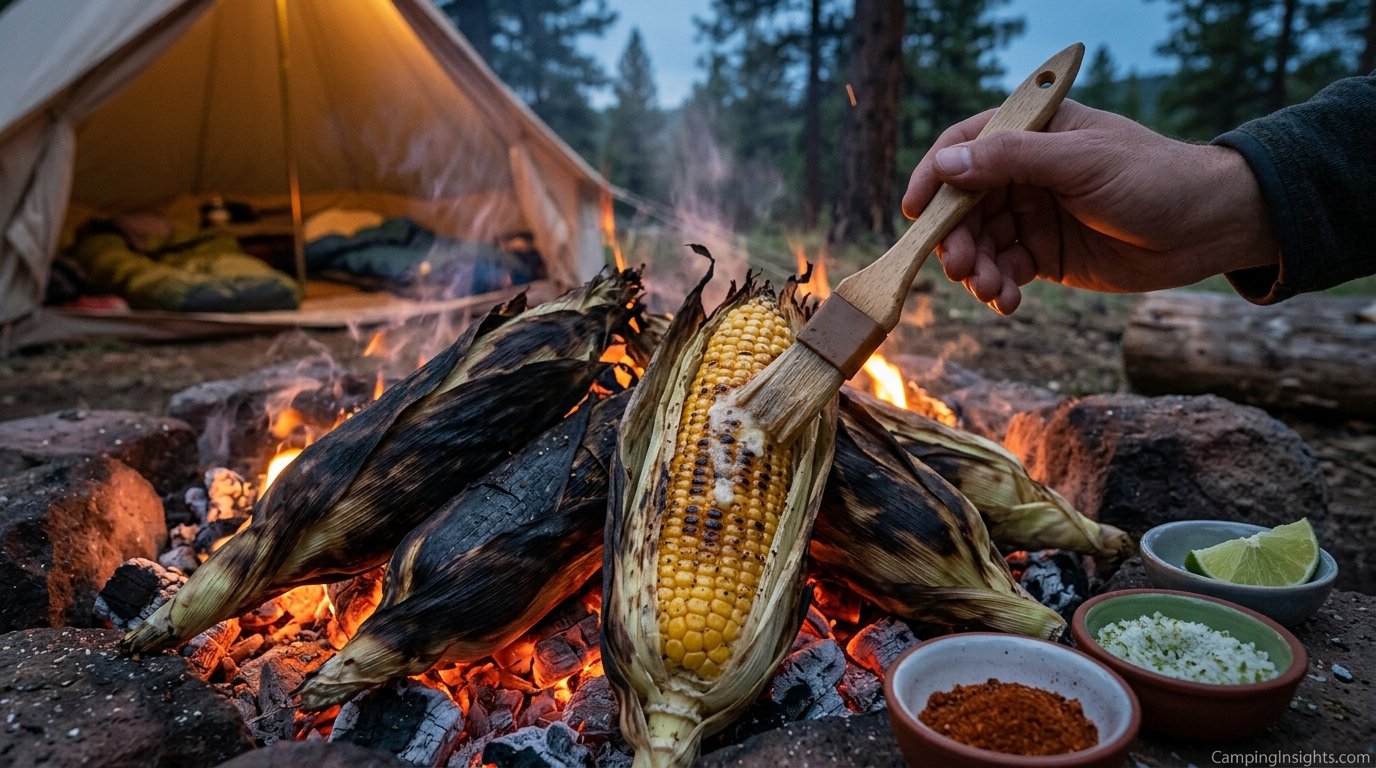
Idea: grilled corn on the cob
Campfire Grilled Cheese
Buttered bread and cheese pressed and toasted in a pie iron or directly over a grate on a small camp skillet. It’s a fast, comforting option after a cold or wet day when nobody wants to wait on anything complicated, and it pairs well with a can of tomato soup warmed in the same pot.
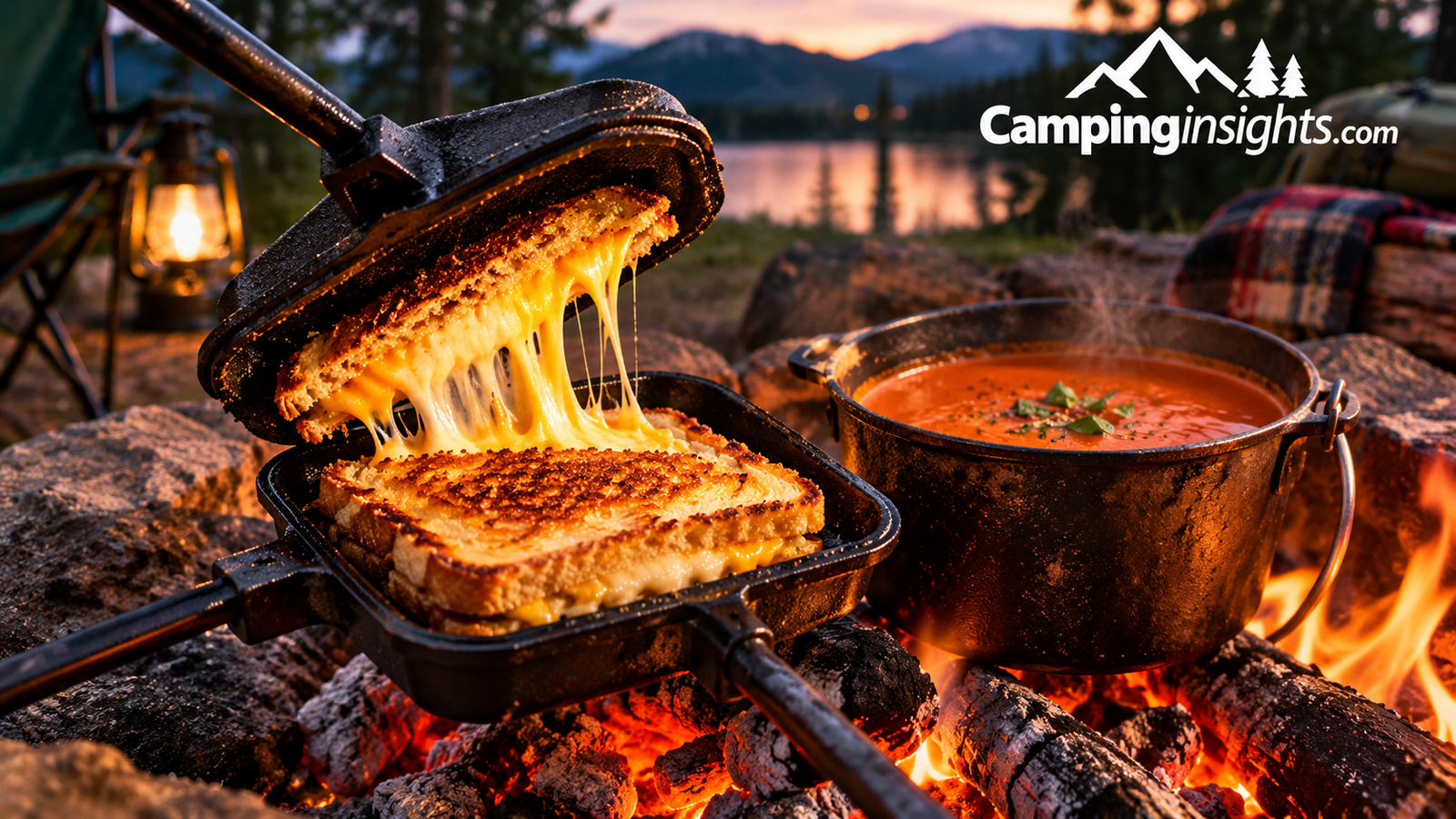
Idea: campfire grilled cheese
Campfire Baked Potatoes
Whole potatoes wrapped tightly in foil and buried in hot coals for 45–60 minutes, then split open and loaded with butter, cheese, bacon bits, and sour cream. It’s a slower campfire food, but nearly hands-off once the potatoes are in the coals, which makes it easy to pair with a faster-cooking protein alongside it.
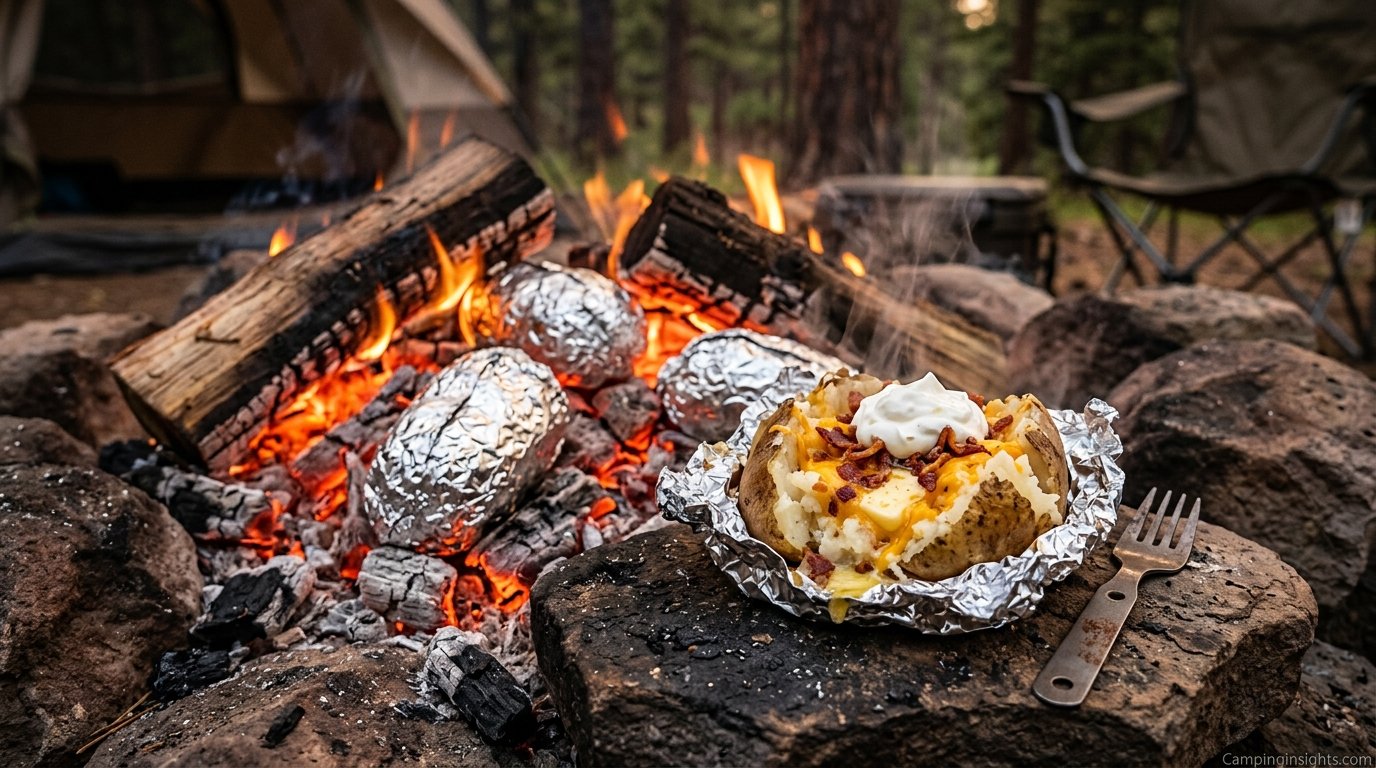
Idea: campfire baked potatoes
Grilled Shrimp Skewers with Garlic Butter
Shrimp threaded onto skewers, brushed with melted garlic butter, and grilled just a few minutes per side until pink and slightly charred at the edges. Shrimp cooks fast enough that this works well as a starter while a slower main dish finishes over the same fire.
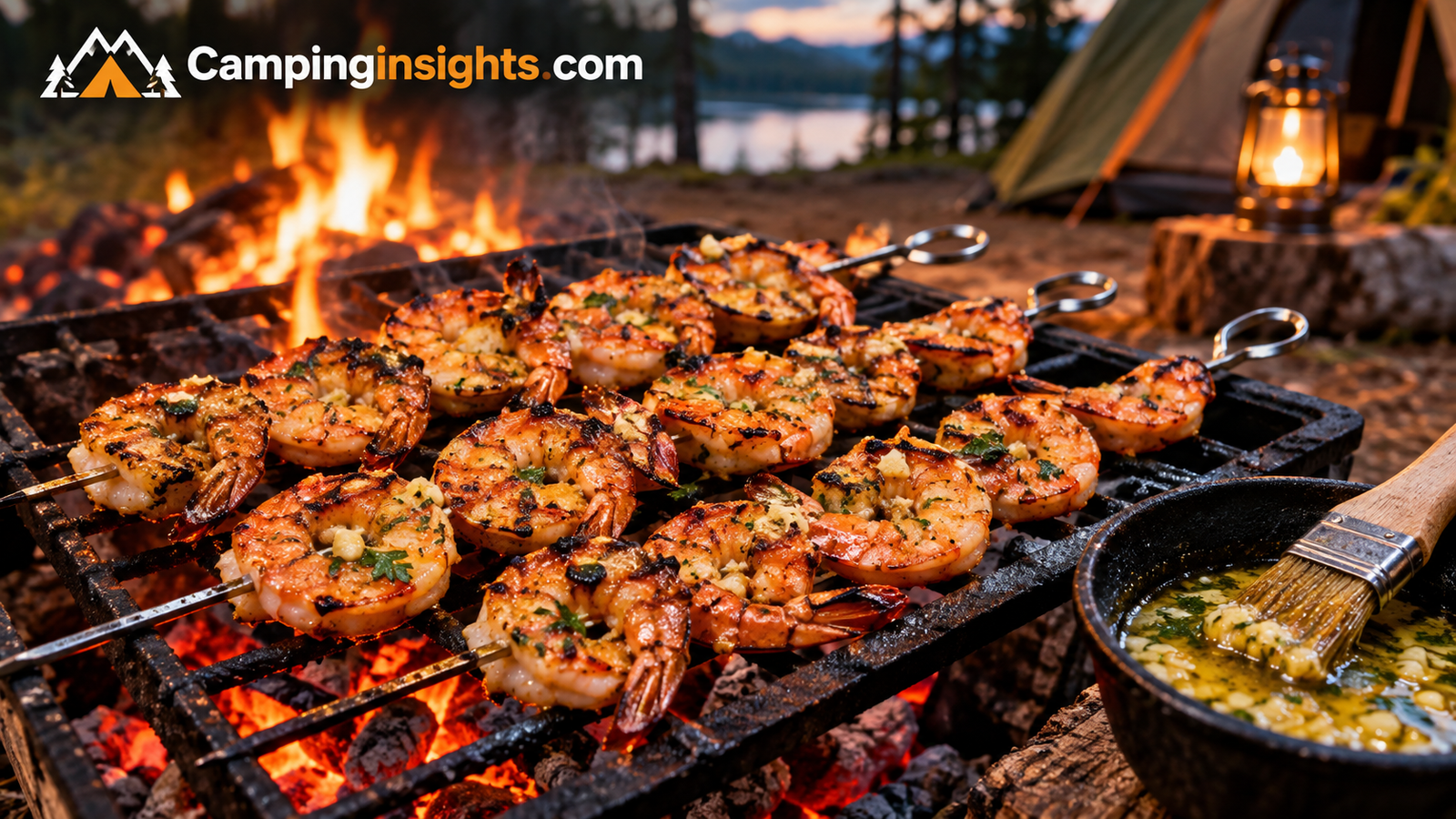
Idea: garlic butter shrimp skewers
A quick note on fire etiquette while cooking: keep a bucket of water or dirt nearby whenever you’re cooking directly over open flame, avoid leaving skewers or foil trays unattended, and always check current fire restrictions for the area before planning any meal that depends on an open fire or coals.
Simple Sides to Round Out a Campfire Meal
Campfire mains are often the star of the evening, but a quick side keeps the meal from feeling one-note. A bag of chips, a pre-made coleslaw, or a simple sliced tomato and cucumber salad dressed with a little oil and vinegar all take under five minutes to set out and don’t compete with the fire for space or attention. Bread rolls warmed briefly at the edge of the fire are another easy addition that makes a skewer dinner feel more complete.

Reusable metal skewers beat wooden ones for camping — no soaking required and no risk of them burning through halfway over the fire.
Shop Skewer Sets →8. Kid-Friendly Camping Food Ideas
Camping food ideas for kids work best when they’re interactive, forgiving of mess, and don’t require the child to like anything unfamiliar on the first try. The goal isn’t necessarily nutrition-first cooking — it’s getting everyone fed with the least amount of friction possible after a long day outdoors.
Build-Your-Own Pizza Pockets
Tortillas folded around sauce, cheese, and toppings, then cooked in a pie iron over the fire until crisp.
Dinosaur Egg Oatmeal
A chocolate egg hidden in a bowl of oatmeal that “hatches” as they eat — a small trick that gets picky eaters through breakfast.
Ants on a Log, Trail Version
Celery, peanut butter, and raisins pre-assembled at home for a familiar, no-mess snack.
Mini Marshmallow Skewers
Kid-safe roasting sticks with mini marshmallows for a lower-stakes version of the classic s’more roast.
Cheese Quesadilla Triangles
Pre-cut into small triangles so they’re easy for smaller hands to hold and eat without a fork.
Fruit Kabobs
Grapes, melon, and strawberries on a skewer — a fun way to get kids to actually eat the fruit in the cooler.
Mini Bagel Pizzas
Bagel halves topped with sauce, cheese, and pepperoni, warmed over the fire on a grate until melted.
PB&J Roll-Ups
Flattened bread spread with peanut butter and jelly, rolled tight, and sliced into pinwheels for easy snacking.
Campfire Popcorn
A stovetop popcorn kit or a foil pouch of kernels shaken over the fire — a fun, interactive evening treat.
Chicken Nugget Skewers
Pre-cooked frozen nuggets threaded onto a skewer and warmed over the fire for a familiar, low-effort dinner.
For picky eaters, it helps to bring at least one meal per day that’s familiar and unchanged from home — a plain quesadilla, a hot dog, or a peanut butter sandwich — so there’s always a fallback if a new camping food idea doesn’t land. Letting kids help assemble their own foil packet, skewer, or pizza pocket also tends to make them more willing to actually eat it once it’s cooked, since there’s a sense of ownership over a meal they built themselves rather than one that simply appeared on a plate.
It also helps to keep portions smaller and more frequent for younger kids rather than three large meals — a mid-morning and mid-afternoon snack break tends to prevent the kind of hunger-driven meltdown that makes cooking dinner that evening a lot harder than it needs to be. Packing a couple of “just in case” familiar snacks, like a favorite granola bar or fruit pouch, costs almost nothing in space and can save an otherwise rough afternoon.

A pie iron turns almost any filling into a hot, sealed pocket — one of the most reliable kid-approved camping food tools out there.
Shop Pie Irons →9. Vegetarian & Vegan Camping Food Ideas
Plant-based camping food ideas don’t have to mean extra work — most of the meals above adapt easily by swapping the protein, and canned beans and lentils are genuinely some of the easiest camping proteins to work with since they need no refrigeration before opening and cook in minutes.
Foil Packet Veggie & Chickpea Medley
Chickpeas, zucchini, cherry tomatoes, and bell pepper with olive oil and herbs, sealed and cooked exactly like a meat foil packet. It holds up well over coals without drying out the way some vegetables can, since the chickpeas add moisture and body to the whole packet.
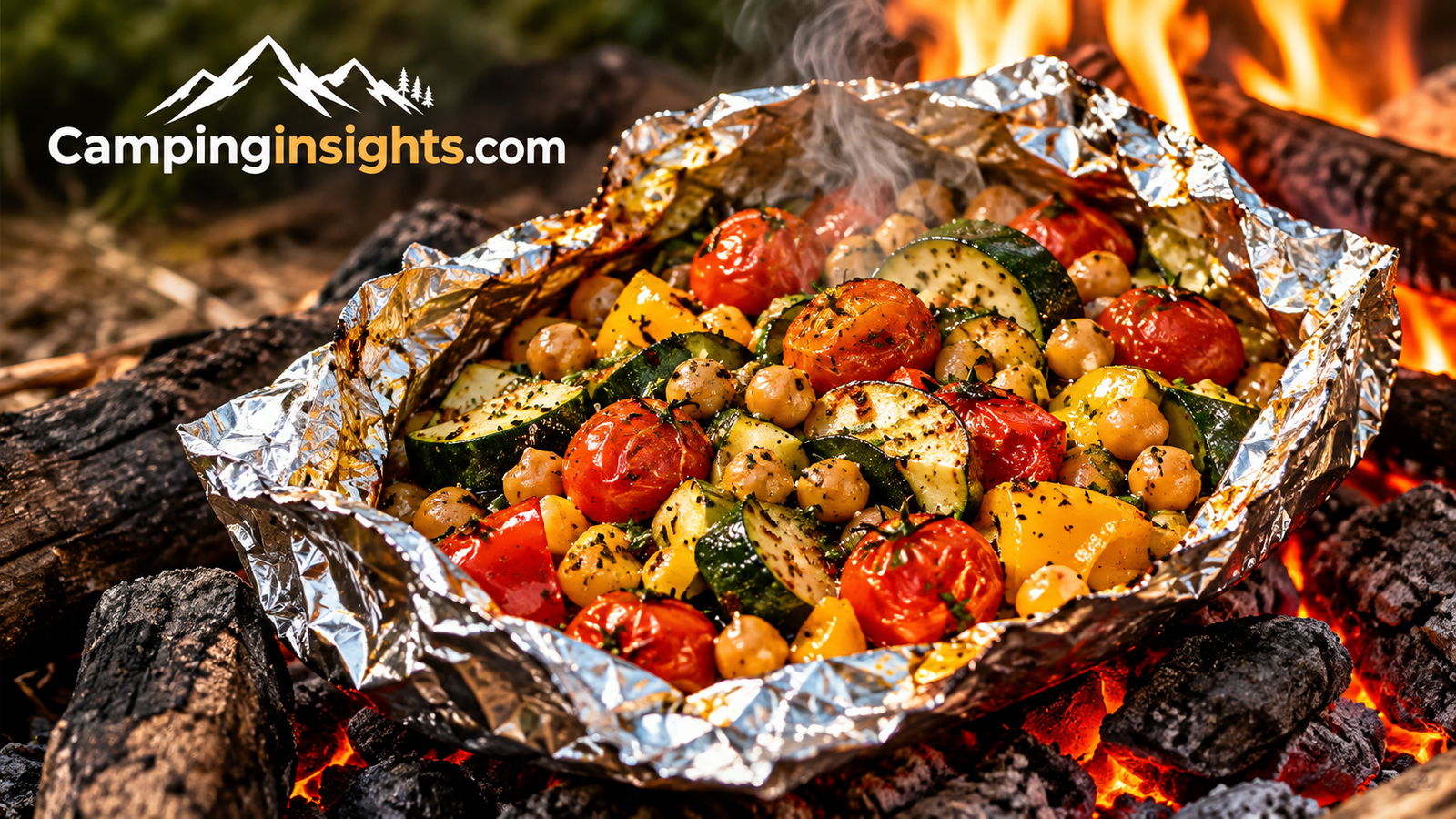
Idea: veggie and chickpea foil packet
Black Bean and Rice Skillet
Canned black beans, rice, corn, and salsa combined in a single skillet — filling, cheap, and needs almost no prep beyond opening cans. Top with avocado or shredded cheese if you’re not keeping it strictly vegan, or leave it as is for a fully plant-based dinner.
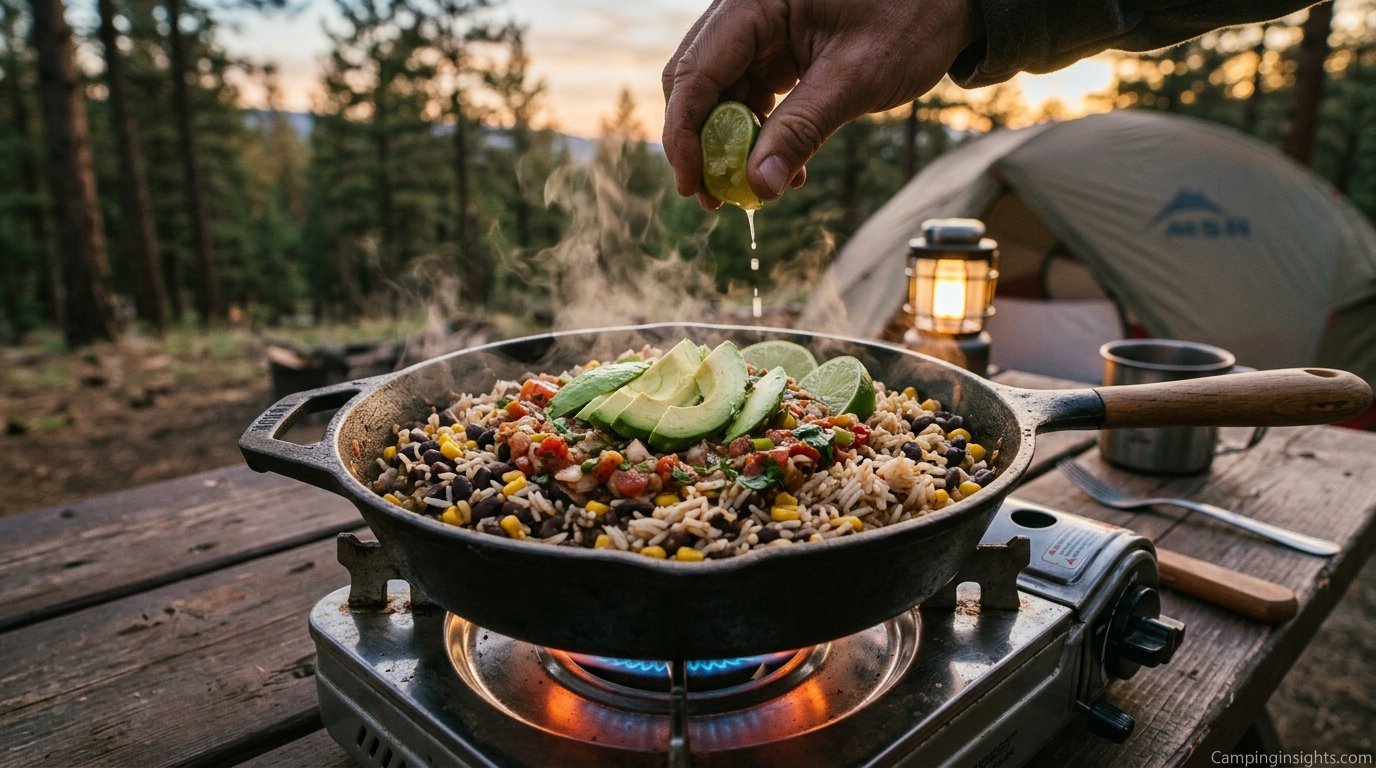
Idea: black bean and rice skillet
Grilled Halloumi Skewers
Halloumi cheese holds its shape on the grill, unlike softer cheeses, making it a good vegetarian stand-in on a kebab skewer with vegetables. It develops a nice char on the outside while staying firm inside, which makes it satisfying in a way that a lot of vegetarian grilling options aren’t. Pair it with cherry tomatoes and zucchini on the same skewer so the vegetables cook in roughly the same amount of time as the cheese.
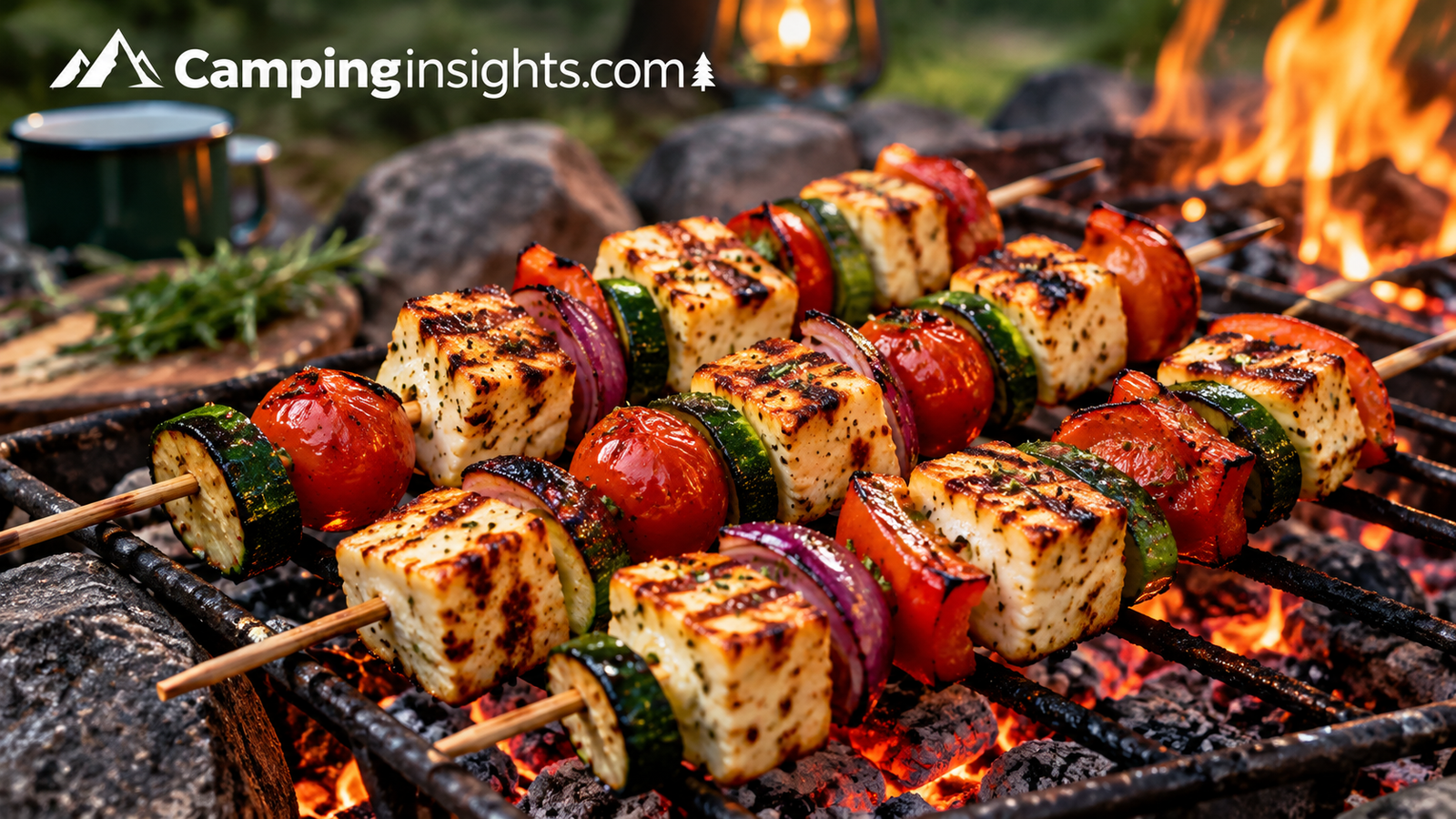
Idea: grilled halloumi skewers
Vegan Lentil Camp Chili
Canned lentils, tomatoes, and chili seasoning simmered together for a plant-based version of campsite chili with no substitutions needed. Lentils hold their texture well over a camp stove and don’t need the long simmer time that dried beans would require. Top with diced avocado or a squeeze of lime at the end for a fresher finish before serving.
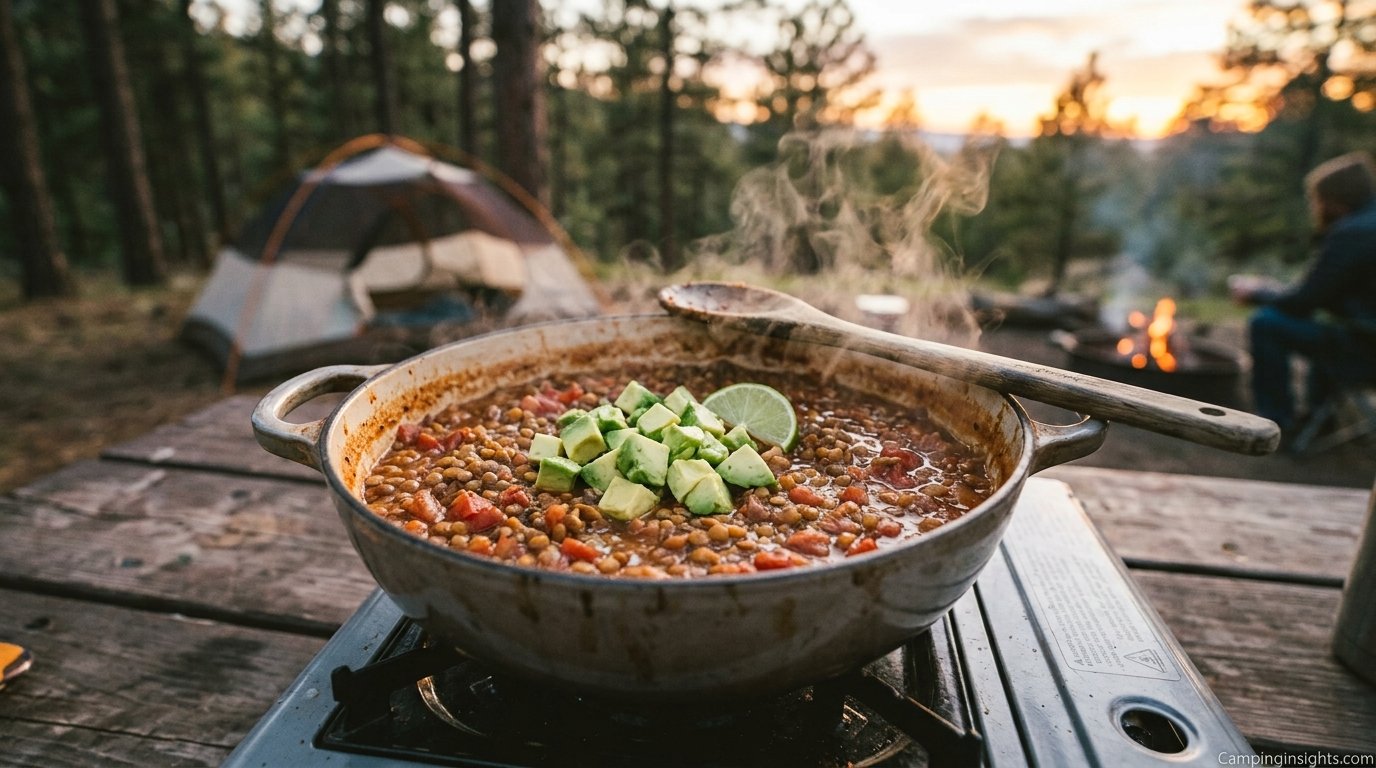
Idea: vegan lentil chili
Grilled Vegetable Skewers with Peanut Sauce
Zucchini, mushroom, bell pepper, and red onion grilled on skewers and served with a peanut sauce mixed at home and carried in a small squeeze bottle. The sauce adds enough richness and flavor that the meal doesn’t feel like it’s missing a protein at all.
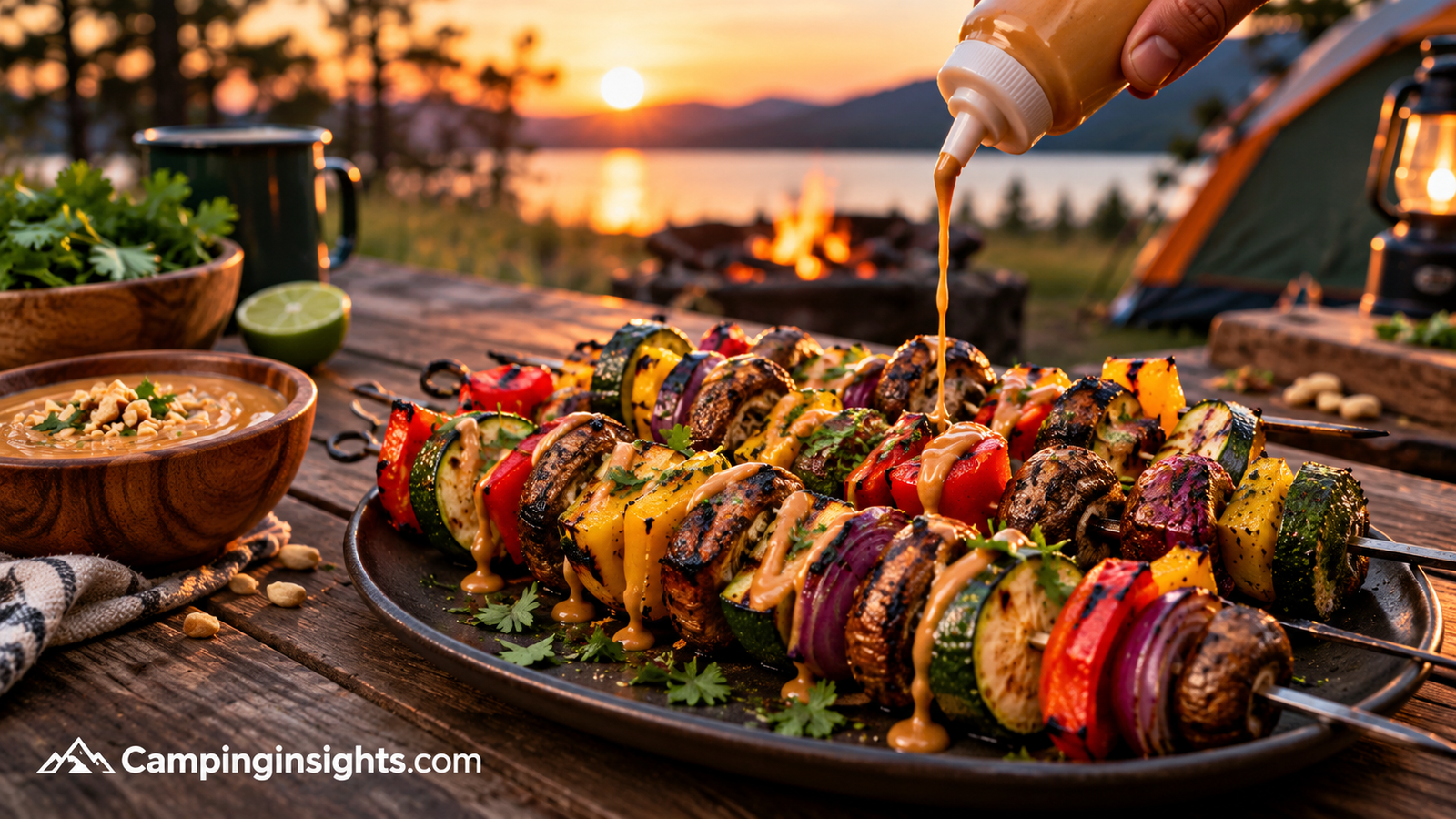
Idea: veggie skewers with peanut sauce
Vegan Foil Packet Portobello “Steaks”
Large portobello mushroom caps brushed with olive oil, balsamic vinegar, and garlic, sealed in foil, and cooked over coals until tender. The mushrooms release their own liquid as they cook, basting themselves in a way that keeps them juicy rather than dried out.
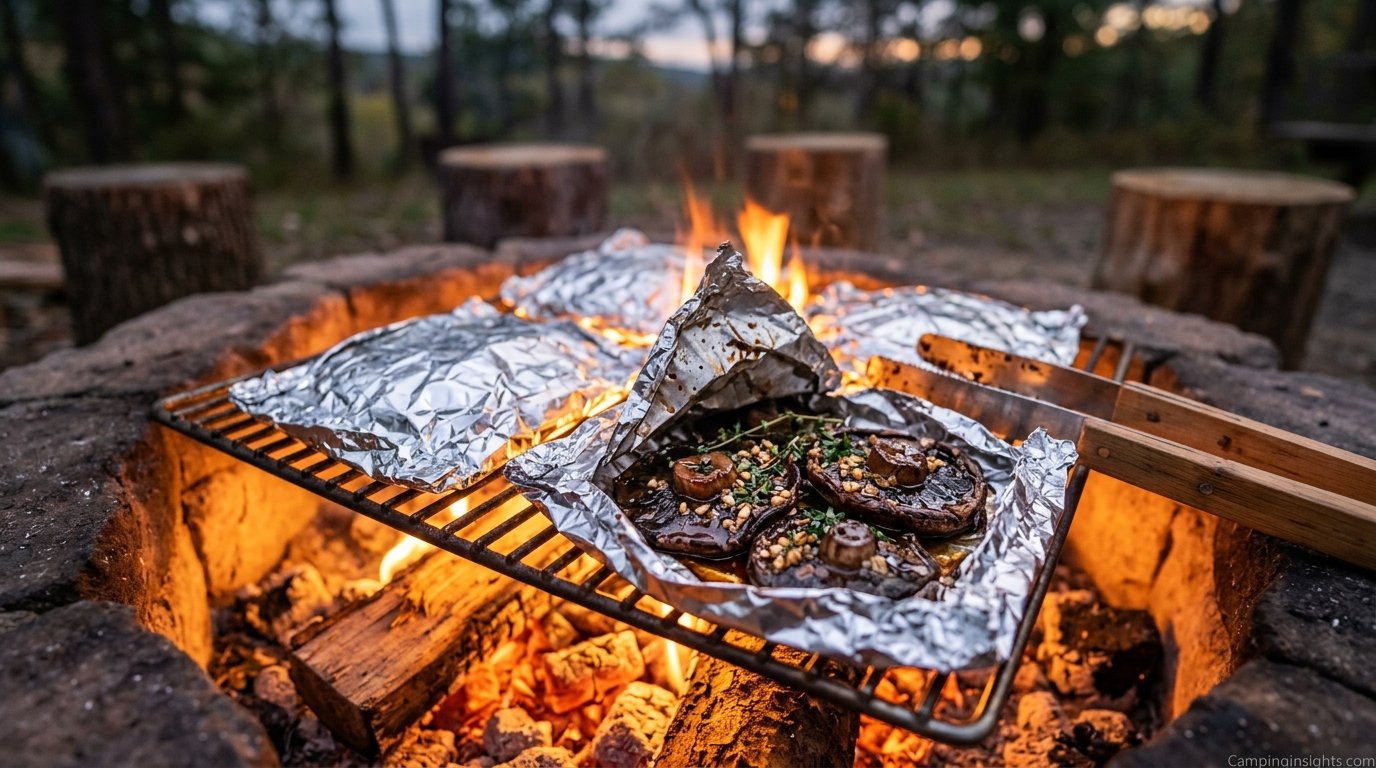
Idea: portobello “steak” foil packets
Vegetarian Camp Quesadillas
Black beans, corn, and shredded cheese folded into a tortilla and toasted on a skillet until crisp — a fast, filling dinner or lunch that needs almost no ingredients beyond pantry staples and a block of cheese from the cooler.
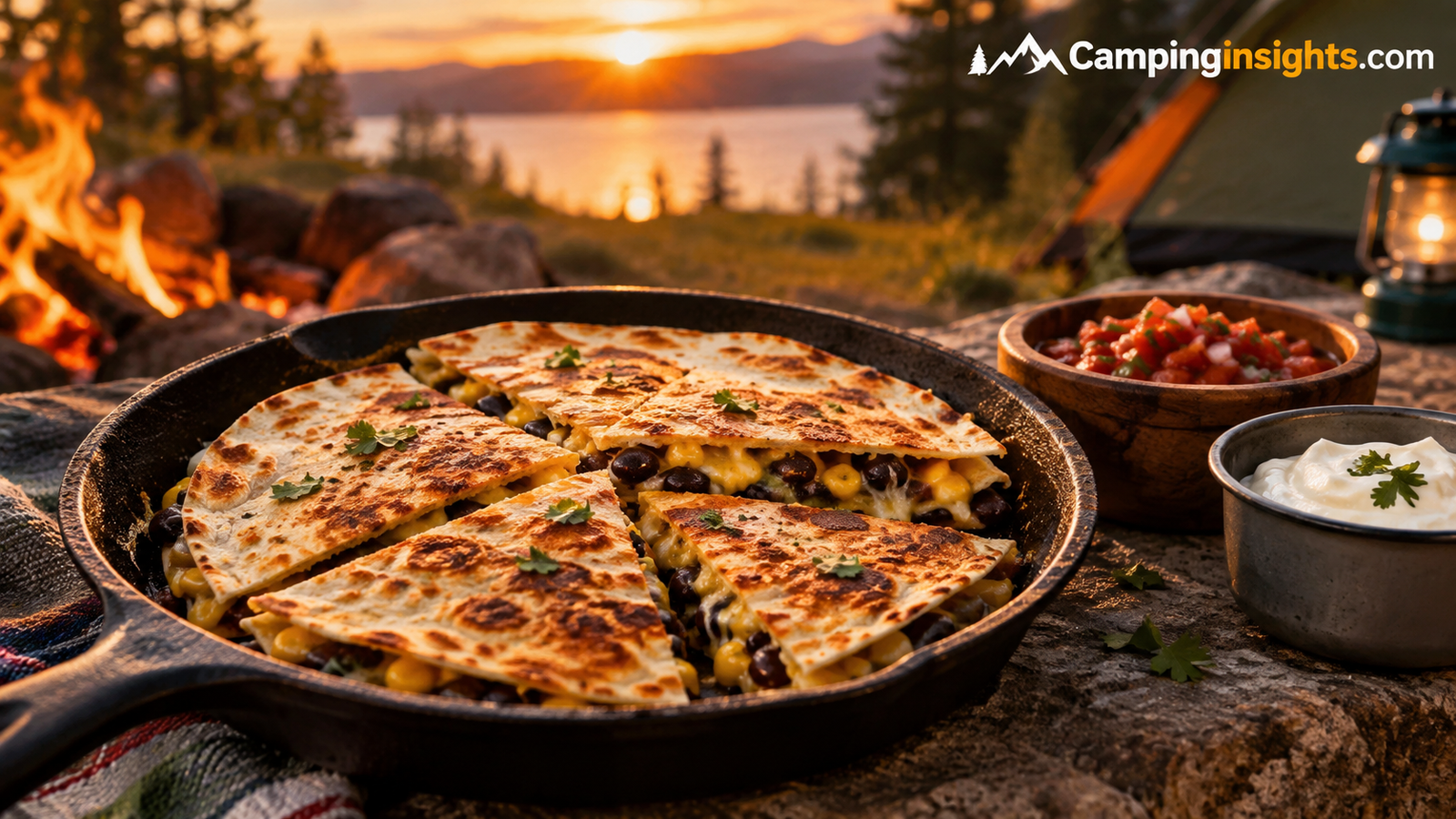
Idea: vegetarian camp quesadillas
For longer trips, pack a few shelf-stable plant proteins like canned lentils, chickpeas, tofu in aseptic packaging, or textured vegetable protein — none of them need refrigeration before opening, which makes vegetarian and vegan camping food ideas some of the easiest to plan around a limited cooler. Nut butters, hummus, and cheese (for vegetarians) round out the protein side of the menu without adding much prep, and a bag of roasted chickpeas or edamame makes a solid protein-forward snack between meals.
10. Make-Ahead Meal Prep for Camping
The camping food ideas that feel the most “effortless” at the campsite are almost always the ones with the most prep done at home. A little kitchen time before the trip pays off every single night, and it’s the difference between camping meals that feel relaxed and ones that feel like a second job.
Pre-Chop Vegetables
Wash, chop, and bag vegetables by meal so there’s no cutting board needed at camp.
Freeze Sauces and Marinades
Marinate proteins in a freezer bag and freeze flat — it thaws in the cooler and doubles as an ice pack.
Pre-Portion Spice Mixes
Combine spice blends for each meal into small labeled containers instead of hauling full spice bottles.
Pre-Cook Rice and Grains
Rice and quinoa reheat fast, saving significant stove time and fuel at camp.
Assemble Foil Packets at Home
Fully build and seal foil packets before the trip and just store them in the cooler until it’s time to cook.
Label Everything by Meal
Write the meal name and day on each bag or container so there’s no guessing at the cooler.
Portion Snacks in Advance
Split trail mix and chips into single-serving bags so nobody’s digging through a shared bulk bag with wet hands.
Pack a Dedicated Spice Kit
A small labeled box with salt, pepper, garlic powder, and one or two go-to blends covers most meals without hauling the whole spice rack.
Pre-Wash and Dry Produce
Washing greens and produce at home and drying thoroughly before packing prevents excess moisture from turning into mold in the cooler.
Build a Camp Pantry Box
A single hard-sided bin with oil, salt, sugar, and other dry staples keeps everything in one place instead of scattered across bags.
A simple timeline helps this go smoothly: about a week out, do the shopping and start any freezing (marinades, pre-cooked proteins). Two or three days before, chop vegetables that hold up in the fridge, like carrots, peppers, and onions. The night before you leave, pack the cooler in use-by-day order, load frozen items last so they stay solid longest, and do a final check against your meal grid to make sure nothing got left on the counter.
Seasoning and Cast Iron Care at Camp
If you’re bringing a cast iron skillet or Dutch oven, a thin layer of oil wiped on after each use at camp keeps it from rusting overnight, especially if it’s packed away while still slightly damp from cleaning. Avoid soap on well-seasoned cast iron where possible — a scrub with coarse salt and a paper towel usually lifts stuck-on food just as well without stripping the seasoning built up over previous trips.

A labeled meal-prep container set makes the “pack in use-by-day order” strategy from Section 1 far easier to actually follow.
Shop Meal Prep Sets →11. Campfire Desserts & Treats
No list of camping food ideas is complete without dessert, and the fire itself does most of the work here — which means dessert at camp often takes less effort than it would at home.
Classic S’mores, and Two Variations
Beyond the standard graham cracker and chocolate, try a peanut butter cup instead of plain chocolate, or swap in a chocolate chip cookie for the graham cracker. Toasting the marshmallow low and slow over glowing coals rather than open flame gives a more even golden color than rushing it over a big flame.
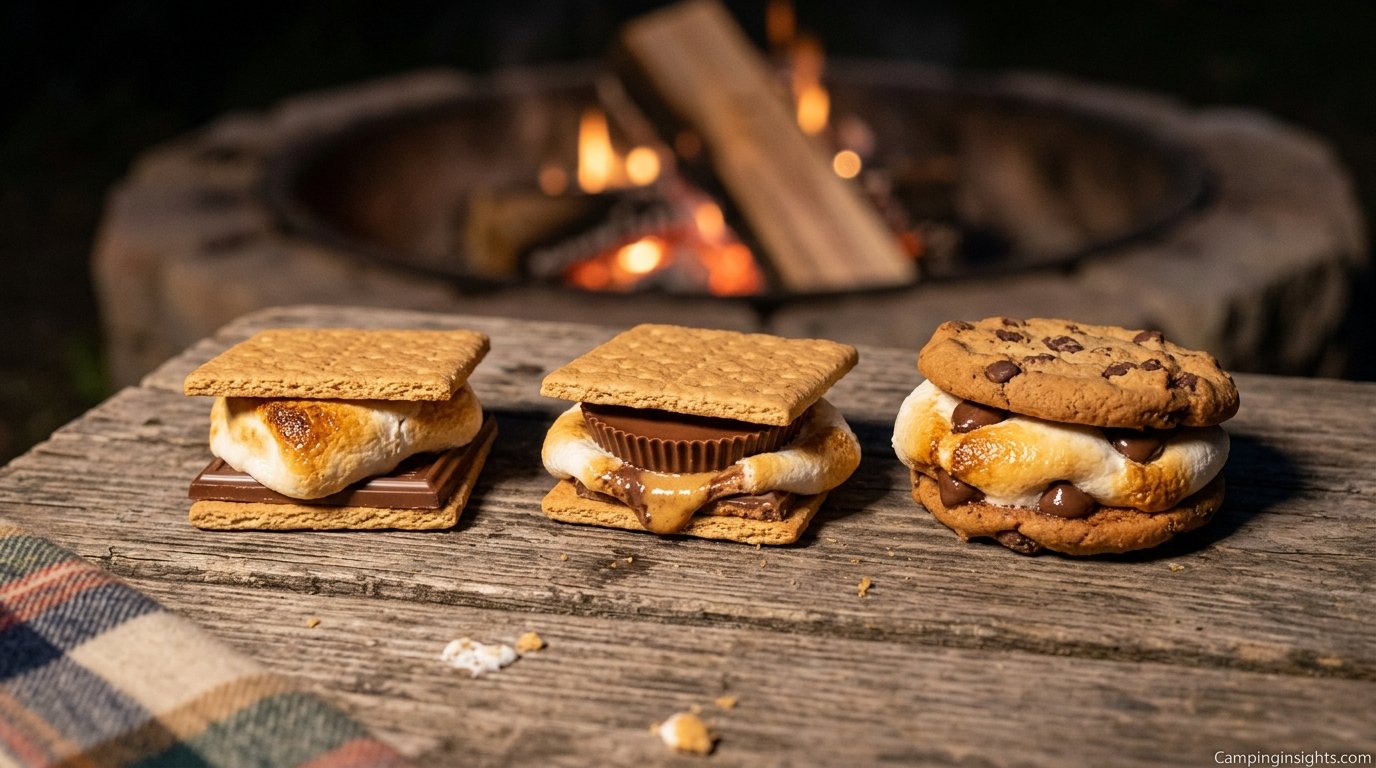
Idea: campfire s’mores, three ways
Banana Boats
A banana sliced lengthwise (peel still on), stuffed with chocolate chips and mini marshmallows, wrapped in foil, and warmed on the coals until gooey. Eat it straight out of the peel with a spoon — no plate required, which makes cleanup practically nonexistent.
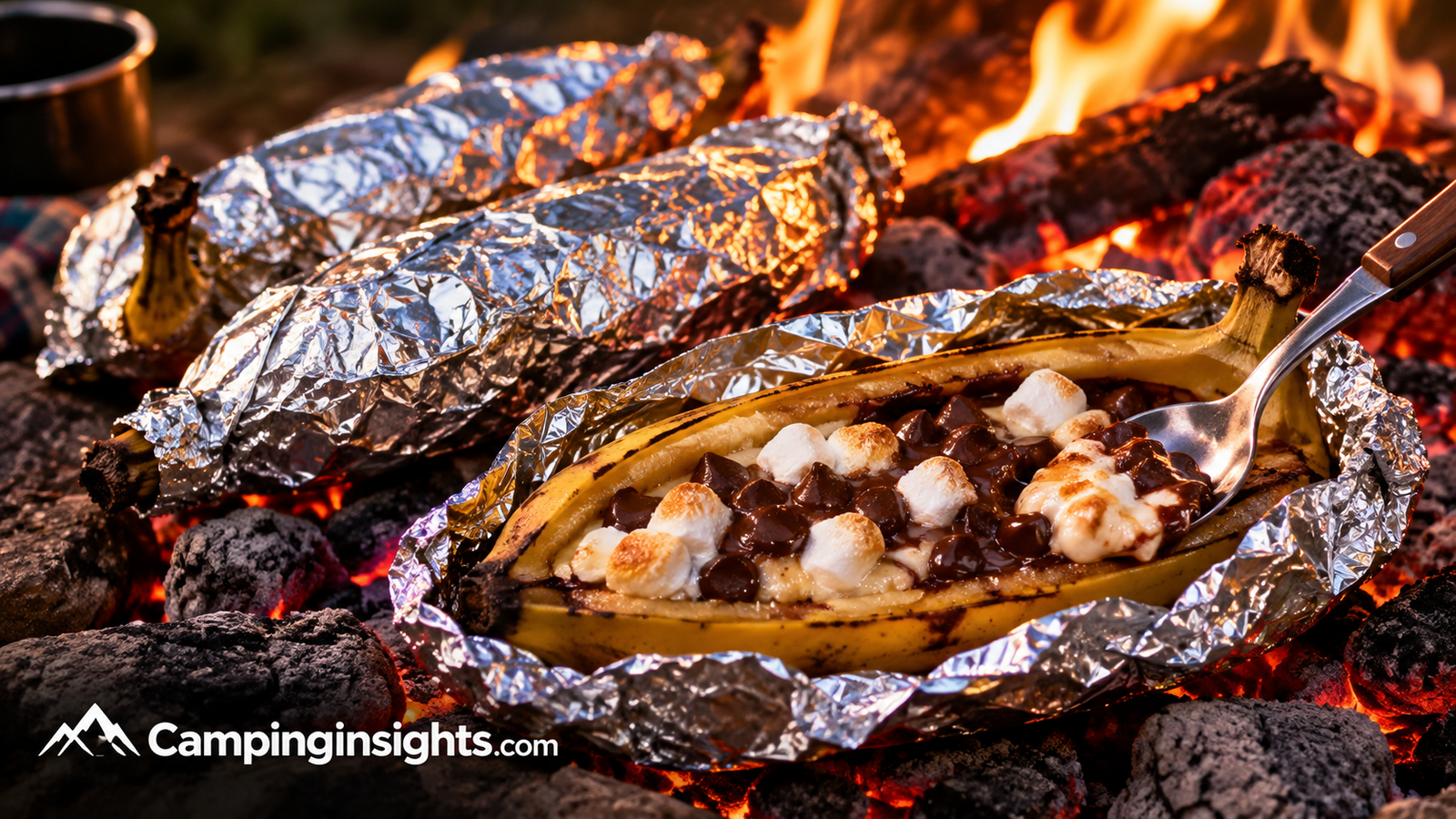
Idea: campfire banana boats
Dutch Oven Peach Cobbler
Canned peaches and a boxed cake mix layered in a Dutch oven and baked over coals — one of the easiest “baked” desserts you can make at a campsite. Coals on the lid as well as underneath the pot help it bake more evenly, closer to how a real oven would.
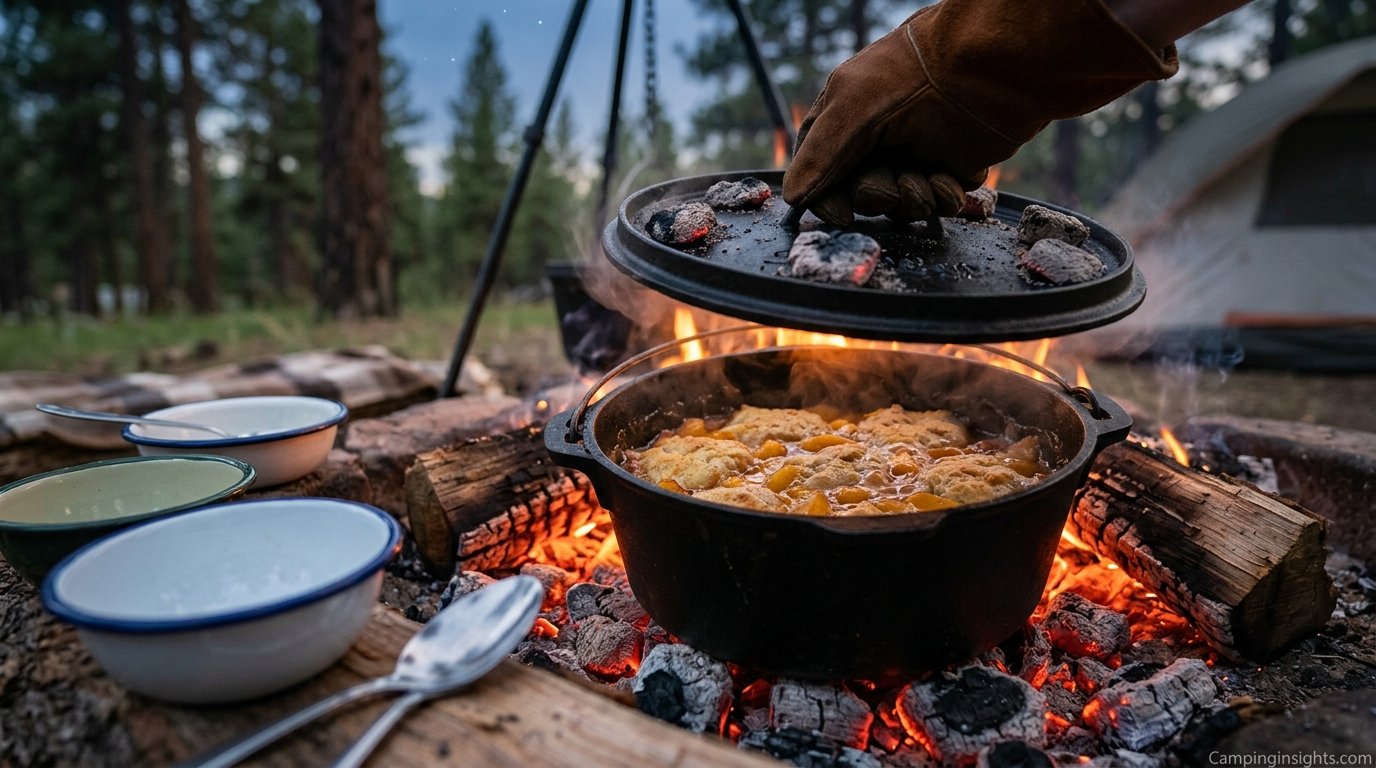
Idea: Dutch oven peach cobbler
Campfire Cones
Waffle cones stuffed with marshmallows, chocolate chips, and fruit, wrapped in foil, and warmed at the fire’s edge for a few minutes — a mess-free take on s’mores. It’s especially popular with kids since they can pick their own mix of fillings before it goes on the fire.
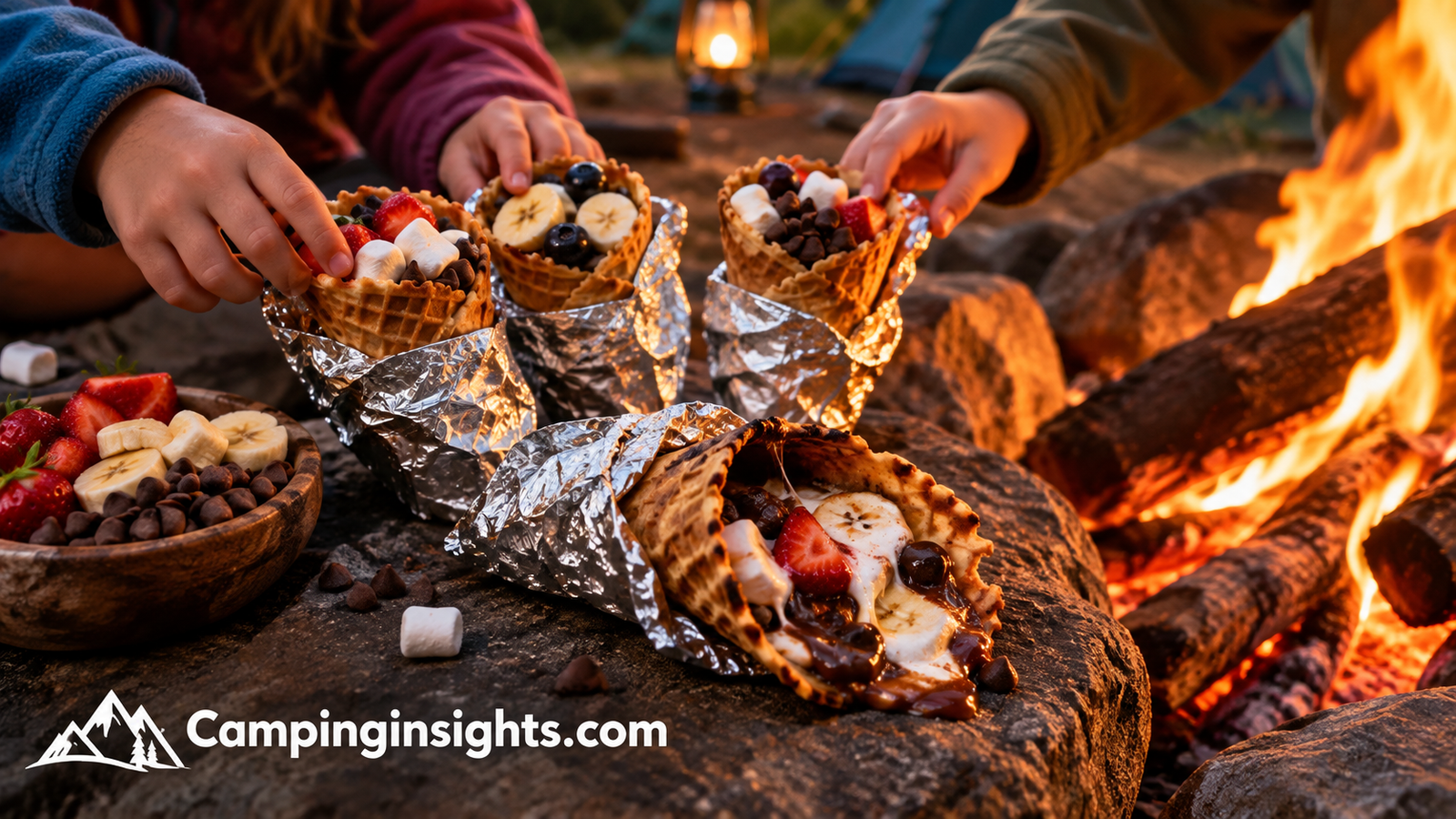
Idea: campfire dessert cones
Grilled Pineapple with Cinnamon Sugar
Pineapple rings brushed with a little butter and cinnamon sugar, grilled directly over the fire until caramelized at the edges. It’s a lighter dessert option for a warm evening when a full s’more feels like too much.
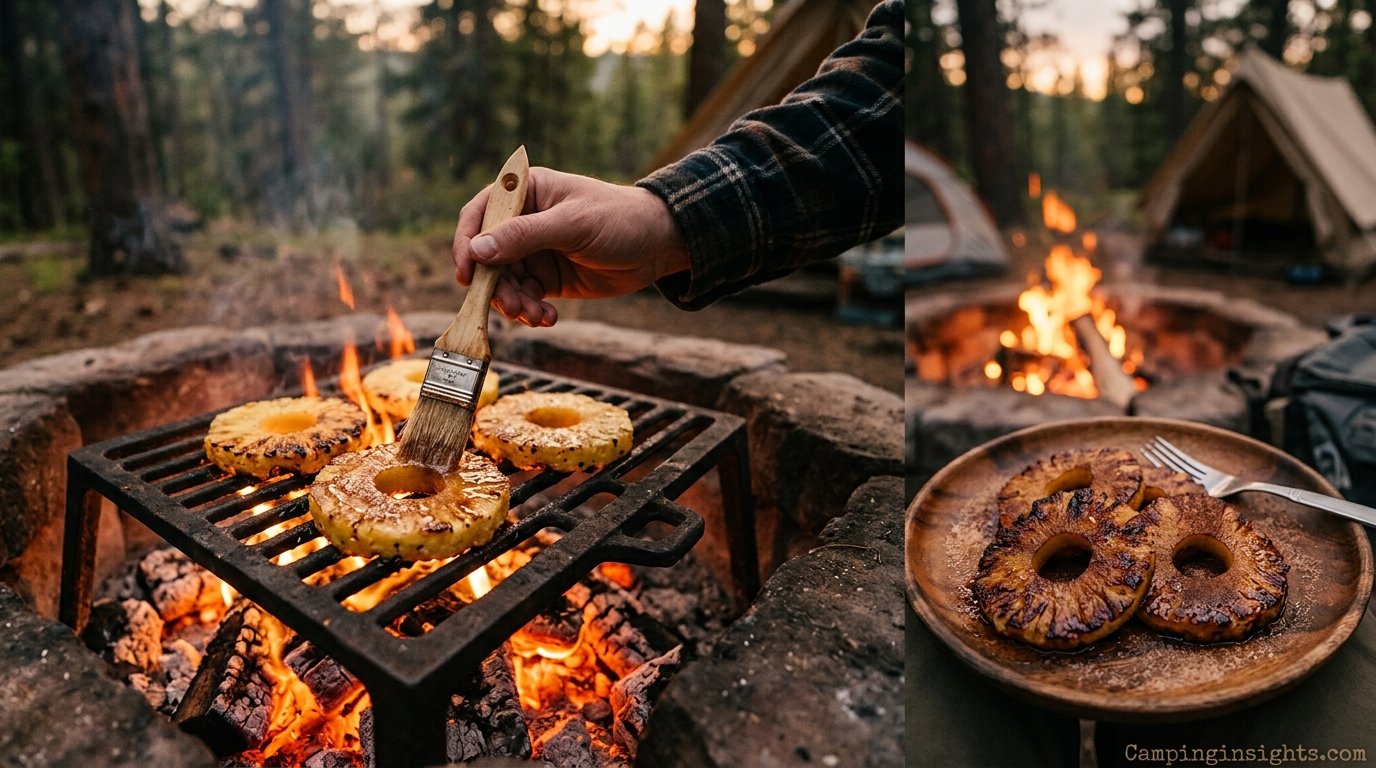
Idea: grilled cinnamon pineapple
Roasted Cinnamon Sugar Dough Twists
Refrigerated biscuit dough or breadstick dough twisted around a stick, roasted slowly over coals until golden, then rolled in cinnamon sugar while still warm. It’s messier than a s’more but genuinely fun as a group activity around the fire, especially with kids who like the roasting part as much as the eating.
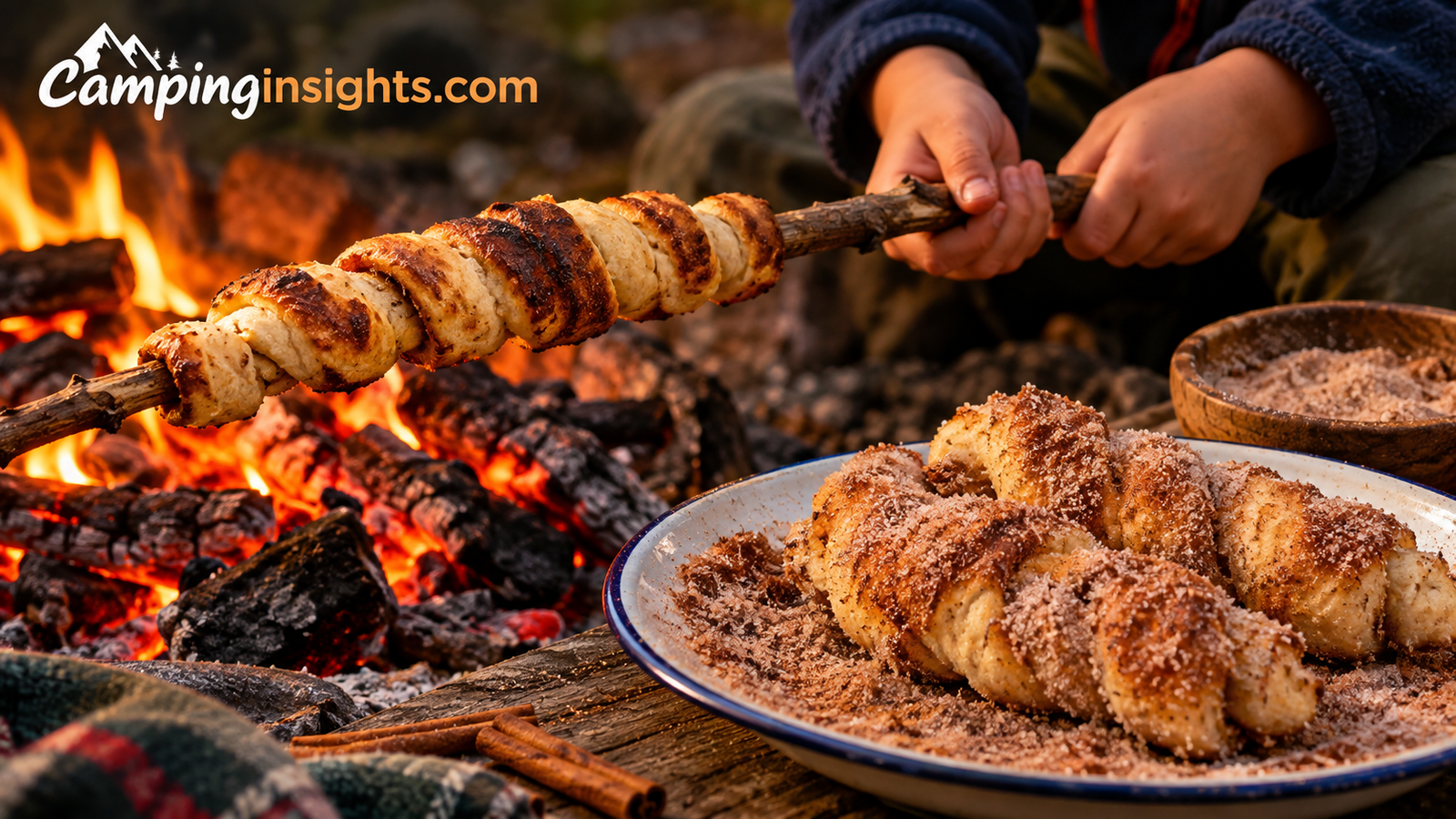
Idea: cinnamon sugar dough twists
Foil Packet Apple Crisp
Sliced apples tossed with cinnamon and sugar, topped with a handful of granola or oat crumble, sealed in foil, and warmed over coals until the apples soften. It comes together with almost no dishes and gives you a warm dessert without needing a full Dutch oven setup.
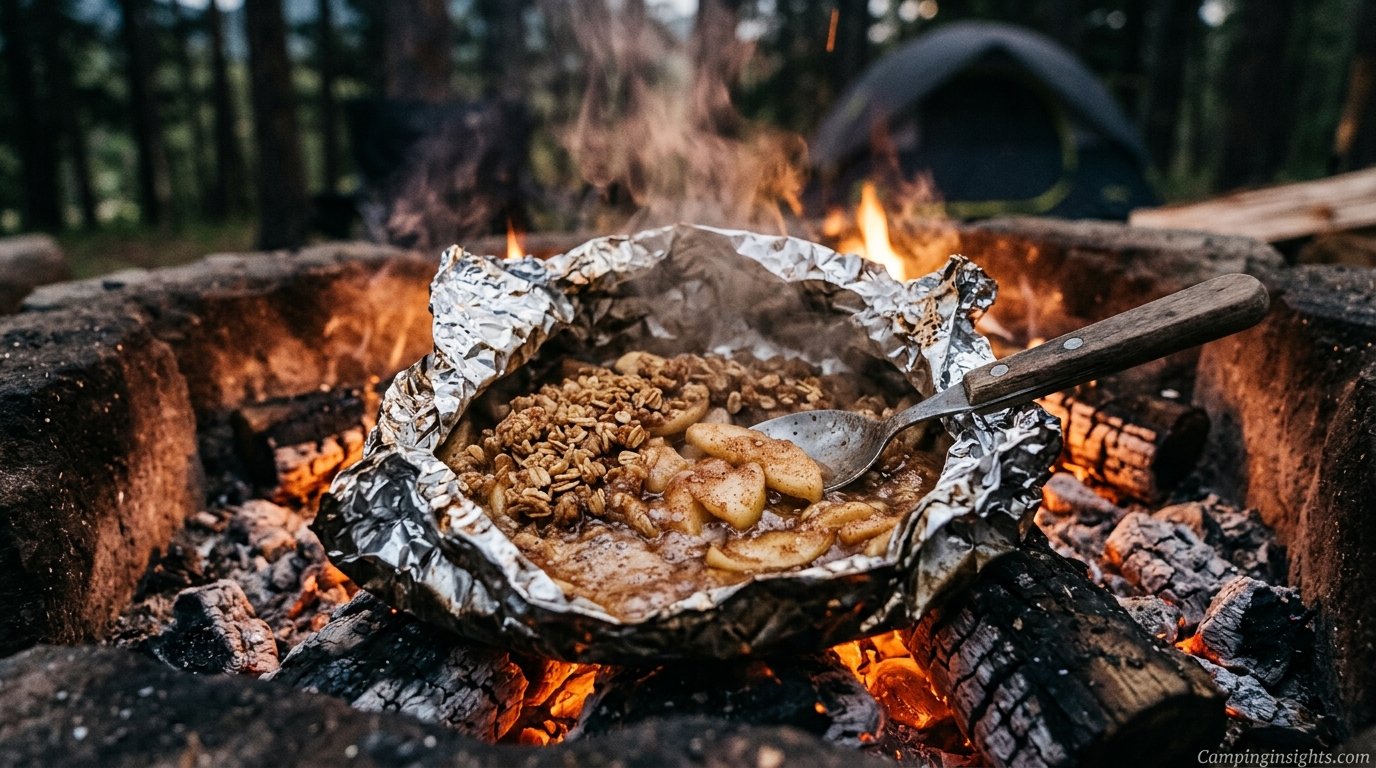
Idea: foil packet apple crisp
As with any dessert cooked directly over a fire, keep marshmallow sticks and skewers pointed away from other people, and let anything wrapped in foil cool for a minute before opening — the filling inside stays far hotter than the outside of the packet suggests.
12. Food Storage, Coolers & Safety
Even the best camping food ideas fall apart without proper storage. This section covers the practical side that keeps meals safe to eat and wildlife out of camp — the unglamorous part of camping food that matters just as much as any recipe.
Two-Cooler System
Use one cooler strictly for drinks (opened constantly, so it loses cold fast) and a second for food (opened only at mealtimes). This single change dramatically extends how long ice lasts in the food cooler, since the drinks cooler absorbs most of the repeated opening that would otherwise let warm air into your food supply.
Ice Blocks Beat Ice Cubes
Frozen water in reused containers melts far slower than bagged ice cubes and doesn’t leave your food swimming in melted water by day two. A layer of ice blocks on the bottom and another on top of the food, rather than mixed throughout, also helps maintain a more even temperature.
Keep Raw Meat on the Bottom
Store raw meat below ready-to-eat food in the cooler, ideally in a sealed container, so any leakage can’t drip onto produce or prepared meals. This is the same basic food-safety logic used in a home refrigerator, just adapted for a cooler with far less consistent temperature control.
Know the Danger Zone
Perishable food that sits between roughly 40°F and 140°F for more than two hours (or one hour above 90°F on a hot day) is at meaningfully higher risk of bacterial growth. A cooler that’s properly packed with enough ice should keep food well below that range for days, but it’s worth checking with a small thermometer on longer trips rather than guessing.
Understanding Cooler Ice Ratios
As a general starting point, aim for roughly a 2:1 ratio of ice to food by volume for trips longer than a couple of days — less than that and the cooler struggles to maintain a safe temperature once it’s opened a few times a day. High-retention rotomolded coolers can stretch that ratio further and still hold cold reliably, while a basic foam or thin-walled cooler needs to stay closer to that 2:1 baseline to perform well over multiple days.
Where to Position the Cooler at Camp
Shade matters more than most people expect — a cooler left in direct sun can lose a full day of ice retention compared to one kept under a tree, a tarp, or inside a vehicle. Elevating it slightly off hot ground, such as on a folding table or a stack of firewood, also helps, since direct contact with sun-warmed dirt or rock transfers heat into the cooler over the course of a day.
Store Food Away From Sleeping Areas
In bear or wildlife-active areas, food and scented items belong in a vehicle, bear box, or hung bag — never in or near the tent. This matters just as much as any tent-care habit, including the ventilation steps in our guide on how to stop condensation in a tent, since a dry, well-managed tent and a properly stored food supply both come down to the same discipline of managing moisture and smells at camp.
Cleaning Up Camp Kitchen Waste
Food scraps and dirty dishwater attract wildlife just as much as unsecured food does, so strain dishwater through a fine mesh before dumping it well away from your tent and any water sources, and pack out food scraps in a sealed bag rather than burying them or leaving them near the fire ring. Wipe down cutting surfaces and coolers each night, since even small residue can draw in insects or animals overnight.
Reusable Over Disposable Where Practical
Reusable containers, bottles, and utensils cut down on the trash you have to pack out and reduce the odds of a wrapper blowing away and becoming litter. Where disposables are the more practical choice, such as foil for packet meals, plan to pack every scrap of it out rather than leaving anything behind at the site.
Handling Leftovers at the End of a Trip
On the last morning, do a quick inventory of what’s left in the cooler and dry bags rather than just tossing everything into a bag for the drive home. Anything already cooked and still cold can usually be eaten for a final breakfast or lunch before you leave, while raw perishables that are unlikely to survive the drive are safer to use up at camp than to risk carrying home in a cooler that’s lost most of its ice by that point.
| Food Type | Cooler Position | Use By |
|---|---|---|
| Raw meat | Bottom, sealed container | Day 1–2 |
| Dairy & eggs | Middle | Day 1–3 |
| Produce | Top, away from ice water | Day 1–4 |
| Shelf-stable snacks | Dry bag, not cooler | Whole trip |

A certified bear-resistant container is non-negotiable in wildlife-active areas — it protects both your food supply and the animals that would otherwise get into it.
Shop Bear-Resistant Containers →Common Camping Food Mistakes to Avoid
A few small missteps account for most bad camping food experiences, and almost all of them are easy to avoid once you know to watch for them.
Overpacking the Menu
Planning five different elaborate dinners for a three-night trip usually means several go unused and the cooler ends up overstuffed and harder to keep cold.
Forgetting a Can Opener
One of the most common camping mistakes — pack a spare in the food bin, not just the main kitchen kit, so it’s never the reason a meal gets skipped.
Not Testing New Recipes First
A campsite is not the place to try an unfamiliar recipe for the first time — test it at home so you know timing and ingredient amounts before it matters.
Ignoring Fire Restrictions
Planning an entire menu around campfire cooking without checking current restrictions can leave you with no way to cook half your meals.
Skipping a No-Cook Backup
Without at least one no-cook meal in reserve, a broken stove or a fire ban can turn into a genuinely hungry night.
Underestimating Cooler Ice Needs
A cooler that’s mostly food and only lightly iced won’t hold temperature nearly as long as one packed with a proper ice-to-food ratio.
Frequently Asked Questions
What’s the easiest camping food idea for beginners?
Foil packet meals are typically the easiest starting point — minimal equipment, minimal cleanup, and hard to overcook since everything steams together inside the sealed foil. They’re also very forgiving of substitutions, so a first-time camper can swap in whatever protein or vegetables they already have on hand without needing to follow a strict recipe.
How long does food actually stay cold in a camping cooler?
A well-packed, high-retention cooler with block ice can hold safe temperatures for 3–5 days; a basic cooler with loose ice cubes usually only manages 1–2 days before ice melts significantly. Keeping the cooler in shade, minimizing how often it’s opened, and starting with pre-chilled food and drinks all extend that window further.
What camping food ideas work without any cooking at all?
Charcuterie boxes, tortilla wrap bars, tuna or chicken pouches, overnight oats, and pre-made pasta salad all require zero heat and are ready to eat straight from the cooler.
What’s the best camping food for backpacking specifically?
Freeze-dried meal pouches, instant mashed potatoes, upgraded instant ramen, and no-bake energy bites are all lightweight, calorie-dense, and require only boiling water or no cooking at all. Repackaging everything into lightweight resealable bags before the trip also helps cut down on the bulk and weight of store packaging.
How do I keep camping food safe from bears or wildlife?
Store all food, trash, and scented items in a vehicle, bear-resistant container, or properly hung bag well away from sleeping areas — never inside a tent.
Can I meal prep camping food before the trip?
Yes — pre-chopping vegetables, freezing marinades, pre-cooking rice, and fully assembling foil packets at home are some of the most effective ways to reduce work at the campsite.
What are good vegetarian camping food ideas?
Foil packet chickpea and vegetable medleys, black bean and rice skillets, grilled halloumi skewers, and vegan lentil chili all work well with standard camping cooking methods.
What camping desserts don’t need an oven?
Banana boats, campfire cones, grilled pineapple, and classic s’mores all use the campfire directly and need no oven or stove at all.
How do I plan camping meals for a large group?
One-pot meals and Dutch oven dishes scale the most easily for groups, since quantities can simply be increased without adding extra pans or cook time.
What’s a good kid-friendly camping dinner?
Build-your-own pizza pockets made in a pie iron and cheese quesadilla triangles are both popular with kids because they’re interactive and familiar in flavor.
Do I need a cooler for a short overnight camping trip?
For most overnight trips, yes — even a basic cooler with ice packs keeps perishables like dairy, meat, and produce safe for the duration of a one or two-night stay.
What’s the best way to organize food in a camping cooler?
Pack meals in reverse order of when you’ll eat them, keep raw meat sealed at the bottom, and use a separate drink cooler so the food cooler is opened less often.
How much food should I bring per person, per day of camping?
A common starting point is roughly 1.5 to 2 pounds of food per person per day for car camping, and slightly more calorie-dense but lighter totals for backpacking where every ounce counts.
What’s a good camping food idea if the stove breaks or the fire won’t start?
Always pack at least one full no-cook backup meal, such as a tortilla wrap bar or a charcuterie box, so a stove or fire failure doesn’t mean going hungry.
How do I stop wildlife from getting into my camping food?
Store food and scented items in a vehicle, certified bear-resistant container, or properly hung bag away from sleeping areas, and clean up food scraps and dishwater promptly rather than leaving them near the campsite overnight.
Can I bring fresh meat on a multi-day camping trip?
Yes, as long as it’s kept below 40°F the entire time — freeze it solid before the trip so it thaws gradually in a well-packed cooler, and plan to cook it within the first one to two days.
Final Thoughts on Camping Food Ideas
Good camping food comes down to matching the idea to the trip — foil packets and one-pot meals for car camping, freeze-dried pouches and energy bites for the trail, and no-cook options for hot days or lazy lunches. Pick a handful of these camping food ideas, prep what you can before you leave, and pack your cooler with the “use-by-day” order in mind, and mealtime at camp stops being a chore and starts being one of the best parts of the trip.
Shop All Camping Cooking Gear →