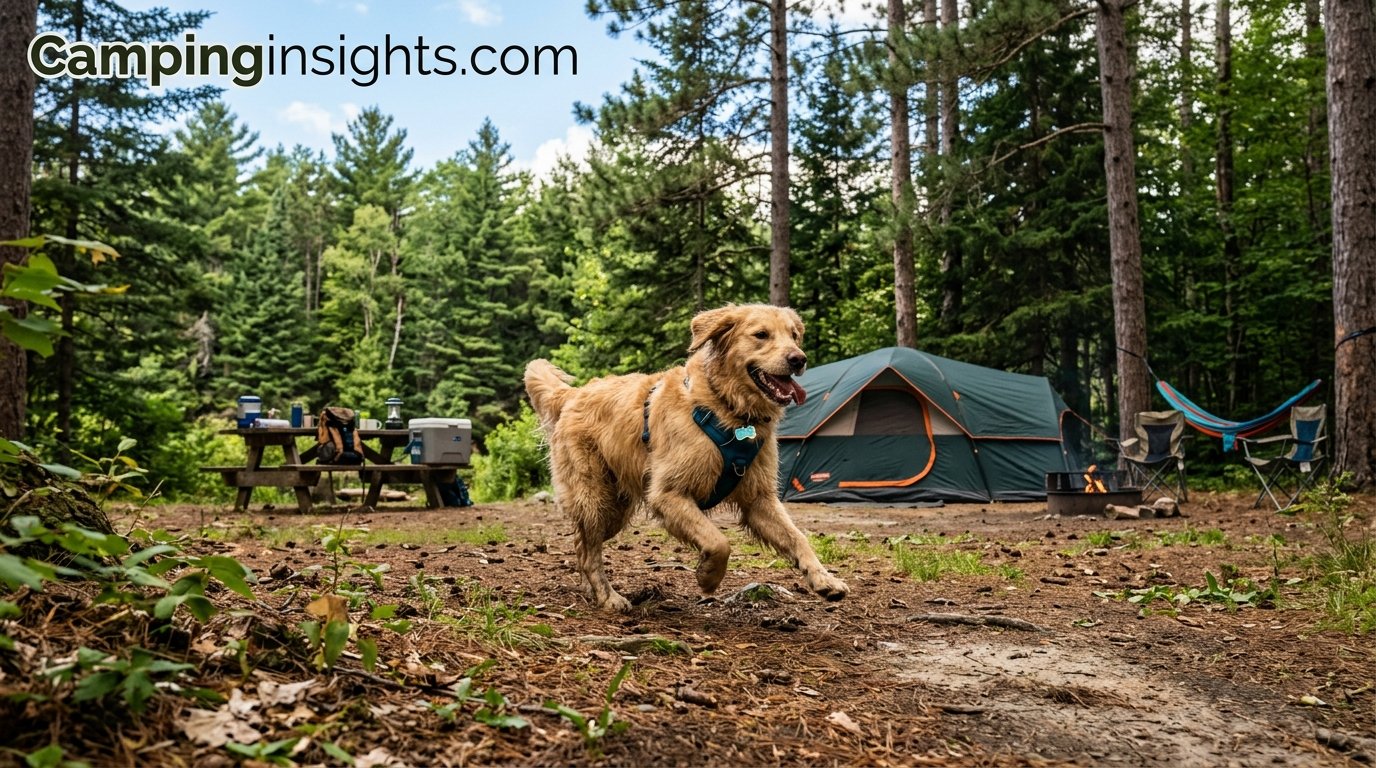
There’s something undeniably special about waking up in a tent with your dog curled up beside you, birds calling overhead, and the smell of pine drifting through the mesh. Camping with a dog transforms an ordinary outdoor trip into something richer — your best friend reads the trail with you, alerts you to every rustle in the brush, and reminds you to actually sit still and take in the view instead of rushing to the next waypoint. But sharing the wilderness with a dog also comes with a layer of planning that solo campers or even couples don’t have to think about. From choosing dog-friendly campsites and packing the right gear to managing wildlife encounters and keeping your pup hydrated on a long hike, the details matter more when a four-legged companion is counting on you. This guide covers every angle — gear, training, safety, food, sleeping arrangements, seasonal considerations, and trail etiquette — so you can focus on enjoying the trip instead of problem-solving every time something unexpected comes up.
1. Why Camping With Your Dog Is Worth the Extra Planning
Let’s start with the obvious: dogs make camping better. They provide companionship during long evenings by the fire, warmth on cold nights, and an early warning system when something moves through camp after dark. But beyond the practical benefits, there’s a deeper reason people keep bringing their dogs into the backcountry. Dogs experience the outdoors with an intensity that’s contagious. Watch a dog on a mountain trail for ten minutes — the way they stop to nose every new smell, the way they stand motionless staring at a distant ridge, the way they plunge into a stream without a second thought — and you’ll start seeing the landscape through different eyes yourself.
That said, the planning burden does increase. You’re no longer packing for yourself; you’re packing for a creature that can’t tell you when it’s too hot, too tired, or coming down with something. A weekend trip that might otherwise require a quick gear check and a cooler full of food becomes a more deliberate exercise in risk management. You need to think about leash requirements, bear country food storage (dog food smells just as interesting to a bear as your granola does), veterinary emergencies, and whether your dog’s temperament actually suits the environment you’re heading into.
The good news is that none of this is difficult. It’s just different. Once you’ve done a few trips with your dog, the extra checklist items become second nature, and the payoff — sharing a wild place with the animal that trusts you most — is something you can’t replicate any other way. If you’re just getting started with camping in general, it’s worth reading through a comprehensive camping guide first to get comfortable with the basics, then layering in the dog-specific considerations covered here.
What This Guide Covers
This isn’t a surface-level “bring a leash and some kibble” article. We’ve organized everything into twelve in-depth sections that walk you through the entire experience — from the first time you think about bringing your dog on a trip to the moment you’re back home, unpacking a mud-caked sleeping bag and wondering why you didn’t do this sooner. Each section is designed to be useful on its own, so if you’re an experienced camper who just added a dog to the family, you can skip straight to the sections that matter most.
Is Your Dog a Good Fit for Camping?
Most dogs can camp, but not every dog should camp in every setting. A ten-year-old bulldog with respiratory issues is not a good candidate for a high-altitude backpacking trip. A nervous rescue that flinches at sudden sounds might struggle in a busy campground with generators and kids running around. A high-energy border collie that’s been cooped up in an apartment all week will probably love every second of it — but only if you’ve done enough training to keep it from chasing every squirrel off-trail.
Honest assessment is key here. Consider your dog’s age, breed, physical condition, temperament, and training level. Puppies under six months often lack the stamina and judgment for backcountry trips. Senior dogs with joint issues may need shorter hikes and extra padding. Brachycephalic breeds (flat-faced dogs like pugs, French bulldogs, and boxers) overheat faster and struggle at altitude. None of these are automatic disqualifiers — they just mean you need to adjust the trip to fit the dog, not the other way around.
There’s also the question of behavior. A dog that reliably comes when called, walks calmly on a leash, and doesn’t bark at every passing hiker is going to have a much better time at a campsite than one that bolts at the sight of a deer. If your dog’s obedience training is still a work in progress, that’s fine — but consider starting with a backyard camping night or a single overnight at a quiet, drive-in campsite before committing to a multi-day backcountry trip.

Ruffwear Approach Dog Pack
Let your dog carry their own gear. This durable, adjustable saddlebag-style pack is perfect for trail-ready dogs who want to pull their weight.
View on Amazon2. Choosing the Right Campsite for You and Your Dog
Not all campsites are created equal when you’re traveling with a dog. A site that works perfectly for a solo backpacker or a couple might be stressful, dangerous, or flat-out unwelcoming for a dog. The key factors to evaluate are the campsite’s pet policy, the surrounding terrain, proximity to water, shade availability, and how much foot traffic passes through. Choosing the right spot up front saves you from scrambling for solutions once you’re already set up.
Understanding Campground Pet Policies
This is the first and most important filter. National parks in the United States generally have strict pet regulations — dogs are often limited to paved roads, parking areas, and developed campgrounds. They’re typically prohibited from trails, backcountry areas, and beaches. National forests and Bureau of Land Management (BLM) lands are usually much more permissive, often allowing dogs off-leash in areas where they’re under voice control. State parks vary widely by state and even by individual park.
Private campgrounds tend to be more dog-friendly, but many charge a per-pet, per-night fee and have breed restrictions that may exclude popular breeds like pit bulls, Rottweilers, or German shepherds. Always call ahead or check the campground’s website before booking, and don’t assume that “pet-friendly” means your dog can roam free. In most cases, “pet-friendly” means leashed at all times and not left unattended at the site.
For a deeper dive into how to evaluate campgrounds, campsites, and the surrounding terrain, check out our guide on how to choose a campsite — it covers everything from ground composition to water drainage, and the same principles apply when you’re picking a spot for you and your dog.
Best Types of Campsites for Dogs
| Campsite Type | Dog-Friendliness | Key Considerations |
|---|---|---|
| National Forest Dispersed | Excellent | No leash laws in most areas; plenty of space; fewer crowds |
| BLM Land | Excellent | Very few restrictions; minimal facilities; watch for wildlife |
| State Park Campgrounds | Good | Check individual park rules; leash required; good facilities |
| National Park Campgrounds | Limited | Dogs restricted to roads and campgrounds; no trail access |
| Private RV Parks | Variable | Breed restrictions common; pet fees apply; fenced areas rare |
| Backcountry Sites | Good (with prep) | No facilities; must pack out waste; wildlife encounters likely |
Terrain and Environment to Watch For
A campsite near a gentle stream with a sandy bank is ideal for a dog — natural water access, soft ground, and a built-in entertainment system. A campsite on a rocky bluff above a steep drop-off is not. When you’re scouting a spot, think about your dog’s ability to navigate the terrain safely. Sharp volcanic rock can shred paw pads. Steep hillsides can cause slips and joint injuries, especially for older dogs or breeds prone to hip dysplasia. Dense underbrush may harbor ticks, snakes, or poison ivy that your dog will walk right through without a second thought.
Water proximity is a double-edged sword. Streams and lakes are great for hydration and cooling off, but stagnant water can harbor harmful bacteria like Leptospira (which causes leptospirosis) and blue-green algae (cyanobacteria), which can be fatal to dogs within hours. Running water at higher elevations is generally safer. If you’re near a still pond or lake with visible green scum on the surface, keep your dog away from it entirely.
Shade is another critical factor, especially in summer. A campsite with mature tree cover keeps both you and your dog significantly cooler during the hottest part of the day. If you’re camping in open terrain with limited shade, bring a tarp or canopy to create an overhead shelter for your dog, and plan to keep midday activity to a minimum.
Setting Up Camp With a Dog in Mind
Once you’ve chosen your site, think about the layout. Place your dog’s tether or stake-out point where they can see you — dogs left in a visual dead zone tend to bark more and become anxious. Keep the food storage area (including your dog’s kibble) at least 100 feet from your sleeping area if you’re in bear country. Lay out a familiar blanket or bed near the tent entrance so your dog has a designated “home base” that smells like them.
If your dog is a digger, avoid placing their tie-out near the fire ring — flying embers and hot ash are a burn hazard. If they’re a chewer, keep gear and guylines out of reach. These sound like small details, but they’re the difference between a relaxing evening in camp and one spent re-staking your tent and treating a singed paw.

PetSafe Tie-Out Cable
Keep your dog secure at camp without restricting their movement too much. This galvanized steel cable is rated for dogs up to 60 pounds and comes with a swivel clip to prevent tangling.
View on Amazon3. Essential Gear for Camping With a Dog
Packing for a dog isn’t as complicated as packing for yourself, but there are a few items that are genuinely non-negotiable and a longer list of gear that makes the trip significantly more comfortable. The goal is to bring what your dog needs without turning your pack into a pet supply store. Below, we’ve broken the gear into three tiers: must-haves, strongly recommended, and nice-to-haves depending on your trip style.
Must-Have Gear
- Collar with ID tags: Your dog’s regular collar with up-to-date contact information. A reflective or light-up collar is even better for visibility at night.
- Leash (6-foot): Required at most campgrounds. Bring a standard flat leash — not a retractable one, which can malfunction and doesn’t give you adequate control on trails.
- Stake-out cable or tie-down: Lets your dog move around camp without wandering off. Look for a swivel-style cable that resists tangling.
- Collapsible water bowls: Lightweight silicone bowls that fold flat are perfect for trail breaks and camp. Bring at least two — one for water, one for food.
- Dog food and treats: Pack more than you think you need. A dog burning calories on a multi-mile hike needs roughly 25–50% more food than a typical at-home day. Store food in bear-resistant containers if required.
- Waste bags: Pack it in, pack it out — this includes dog waste. Bring a dedicated supply of bags and a sealed container to carry used bags until you reach a trash receptacle.
- Updated vaccinations and health records: Carry a copy (paper or photo on your phone) in case of an emergency vet visit or if campground staff ask for proof of rabies vaccination.
Strongly Recommended Gear
- Dog backpack: For dogs over 30 pounds in good physical condition, a well-fitted saddlebag lets them carry their own food, water, and bowls. Start with light loads (no more than 10–15% of their body weight) and increase gradually.
- Dog sleeping pad or blanket: A closed-cell foam pad or a lightweight travel bed gives your dog insulation from the cold ground and a familiar surface to settle on.
- Paw protection (boots or wax): Hot sand, sharp rocks, frozen ground, and salted roads can all damage paw pads. Dog boots take some training to accept, but paw wax (like Musher’s Secret) is a low-friction alternative that provides a protective barrier.
- Dog first aid kit: A basic kit should include gauze, adhesive tape, antiseptic wipes, tweezers (for ticks and thorns), styptic powder, a muzzle (even friendly dogs may bite when in pain), and any medications your dog takes regularly.
- LED collar light or clip-on beacon: Dogs disappear fast in the dark. A small LED light clipped to their collar makes them visible from 100+ feet away and costs almost nothing in weight.
- Rain jacket or cooling vest: Depending on the season, a lightweight waterproof layer or an evaporative cooling vest can make a real difference in your dog’s comfort level.
Comparison: Top Dog Camping Gear Sets
| Product | Best For | Weight | Price Range | Standout Feature |
|---|---|---|---|---|
| Ruffwear Approach Pack | Day hikes & overnights | ~12 oz | $$ | Integrated harness; saddlebag design |
| Ruffwear Palisades Pack | Multi-day backpacking | ~1.2 lbs | $$$ | Detachable panniers; hydration-compatible |
| Outward Hound DayPak | Casual day trips | ~8 oz | $ | Budget-friendly; breathable mesh |
| Kurgo Baxter Pack | All-around use | ~10 oz | $$ | Eight adjustment points; reflective trim |
| Mountainsmith K-9 Dog Pack | Extended trips | ~1 lb | $$ | Padded harness; load compression straps |
Nice-to-Have Gear
Once you’ve covered the essentials, a few extras can round out the experience. A portable dog fence or exercise pen creates a defined off-leash space at camp without relying on trees or stakes. A long training lead (20–30 feet) gives your dog more freedom in areas where off-leash rules allow it. A small brush or comb helps manage burrs, mats, and shedding after a day on the trail. And a dog-specific towel — microfiber, fast-drying — is invaluable for wiping down a wet, muddy dog before they shake off inside your tent.
For carrying all of this, you’ll want a quality camping backpack with enough room for your dog’s gear alongside your own. Some campers prefer a dedicated dog gear bag that stays in the car, while others distribute their dog’s items throughout their pack for accessibility on the trail.
Gear to Leave Behind
Resist the urge to overpack novelty items. Dog sleeping bags, portable dog showers, and inflatable dog beds sound fun but add weight and complexity for minimal benefit. Your dog doesn’t care about thread count — they care about being near you, staying warm, and having water. Focus your budget and packing space on the items above, and you’ll be set for virtually any trip.

Ruffwear Front Range Harness
A padded, everyday harness with two leash attachment points — perfect for trail walks and campsite tie-outs. Padded chest and belly panel for all-day comfort.
View on Amazon4. Training and Behavior Prep Before Your First Trip
A well-behaved dog is a happy camper — and so are the people camped next to you. Before you head into the backcountry, there’s a short list of commands and behaviors that will make the trip safer and more enjoyable for everyone involved. None of this requires professional training or hours of daily practice, but it does require consistency and realistic expectations about what your dog can handle.
The Essential Command Checklist
These aren’t tricks; they’re safety tools. A dog that reliably responds to these commands in a distracting environment (not just your living room) is ready for the trail.
- Come / Recall: The single most important command. Your dog must return to you immediately when called, regardless of what’s happening around them. Practice with increasing distractions — start in your yard, then a quiet park, then a busier area with other dogs.
- Leave it: Prevents your dog from eating something dangerous on the trail — a dead animal, a toxic plant, another camper’s dropped medication. This one can be lifesaving.
- Stay / Wait: Useful at trail crossings, campsite boundaries, and whenever you need your dog to hold position while you manage gear, take a photo, or talk to another hiker.
- Drop it: Complements “leave it” for situations where your dog already has something in their mouth. Practice with low-value items first, then work up to high-value finds.
- Quiet: Barking at wildlife at 5 a.m. is a fast way to make enemies in camp. A “quiet” command, paired with positive reinforcement, helps manage vocalization without suppressing it entirely.
- Heel / With me: Walking on a loose leash beside you rather than pulling ahead. Critical for narrow trails, passing other hikers, and navigating areas with drop-offs or obstacles.
Desensitization Exercises
Camping exposes dogs to stimuli they may never encounter at home: crackling campfires, popping embers, strange animal sounds, headlamps, the texture of a tent floor, and the feeling of being tethered outdoors. If possible, introduce these before your trip:
- Tent exposure: Set up your tent at home and let your dog explore it. Feed them meals inside. Zip them in for short periods while you sit outside, then gradually extend the time.
- Fire exposure: If you have a fire pit at home, let your dog observe a fire from a safe distance. Reward calm behavior. The popping and crackling can startle dogs that have never heard it before.
- Tethering practice: Clip your dog to a stake-out cable in the yard and walk out of sight for short periods. Return and reward. This builds confidence that you’ll come back and reduces anxiety-driven barking or pulling.
- Surface training: If you’ll be hiking on rocky terrain, expose your dog to uneven surfaces at home — gravel paths, wooden decks, metal grates. This builds paw confidence and reduces the chance of a panic response on a rocky trail.
Understanding Your Dog’s Stress Signals
Dogs communicate discomfort long before they act out. Learning to read these signals lets you intervene before a situation escalates:
| Signal | What It Means | What to Do |
|---|---|---|
| Yawning (outside of tiredness) | Mild stress or uncertainty | Give them space; reduce stimulation |
| Lip licking (no food present) | Anxiety or appeasement | Remove them from the situation calmly |
| Whale eye (showing whites of eyes) | High stress; potential snap | Stop whatever’s happening; let the dog retreat |
| Tucked tail | Fear | Create distance from the trigger; offer comfort |
| Panting (cool weather, no exercise) | Stress panting | Identify and remove the stressor; offer water |
| Excessive shedding (sudden) | Acute stress response | Remove from environment; allow calm recovery |
When to Leave Your Dog at Home
Not every trip is right for every dog, and recognizing that before you leave is far better than discovering it three miles into a trail. If your dog is aggressive toward other dogs or people, camping in a developed campground is a poor choice. If your dog has severe separation anxiety and you plan to leave them at camp while you do a day hike, reconsider the plan. If your dog has a medical condition that requires temperature-controlled environments or frequent veterinary monitoring, the backcountry is not the place for them.
This isn’t about gatekeeping — it’s about honesty. The outdoors will still be there when your dog is ready, and there are plenty of shorter, lower-risk outings (day hikes, car camping at a quiet site, a backyard tent night) that can help build your dog’s confidence and trail manners over time.

Kurgo Journey Air Dog Harness
Breathable mesh construction with a padded chest plate. Ideal for training hikes and trail walks where you need reliable control without restricting movement.
View on Amazon5. Keeping Your Dog Safe at the Campsite
The campsite itself presents a surprising number of hazards for dogs — many of which aren’t obvious until you’re dealing with them. Between the fire ring, the neighbor’s food, loose guy-lines, curious wildlife, and the sheer novelty of a new environment, there’s a lot that can go sideways. The good news is that most campsite risks are manageable with basic awareness and a few simple habits.
Before diving into specifics, it’s worth reviewing our camping safety tips for general guidance that applies to everyone in your group. A safe campsite is a safe campsite for dogs too — but dogs add a few extra considerations on top.
Fire Safety
Campfires are one of the biggest hazard zones for dogs at a campsite. Curious dogs — especially puppies — may walk directly toward a flame or hot coals out of sheer interest. Embers pop and fly unpredictably, and a dog lying near the fire ring can get burned without realizing it until the damage is done.
Keep your dog at least five feet from the fire ring at all times. If your dog is on a tie-out, make sure the radius doesn’t bring them within reach of the fire. Never leave food on low tables or near the fire where a dog can snatch it — the resulting scramble can knock over cooking equipment and send hot coals scattering. And when you’re done for the night, douse the fire thoroughly. Dogs walking over a bed of seemingly-dead coals in the morning is a common and preventable injury.
Food Storage and Counter-Surfing
Dogs are opportunistic feeders, and a campsite is basically a buffet of unattended food. Your cooler, your camp kitchen, your neighbor’s picnic table — all are within reach of a motivated dog. In bear country, this isn’t just an annoyance; it’s a serious safety issue. A dog that gets into food at night can attract wildlife to your campsite, and a dog that develops a habit of raiding food storage is a liability on every future trip.
Store all food — including your dog’s kibble and treats — in sealed containers inside a locked vehicle or a bear-resistant canister. Don’t leave food unattended on tables, even for a minute. If your dog is a known counter-surfer, keep them on a leash or tethered at a distance from the cooking area during meal prep.
Leash and Tether Management
A tangled dog is an unhappy dog, and in the worst case, a tangled dog can pull down a tent, knock over a stove, or strangle itself. Use a swivel-clip stake-out cable to minimize tangling, and check the tether periodically throughout the day. If you’re using a tie-out attached to a tree, make sure the tree is sturdy enough that a sudden lunge won’t bring a branch down on your dog.
Avoid using a flexi/retractable leash as a tie-out — they don’t lock reliably under sustained tension, and the thin cord can cause rope burns or wrap around legs. A fixed-length cable or a lightweight chain with a swivel is far more appropriate.
Neighboring Campers and Other Dogs
One of the most common sources of conflict at a campground is dog-on-dog reactivity. Even if your dog is friendly, the dog in the next site might not be. Always ask before letting your dog approach another camper or their dog. Keep your dog leashed in shared spaces — parking areas, bathhouse paths, trailheads, and boat launches.
If your dog barks excessively at passersby, consider choosing a campsite at the end of a loop or one that’s set back from the road. A visual barrier — a tarp strung between trees, your vehicle parked strategically — can also reduce the number of triggers your dog encounters throughout the day.
Escape Prevention
Lost dogs in the backcountry are a nightmare scenario. The unfamiliar terrain, wildlife smells, and general excitement of camping can override even a normally reliable dog’s training. Double-check that your dog’s collar fits snugly (you should be able to fit two fingers underneath, no more), that their ID tags are current and legible, and that your phone number is on them somewhere even if the tags fall off.
A microchip is the gold standard for permanent identification, but it only helps if someone finds your dog and takes them to a vet or shelter that can scan it. In the backcountry, that may take days — or never happen. An AirTag or GPS tracker clipped to your dog’s collar adds a real-time location layer that can make the difference between a stressful hour and a lost dog.

Nite Ize NiteHowl LED Collar
A rechargeable LED collar that slides over your dog’s existing collar. Visible up to 1,000 feet — essential for keeping track of your dog after dark at camp.
View on Amazon6. Food, Water, and Nutrition on the Trail
Feeding your dog at camp and on the trail requires a different approach than the twice-a-day bowl routine at home. A dog that’s hiking, swimming, and exploring all day is burning significantly more calories than a dog lounging on the living room carpet, and their hydration needs increase proportionally. At the same time, the logistics of carrying, storing, and preparing dog food in the backcountry present their own challenges — especially if you’re backpacking and weight matters.
If you’re looking for meal inspiration for the humans in your group while you’re at it, our camping food ideas guide has you covered for everything from foil-packet dinners to campfire breakfasts.
How Much to Feed
A general rule: increase your dog’s daily food intake by 25–50% on active hiking days. A 50-pound dog that normally eats two cups of kibble per day might need three cups or more when covering 8–10 miles of trail. Monitor your dog’s body condition throughout the trip — if you can easily see their ribs or feel their spine with no flesh covering, they’re burning more than they’re taking in.
Feed smaller, more frequent meals rather than one or two large feedings. A big meal before a strenuous hike can cause nausea and vomiting, especially in deep-chested breeds prone to bloat. Offer a light breakfast at least an hour before hitting the trail, a small lunch portion at a midday rest stop, and a full meal at camp in the evening.
Best Food Options for the Trail
| Food Type | Pros | Cons | Best For |
|---|---|---|---|
| Regular kibble | Lightweight; familiar; long shelf life | Lower calorie density | Car camping; short trips |
| High-performance kibble | Higher fat/protein; calorie-dense | More expensive; may cause GI upset if new | Multi-day backpacking |
| Freeze-dried raw | Extremely lightweight; nutrient-rich | Expensive; requires water to rehydrate | Ultralight backpacking |
| Dehydrated food | Light; compact; good nutrition | Requires prep time and water | Multi-day trips |
| Wet/canned food | Palatable; hydrating | Heavy; bulky; produces waste packaging | Car camping only |
The key with any food switch is to transition gradually. If you plan to feed your dog a high-performance or freeze-dried food on the trail, introduce it at home at least two weeks before your trip, mixing it in increasing proportions with their regular food. A sudden dietary change in the backcountry is a recipe for diarrhea, vomiting, and a very unpleasant tent situation.
Hydration
Dogs don’t sweat the way humans do — they cool themselves primarily through panting, which means they can dehydrate faster than you might expect, especially in warm weather or at altitude. A rough guideline: a healthy, active dog needs about one ounce of water per pound of body weight per day, with that number doubling or tripling on hot, strenuous days.
Always carry water for your dog — don’t rely on finding water sources along the trail. Streams and lakes may be contaminated, dry in drought conditions, or simply too far apart for your dog’s needs. A collapsible silicone bowl and a dedicated water bottle (or a hydration bladder with a quick-disconnect for sharing) make trail hydration easy.
At camp, set up a water station in a shaded area and refresh the water at least twice a day. Stagnant, warm water breeds bacteria and becomes unpalatable quickly. If you’re near a natural water source, consider filtering or treating water for your dog the same way you would for yourself — giardia and leptospirosis don’t discriminate between species.
Treats and Trail Snacks
Treats serve a dual purpose on the trail: training reinforcement and quick calorie boost. High-value, calorie-dense treats are especially useful for reinforcing recall and “leave it” commands in distracting environments. Jerky-style treats, dehydrated liver, and small training treats all work well. Avoid treats with excessive salt, artificial sweeteners (especially xylitol, which is toxic to dogs), or anything that crumbles into dust in a pack pocket.
Some campers give their dogs small amounts of their own camp food as treats — plain cooked meat, rice, or scrambled eggs are generally safe. Avoid sharing anything with onions, garlic, grapes, raisins, chocolate, or heavy seasoning. When in doubt, stick to dog-specific treats.
Food Storage in Bear Country
Dog food smells just as appetizing to a bear as human food does. In areas with bear regulations, your dog’s food must be stored in bear-resistant containers, hung from a bear bag system, or locked in a hard-sided vehicle — the same rules that apply to your food. Don’t feed your dog inside or near your tent. Clean up any spilled kibble immediately. And don’t leave a food bowl out overnight — even the residue smell can attract curious wildlife.

Outward Hound Port-A-Bowl
Collapsible, lightweight, and packable travel bowls for food and water. Made from quick-drying fabric with a no-spill design — an essential piece of trail gear for any dog owner.
View on Amazon7. Sleeping Arrangements: Where Your Dog Sleeps at Camp
Where your dog sleeps at camp is one of those decisions that seems simple until you’re lying in a tent at midnight with 60 pounds of restless shepherd stepping on your bladder. There’s no single right answer — it depends on your dog’s size, temperament, the weather, and how much personal space you need to actually rest. But thinking through the options before you’re in the tent saves you from improvising in the dark.
The quality of your own sleep system matters too, especially if your dog is sharing your tent. A dog pressing against you on a thin, uninsulated sleeping pad will compress the insulation and create cold spots. If you’re planning cold-weather trips, it’s worth reading up on how to keep a tent warm at night — many of the same principles (insulation, draft management, proper sleep system layering) benefit both you and your dog.
Option 1: Dog Sleeps Inside the Tent With You
This is the most common arrangement, and for good reason. Your dog is close, warm, and secure. You can monitor their comfort throughout the night, and they provide a natural foot-warmer in cold weather. The main challenges are space, dirt, and nails.
Most two-person tents are tight for two humans; add a medium or large dog and you’re sharing very intimate quarters. A three-person tent is a better fit if your dog is over 40 pounds. Lay down a dedicated dog blanket or pad to protect the tent floor from claws and dirt. Trim your dog’s nails before the trip — a long nail puncturing a tent floor or an air mattress at 2 a.m. is a sound you don’t want to hear.
If your dog is restless at home, expect the same at camp — probably worse. A long hike before bed helps tire them out. Bring a familiar item from home (a blanket, a toy) that carries comforting scents. And if your dog tends to whine or pace when anxious, practice tent sleeping at home before your trip.
Option 2: Dog Sleeps in the Vestibule
Some tents have large vestibules that can comfortably accommodate a dog. This gives your dog shelter and proximity while preserving your sleeping space. The dog is still protected from rain, wind, and insects, but you don’t have to worry about being stepped on or having your sleeping bag claimed as a dog bed.
This works best with dogs that are comfortable being near you but not touching you — dogs that sleep in their own bed at home, for instance. Make sure the vestibule has enough room for your dog to lie fully stretched out, and provide a pad or blanket for insulation. In cold weather, a dog sleeping alone in a vestibule may need extra insulation — a dog jacket or an additional blanket — since they won’t benefit from your body heat.
Option 3: Dog Sleeps Outside the Tent
In mild weather, some dogs prefer sleeping outside. This is more common with breeds that have heavy double coats (huskies, malamutes, Bernese mountain dogs) and dogs that sleep outdoors at home. If you go this route, your dog needs to be on a secure tie-out with enough length to stand, turn around, and lie down comfortably. They also need shelter from rain, dew, and wind — a dog left exposed to a heavy dew will be soaking wet by morning.
The risk factors here are real: wildlife encounters, temperature drops, and the possibility of the dog tangling in their lead or pulling free. For most campers, especially those with smaller dogs or dogs not accustomed to sleeping outside, the tent is the safer and more practical choice.
Creating a Comfortable Sleep Setup
- Dog sleeping pad: A closed-cell foam pad provides insulation from cold ground. Cut one to size or buy a dog-specific version. Elevating your dog even slightly off the ground makes a significant comfort difference.
- Familiar blanket: Bring one from home. The familiar scent is calming, and the blanket serves double duty as a tent floor protector.
- Dog jacket or sweater: For lean, short-haired, or small dogs in cool weather, an insulated jacket helps maintain body temperature through the night.
- A crate-trained dog’s travel crate: If your dog is crate-trained and you have the vehicle space, a collapsible wire crate in the vestibule or under a tarp gives them their own secure “room.” This is especially effective for anxious dogs.
Whatever arrangement you choose, do a test run at home first. Set up the tent, bring your dog in (or set up the crate, or clip them to a stake-out), and go through your full bedtime routine. You’ll learn more from one practice night than from reading a dozen guides, and your dog will be that much more comfortable when it’s the real thing.

Ruffwear Highlands Sleeping Pad
An insulated, lightweight sleeping pad designed specifically for dogs. Closed-cell foam with a soft, durable shell — fits perfectly inside most tents and packs down small.
View on Amazon8. Hiking and Trail Etiquette With a Dog
Sharing the trail with other hikers, mountain bikers, horseback riders, and wildlife is one of the realities of hiking with a dog. Good trail etiquette isn’t just about being polite — it’s about preserving access. Land managers who receive complaints about off-leash dogs, aggressive behavior, or uncollected waste are the ones who implement dog bans. Every responsible dog owner on the trail helps keep trails open for the next one.
The Right of Way Hierarchy
On most trails, the right-of-way hierarchy goes like this: horses have the right of way over everyone, hikers have the right of way over mountain bikers, and uphill hikers generally have the right of way over downhill hikers. When you add a dog to the equation, the priority is keeping your dog under control and out of other trail users’ space.
When you encounter a horse, step off the trail (downhill side if possible) and hold your dog close. Horses can spook at dogs, and a spooked horse on a narrow trail is dangerous for everyone — rider, horse, hiker, and dog alike. Let the rider pass, and keep your dog still until the horse is well past.
When you encounter other hikers, pull your dog to the side and shorten the leash. Don’t assume other people are comfortable around dogs, even friendly ones. A quick “he’s friendly” while your dog barrels toward a stranger is not trail etiquette — it’s a liability.
Leash Rules and Why They Matter
The standard leash requirement on most managed trails is six feet. There’s a reason for this: a six-foot leash gives you control while allowing your dog enough range to walk naturally beside you. Longer leashes (15, 20, 30 feet) are useful in open, low-traffic areas but problematic on narrow trails where they become tripping hazards for other hikers.
Even on trails where off-leash dogs are technically allowed, the expectation is that your dog is under voice control — meaning they come when called, don’t approach other hikers or dogs without permission, and don’t chase wildlife. If your dog can’t reliably do all three of these things, they need to be on a leash, period.
Waste Management
Leave no trace applies to dogs too. Bag your dog’s waste and carry it out. Don’t leave bags on the side of the trail “to pick up on the way back” — you’re going to forget, and then it’s just litter. Carry a dedicated waste bag holder that clips to your pack or leash, and bring a sealable outer bag (like a zip-lock) to contain the odor.
In some backcountry areas, the guidance is to bury dog waste the same way you’d bury human waste — in a cathole, 6–8 inches deep, at least 200 feet from water sources. This is more common in wilderness areas where there are no trash facilities at all. Check local regulations for the specific area you’re visiting.
Trail Pace and Distance
Match the hike to your dog’s fitness level, not yours. A weekend warrior in good shape can comfortably knock out 12–15 miles in a day, but their dog — especially if the dog spends most of the week on short neighborhood walks — may hit their limit at 6–8 miles. Build up distance gradually over multiple trips, starting with 3–5 mile hikes and adding a mile or two each outing.
Watch for signs of fatigue: lagging behind, excessive panting, lying down and refusing to move, or limping. These are your dog’s way of telling you they’ve had enough. Pushing a tired dog to continue risks injury, heatstroke, and a situation where you may have to carry a 50-pound dog back to the trailhead — something nobody wants to do.
Rest breaks matter as much as the hiking itself. Stop every 30–45 minutes on hot days, or whenever you stop for water yourself. Let your dog drink, sniff, and rest in the shade. A dog that’s well-rested and well-hydrated will enjoy the hike more and recover faster at camp in the evening.
Swimming and Water Crossings
Many dogs love water, but not all dogs are natural swimmers. Short-legged breeds (dachshunds, corgis), brachycephalic breeds (pugs, bulldogs), and dogs with heavy, low-slung bodies may struggle in deep or fast-moving water. Even strong swimmers can be overwhelmed by river currents, cold water temperatures, or the fatigue of repeated swimming.
If the trail crosses a stream, scout the crossing first before letting your dog loose. Check for slippery rocks, submerged obstacles, and current speed. For deeper crossings, a dog life jacket provides buoyancy and a handle on top that lets you grab and guide your dog if they get into trouble.

Ruffwear Float Coat Dog Life Jacket
A buoyant, streamlined life jacket with a strong handle for lifting your dog out of water. Essential for boat trips, river crossings, and dogs that aren’t confident swimmers.
View on Amazon9. Dealing With Wildlife, Bugs, and Weather
The outdoors is shared space, and your dog is going to encounter creatures that don’t share your enthusiasm for the meeting. From bears and moose to ticks, mosquitoes, thunderstorms, and extreme heat, the natural world presents a constant stream of potential hazards that you need to be prepared for. This section covers the most common encounters and how to handle them safely.
Wildlife Encounters
Bears
A dog off-leash in bear country is a liability. Dogs that chase bears often lead them back to their owners — and a bear being chased by a dog is a stressed, unpredictable bear. Keep your dog on a leash in bear-active areas, make noise on the trail (talking, clapping, bear bells on your dog’s collar), and store all food and scented items in bear-resistant containers.
If you encounter a bear on the trail, do exactly what you’d do without a dog: pick up your small dog (or shorten the leash to heel position for a larger dog), speak calmly, back away slowly, and give the bear room to leave. Do not let your dog bark, lunge, or chase. For black bears, make yourself look big and speak firmly. For grizzlies, avoid direct eye contact and do not run.
Snakes
Snake bites are a real risk in many camping areas, particularly in the western and southern United States. Dogs are most commonly bitten on the face and legs — they tend to investigate snakes nose-first. Train your dog with a reliable “leave it” command, stay on established trails, and avoid tall grass, rock piles, and areas where snakes bask in the sun.
If your dog is bitten by a venomous snake, keep them calm and still (movement spreads venom faster), carry them to your vehicle if possible, and get to a veterinary emergency clinic immediately. Do not attempt to suck out the venom, apply a tourniquet, or ice the wound — none of these work and some make things worse.
Moose and Deer
Moose are more dangerous than bears in many camping areas, especially cows with calves in spring and bulls during the fall rut. A moose that feels cornered or threatened will charge with little warning, and they can move at 35 mph. Keep your dog close and give moose a very wide berth — at least 75 yards. If a moose charges, get behind a large tree or rock and let the moose pass.
Deer are less dangerous but still problematic — a dog chasing deer through the woods can get lost, injured, or end up on a road. In many states, a dog actively chasing wildlife can be legally shot by landowners or wildlife officers. Keep your dog leashed in areas with deer activity.
Bug and Pest Management
For a comprehensive approach to keeping bugs away from your entire campsite (including your dog), see our detailed guide on how to keep bugs away while camping. For dog-specific pest management, here’s what you need to know:
Ticks
Ticks are the most common and most dangerous pest your dog will encounter. Lyme disease, ehrlichiosis, anaplasmosis, and Rocky Mountain spotted fever are all transmitted by ticks and can cause serious illness in dogs. Check your dog for ticks thoroughly after every hike, paying special attention to the ears, between the toes, under the collar, and in the armpit and groin areas.
Use a veterinarian-recommended tick preventive — topical treatments, oral medications, or tick collars. Don’t rely on “natural” repellents like essential oils, which have minimal proven efficacy and can be toxic to dogs if applied incorrectly. Carry a tick removal tool (fine-tipped tweezers or a dedicated tick key) and know how to use it.
Mosquitoes and Flies
Mosquitoes transmit heartworm, and biting flies can cause painful, infected wounds. Most human insect repellents (especially those containing DEET) are toxic to dogs. Use a dog-specific repellent, or consult your vet about safe options. A mesh tent or screen room at camp provides a bug-free zone for your dog during peak mosquito hours (dawn and dusk).
Weather Preparedness
Heat
Heat is the number one weather-related killer of dogs outdoors. Dogs don’t sweat through their skin — they cool themselves primarily through panting, which becomes less effective as humidity rises and air temperature climbs. Signs of heatstroke include excessive panting, drooling, bright red gums, vomiting, diarrhea, stumbling, and collapse. This is a medical emergency: move your dog to shade immediately, apply cool (not cold) water to their paw pads and belly, and get to a vet.
Prevention is simpler than treatment. Avoid hiking during the hottest part of the day (typically 11 a.m.–3 p.m.). Carry and offer water frequently. Take breaks in shade. Consider a cooling vest for your dog — when soaked in water and worn, it provides evaporative cooling for up to several hours. And remember that hot ground burns paw pads: if you can’t hold the back of your hand on the surface for five seconds, it’s too hot for your dog’s paws.
If you’re planning a trip during a rainy period, our camping in the rain tips can help you prepare the campsite itself — and a dry campsite is a more comfortable campsite for your dog too.
Cold
Cold tolerance varies enormously by breed. A husky can sleep comfortably in sub-zero temperatures; a chihuahua will start shivering at 50°F. For dogs with thin coats, lean bodies, or small frames, an insulated jacket and a sleeping pad with a high R-value are essential for cold-weather camping. Monitor your dog for signs of hypothermia: shivering, lethargy, stiff muscles, and unresponsiveness. If you notice these signs, warm your dog gradually — wrap them in blankets, hold them against your body, and offer warm (not hot) water.
For extended cold-weather trips, our guide on how to keep a tent warm in winter covers insulation and heating strategies that apply to dogs as well as humans.
Thunderstorms
Many dogs are afraid of thunder, and a thunderstorm in a tent can be terrifying for them. The sound is amplified, the tent shakes, and the dog can’t escape to a quiet room like they would at home. If your dog has a known thunderstorm phobia, talk to your vet about anti-anxiety medication for the trip. A Thundershirt (pressure wrap) can help some dogs. And staying calm yourself — petting, speaking in a low voice, offering treats during quiet moments — helps your dog associate the storm with positive experiences rather than panic.

Ruffwear Swamp Cooler Vest
An evaporative cooling vest that reflects heat and cools your dog through evaporation. Soak it in water, wring it out, and put it on your dog for hours of heat relief on the trail.
View on Amazon10. Canine First Aid in the Backcountry
When you’re hours from a trailhead — or even 30 minutes from the nearest road — a dog injury or illness becomes your problem to manage, at least temporarily. Knowing basic canine first aid doesn’t require a veterinary degree, but it does require preparation: a stocked kit, some knowledge of common injuries, and the judgment to know when you can treat something in the field versus when you need to evacuate.
Building a Dog First Aid Kit
You can buy pre-assembled dog first aid kits, but building your own ensures you have everything you need and nothing you don’t. Here’s a field-tested list:
- Gauze pads and rolls: For wound covering and pressure bandages.
- Adhesive tape (medical): To secure gauze without sticking to fur. Vet wrap (self-adhesive bandage) is even better.
- Antiseptic wipes or solution: Chlorhexidine or povidone-iodine for cleaning wounds.
- Hydrogen peroxide (3%): To induce vomiting if directed by a vet or poison control — only use on veterinary advice, not proactively.
- Tweezers and tick removal tool: For removing ticks, thorns, splinters, and foxtails.
- Styptic powder: Stops bleeding from cut nails or minor paw cuts quickly.
- Blunt-tip scissors: For cutting bandages and trimming fur around a wound.
- Muzzle or soft cloth strip: Even the gentlest dog may bite when in pain. A temporary muzzle protects you while you treat them.
- Disposable gloves: For wound care and handling bodily fluids.
- Emergency blanket (mylar): For warmth if your dog is in shock or hypothermic.
- Benadryl (diphenhydramine): For mild allergic reactions. Standard dose is 1 mg per pound of body weight, but confirm with your vet before your trip.
- Any prescribed medications: Bring more than you think you’ll need in case the trip runs long.
- Booties or spare socks: To protect an injured paw on the hike out.
- Emergency contact numbers: Your vet, the nearest emergency vet to your campsite, and the ASPCA Animal Poison Control Center (888-426-4435).
Common Trail Injuries and How to Handle Them
Cut Paw Pads
The most common trail injury for dogs. Clean the wound with antiseptic, apply styptic powder if it’s bleeding heavily, wrap with gauze and vet wrap, and put a bootie over the bandage to protect it. If the cut is deep enough that you can see fat or muscle tissue, the dog needs veterinary care — pack it, wrap it, and head for the trailhead.
Thorns, Foxtails, and Splinters
Foxtails (the barbed seed heads of certain grasses) are especially dangerous — they burrow into skin, ears, noses, and between toes, and can migrate internally if not removed. If your dog is pawing at their ear, sneezing repeatedly, or licking one spot obsessively, check for foxtails. Remove visible ones with tweezers. If one is embedded deeply or you can’t see it, head for a vet.
Insect Stings and Allergic Reactions
Most bee and wasp stings cause localized swelling and discomfort that resolves on its own. Apply a cold compress (a wet bandana works) and monitor. If you notice facial swelling, difficulty breathing, vomiting, or collapse, your dog may be having an anaphylactic reaction — administer Benadryl if you have it and get to a vet immediately.
Sprains and Strains
A dog that suddenly starts limping on the trail may have a sprain, strain, or something more serious like a torn ligament. Rest the dog for 10–15 minutes. If the limp resolves after rest, proceed slowly back to camp and limit activity for 24–48 hours. If the dog won’t bear weight at all, or the limb is visibly swollen or deformed, it may be a fracture — stabilize the limb as best you can and carry or assist the dog to the trailhead.
Heatstroke
Covered in more detail in the weather section above, but worth repeating: heatstroke is the most dangerous acute condition your dog can face outdoors. Move to shade, apply cool water to paw pads, belly, and inner thighs (not ice-cold water, which causes blood vessels to constrict and traps heat), offer small amounts of cool water, and get to a vet as quickly as possible.
When to Evacuate
Err on the side of caution. Your dog can’t tell you how they feel, and some conditions (internal bleeding, snake bites, heatstroke) deteriorate rapidly. If your dog shows any of the following, evacuate immediately:
- Difficulty breathing or rapid, shallow panting that doesn’t resolve with rest
- Loss of consciousness or unresponsiveness
- Profuse bleeding that doesn’t stop with pressure
- Seizures
- Severe vomiting or diarrhea (especially with blood)
- Suspected broken bones or dislocations
- Inability to stand or walk
- Swelling of the face or muzzle (allergic reaction)
Know the location of the nearest veterinary clinic before you leave for your trip. In remote areas, this might be an hour or more away. Carry a versatile repair kit for your gear alongside your dog’s first aid supplies — when something breaks in the backcountry, having the tools to fix it quickly can save your trip.

Kurgo Dog First Aid Kit
A comprehensive, field-ready first aid kit designed specifically for dogs. Includes gauze, antiseptic, tweezers, emergency blanket, and a guidebook — all in a compact, water-resistant case.
View on Amazon11. Camping With a Dog by Season
Each season brings a different set of opportunities and challenges for camping with a dog. A trip that’s perfect in October might be miserable in July, and a spring trip that looks beautiful on the calendar might be a muddy, tick-infested endurance test. Understanding what each season actually looks like from your dog’s perspective helps you plan the right trip at the right time.
Spring
Spring is a mixed bag. The temperatures are comfortable, the wildflowers are blooming, and campgrounds are less crowded than summer. But spring also means mud, high water from snowmelt, and a surge in tick activity. Dogs that love water will be drawn to swollen creeks and rivers that are far more dangerous than they look in summer — stronger currents, colder water, and submerged debris.
Spring is peak tick season in most of the United States. Treat your dog with a vet-recommended preventive, check them thoroughly after every outing, and avoid tall grass and leaf litter where ticks congregate. If you’re camping in an area with spring snowmelt, expect muddy conditions around camp — bring extra towels for your dog and consider a waterproof blanket for the tent vestibule.
Summer
Summer is peak camping season and the time when most people think about bringing their dog along. The days are long, the trails are dry, and swimming holes are at their best. But summer heat is the single biggest safety concern for dogs outdoors, and it requires real adjustments to your plans.
Start hikes early — ideally at dawn — and plan to be back at camp or in shade by late morning. Carry more water than you think you need, for both you and your dog. Avoid hot surfaces (asphalt, sand, exposed rock) that can burn paw pads. And know the signs of heatstroke, because it can develop faster than you’d expect — sometimes in as little as 15 minutes on a very hot day.
Summer is also the season when condensation inside your tent becomes a real issue, and managing ventilation matters for both you and your dog. A wet tent interior from condensation, combined with a damp dog, can make for an uncomfortable sleeping arrangement.
Fall
Fall is arguably the best season for camping with a dog. The temperatures are cool enough for comfortable hiking, the bugs have mostly died off, campgrounds are less crowded, and the foliage makes every trail look like a postcard. Dogs with thick coats that struggled in summer heat come alive in autumn, and the cooler ground temperature means you can hike longer without worrying about paw burns or overheating.
The main fall-specific concern is hunting season. In many public land areas, fall means hunters in the woods wearing blaze orange and carrying firearms. A dog running off-leash through the brush can be mistaken for game — or can flush game toward hunters, creating dangerous situations. If you’re camping in an area with active hunting, put a blaze orange bandana or vest on your dog, keep them leashed, and consider timing your trip to avoid peak hunting weekends.
Winter
Winter camping with a dog is a completely different experience — and for the right dog, it’s a fantastic one. Breeds with thick double coats (huskies, malamutes, Samoyeds, Bernese mountain dogs) thrive in cold weather and will happily plow through snowdrifts that stop their owners in their tracks. But even cold-tolerant dogs need protection from extreme conditions, and dogs that aren’t built for winter need extra gear and shorter exposure times.
The critical considerations for winter dog camping: insulation from the ground (a closed-cell foam pad with a high R-value), protection from wind and moisture (a waterproof jacket or shelter), and hydration (dogs need water even when it’s cold, and water bottles can freeze). If you’re interested in cold-weather camping more broadly, our guides on keeping a tent warm in winter and the best sleeping pads for winter camping cover the fundamentals that apply to both human and canine comfort.
Snow and ice pose specific paw risks. Ice balls form between the toes of dogs with furry feet, causing pain and potential tissue damage. Dog boots or a protective wax layer helps prevent this. Salt and chemical de-icers on roads and parking areas are toxic if ingested (dogs lick their paws) — wipe paws with a damp cloth after walking on treated surfaces. And frozen lakes or rivers present a drowning risk if your dog ventures onto thin ice.

Ruffwear Grip Trex Dog Boots
Protect your dog’s paws from hot surfaces, sharp rocks, snow, and ice with these rugged, Vibram-soled boots. Sold in sets of two for a precise fit on front and rear paws.
View on Amazon12. Car Camping vs. Backpacking With a Dog
The experience of camping with a dog changes dramatically depending on whether you’re driving to a campsite or hiking in with everything on your back. Both are rewarding, but they require different gear, different planning, and a different mindset about what your dog can handle. Understanding the trade-offs helps you choose the right approach for your next trip — or decide when to try the other one.
Car Camping With a Dog
Car camping is the easier entry point for most dog owners, and for good reason. You can bring more gear, more food, more water, and more comfort items without worrying about weight. If your dog has a rough night or the weather turns ugly, you can throw everything in the car and drive home. You can bring a crate, an exercise pen, a full-size dog bed, and enough kibble for a week without adding a single ounce to a backpack.
The trade-off is that developed campgrounds tend to have more rules, more neighbors, and more stimulation. Your dog will encounter other dogs, kids on bikes, generators, and the constant parade of activity that comes with a populated campground. If your dog is reactive or anxious in busy environments, choose a site at the edge of the loop or look for less popular campgrounds with more spacing between sites.
Car camping also opens up more gear options for your own comfort — a quality camping stove for cooking, a roomier tent, and a comfortable sleeping cot that keeps you off the ground. When you’re not carrying everything on your back, there’s no reason to sacrifice your own comfort — and a well-rested owner is a better companion for their dog.
Backpacking With a Dog
Backpacking with a dog is a different beast entirely. Every ounce matters, your dog needs to carry their own supplies (if they’re able), and you’re both dependent on each other in a way that’s more intense than car camping. The rewards are proportional — the solitude, the wildness, the sense of shared accomplishment when you both reach a summit or find a backcountry campsite that nobody else has touched — but so is the responsibility.
For the dog, the fitness requirements are real. A dog that carries a pack needs to be conditioned to the weight and the terrain. Start with an empty pack on short hikes, add weight gradually, and never load more than 10–15% of the dog’s body weight. Watch for signs of fatigue and be willing to transfer the dog’s pack contents to your own pack if they’re struggling.
For the human, packing for two adds complexity. Your dog’s food, water, first aid kit, and sleeping gear take up space and add weight that comes directly out of your comfort budget. Ultralight gear matters more here — a well-organized backpack with compression straps and multiple compartments makes it easier to carry dog-specific items without compromising access to your own essentials.
Side-by-Side Comparison
| Factor | Car Camping | Backpacking |
|---|---|---|
| Entry difficulty | Low — minimal fitness or gear needed | Moderate — both owner and dog need conditioning |
| Gear flexibility | High — bring whatever fits in the car | Low — every ounce counts |
| Dog food options | Any type, including wet/canned food | Kibble, freeze-dried, or dehydrated only |
| Emergency evacuation | Easy — drive to nearest vet | Difficult — may require miles of hiking out |
| Dog off-leash opportunity | Limited — campground rules usually require leash | More options — many backcountry areas allow off-leash |
| Wildlife encounters | Less likely in developed areas | More likely — carry bear spray and know protocols |
| Comfort for dog | Higher — more space, more familiar items | Lower — minimalist setup, unfamiliar sleeping arrangements |
| Best for beginners | Yes — start here | Build up to this with experience |
Making the Transition
If you’ve been car camping with your dog and want to try backpacking, the transition isn’t as steep as it might seem — but it does require a graduated approach. Start with day hikes of increasing length while your dog wears an empty pack. Gradually add weight over several weeks. Do a single overnight backpacking trip close to the trailhead before committing to a multi-day trip. And always have a backup plan — if the trip isn’t working out for either of you, it’s better to hike out early than to push through a miserable experience.
Regardless of which style you choose, the fundamentals remain the same: keep your dog safe, hydrated, well-fed, and under control. The gear and logistics change; the relationship doesn’t. Whether you’re waking up in a campground with your dog stretched out on a queen-size air mattress or sharing a bivy on a mountainside, the best part of the trip is the same — being out there together.
For a complete packing list that covers both human and dog essentials, see our camping checklist for beginners, which you can easily adapt to include the dog-specific items covered in this guide. And if you’re still shopping for a tent that can comfortably accommodate you and your dog, our best camping tents guide includes options with extra floor space and vestibule room that make a real difference when a dog is part of the equation. For tent maintenance, knowing how to make a tent waterproof and having the right tent stakes for rocky ground can be the difference between a dry camp and a soaked one — dog paws track in more moisture than you’d think.

MidWest Exercise Pen for Dogs
A foldable, no-tools-required exercise pen that creates a defined off-leash space at camp. Available in multiple heights for small to large dogs. Folds flat for easy transport.
View on AmazonFrequently Asked Questions About Camping With a Dog
Can I bring my dog to any campground?
How much extra food should I pack for my dog on a camping trip?
Should my dog sleep inside the tent or outside?
What vaccinations does my dog need for camping?
How do I keep my dog from barking at night in camp?
Can dogs get altitude sickness?
What should I do if my dog encounters a bear?
Are dog boots necessary for hiking?
How do I keep my dog cool on a summer camping trip?
Can I leave my dog at the campsite while I go on a day hike?
What’s the best tent size for camping with a dog?
How do I protect my tent floor from my dog’s nails?
Get Out There — Together
Camping with your dog isn’t always the easiest version of a camping trip. It takes more planning, more packing, and more attention to the details that keep your four-legged companion safe and comfortable. But it’s also one of the most rewarding things you can do with your dog. The shared adventures, the quiet moments by the fire, the way your dog looks at you on a mountaintop like you’ve just shown them the entire world — those experiences build a bond that can’t be replicated in a backyard or a dog park.
Start small if you need to. A single overnight at a quiet campsite is a perfect first trip. Build from there. Before long, you’ll have a trail-hardened dog that knows the routine, a packing list that’s dialed in, and a growing list of favorite campsites that you discovered together. The outdoors is better with a dog. Go prove it.
Shop Dog Camping Gear on AmazonYou May Also Like
Disclosure: This article contains affiliate links. If you purchase through these links, we may earn a small commission at no extra cost to you. We only recommend products we genuinely believe in and would use ourselves.