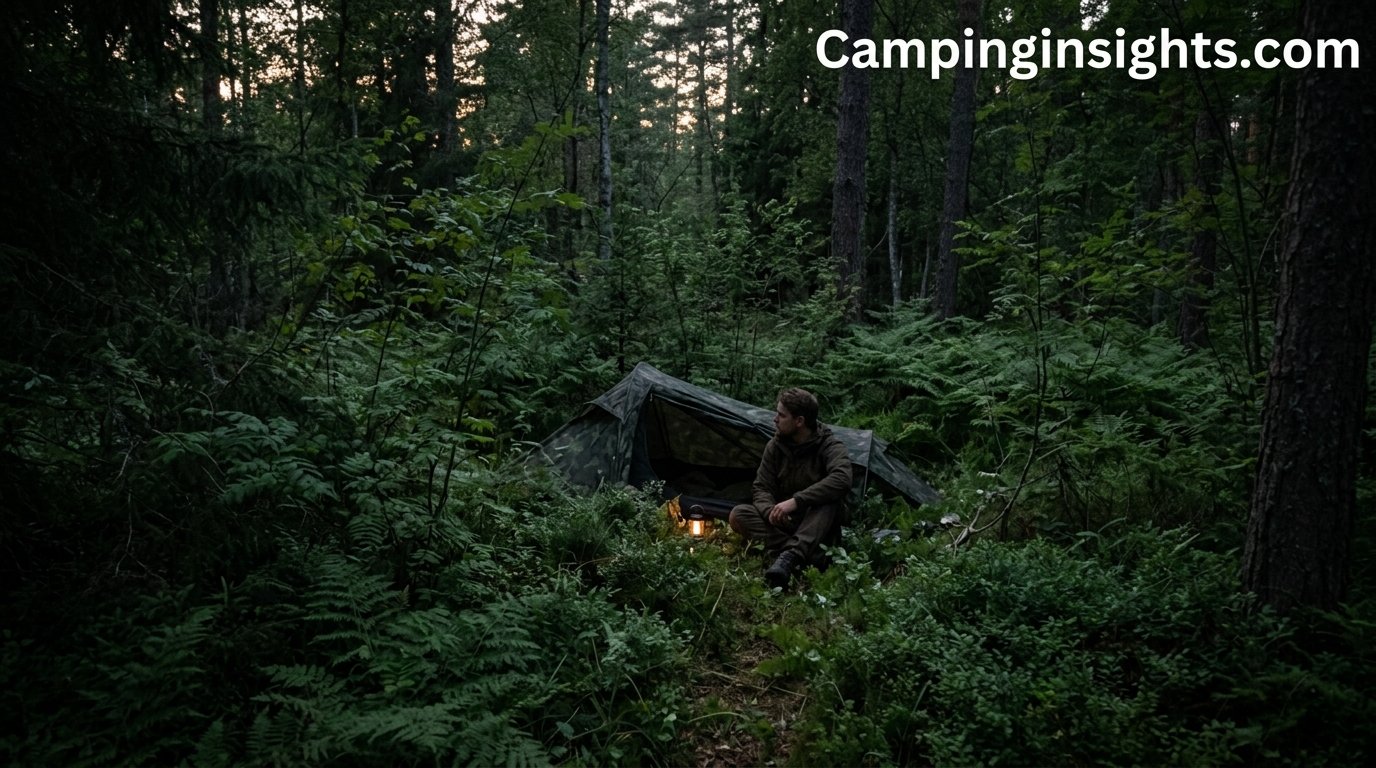
What Is Stealth Camping? The Complete Guide to Camping Unseen
Everything you need to know about staying overnight off-grid, out of sight, and within the law — whether you’re in a van, a tent, or just a sleeping bag under the stars.
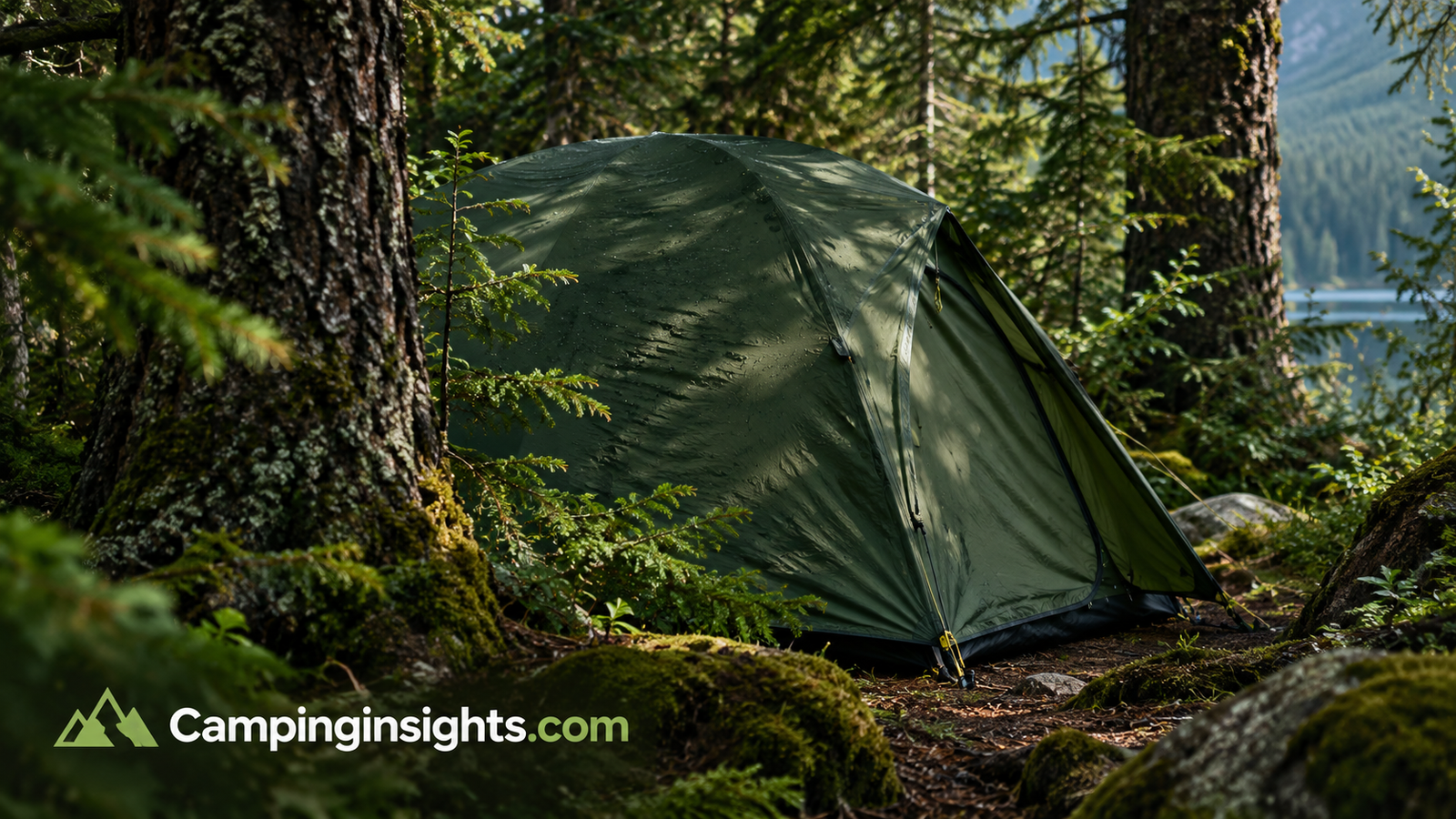
Somewhere between a backcountry backpacking trip and sleeping in your car outside a friend’s apartment lies a quiet, often misunderstood practice called stealth camping. It isn’t about breaking rules for the thrill of it, and it isn’t reserved for people with nowhere else to go. It’s a deliberate style of low-impact, low-visibility overnight camping that’s grown alongside van life, ultralight backpacking, and the broader movement toward cheaper, more flexible travel. If you’ve ever wondered what stealth camping actually means, whether it’s legal, or how people pull it off night after night without drawing attention, this guide walks through all of it. For a broader look at overnight options beyond stealth camping, our camping hub is a good place to start.
What makes stealth camping worth a deep dive is how differently it plays out depending on who’s doing it and where. A thru-hiker tucking a bivy behind a ridge for six hours of sleep is having a completely different experience than a van dweller parked on a quiet street for the night, yet both fall under the same umbrella term. This guide breaks the practice down piece by piece — the legal gray areas, the gear that actually matters, the mistakes that get people noticed, and the etiquette that keeps the whole community welcome on the land it uses. By the end, you should have a realistic, practical picture of whether stealth camping fits your own travel style, and exactly how to do it responsibly if it does.
1. What Is Stealth Camping?
Stealth camping is the practice of camping overnight in a way that’s intentionally discreet — set up late, packed away early, and largely invisible to anyone passing by. The goal isn’t secrecy for its own sake; it’s about minimizing your footprint, avoiding conflict with landowners or authorities, and staying safe by not advertising that you’re alone and vulnerable in an unfamiliar place.
The term is most closely associated with three overlapping communities: thru-hikers who camp just off-trail rather than in designated sites, van-lifers who park overnight in ordinary-looking spots rather than paid campgrounds, and budget travelers who pitch a small tent in an urban green space rather than pay for a hostel. What ties them together is a shared set of habits — arrive late, leave no trace, and never look like you’re staying.
Unlike traditional camping, which usually happens at a marked site with facilities, stealth camping deliberately avoids infrastructure. There’s no campground office, no fire ring, and often no cell signal to call ahead. That trade-off is exactly the point for many people: freedom from reservations, fees, and crowds in exchange for a bit more planning and discretion.
It’s worth being clear about what stealth camping is not. It isn’t squatting, it isn’t a permanent living arrangement, and it isn’t an excuse to ignore land ownership or local law. The practice works precisely because it’s temporary and low-impact — a single night, set up quietly and torn down completely, with nothing left behind to indicate anyone was ever there. The moment stealth camping stops being temporary, it stops being stealth camping and becomes something else entirely, with a very different set of legal and ethical implications.
The word “stealth” also shouldn’t be confused with anything sinister. Most people practicing it are simply hikers, cyclists, and travelers trying to get a good night’s sleep without paying campground fees they can’t always afford, or without adding hours to an already long day by detouring to a designated site. The discretion is a courtesy and a safety measure, not a disguise for anything illicit.
2. Why People Choose Stealth Camping
The motivations behind stealth camping are more varied than most people assume. For long-distance hikers, it’s often the only practical option — designated sites might be miles apart, full, or simply nonexistent along certain stretches of trail. For van dwellers, it’s a financial decision: a single night at a paid RV park can cost as much as a full tank of gas, and stealth parking spreads that money further.
Others are drawn to it for the same reason people are drawn to dispersed camping — a desire to get away from crowded, reservation-only campgrounds and reclaim a bit of spontaneity in travel. There’s also a philosophical thread running through the community: a belief that if you camp responsibly and leave zero trace, you shouldn’t need permission or a fee to spend one quiet night somewhere.
Finally, there’s a simple logistical appeal. Stealth camping lets you stop wherever a long drive or a long day of hiking happens to end, rather than planning your entire route around campground availability.
There’s also a growing group of people who come to stealth camping through necessity rather than preference — seasonal workers, gig-economy drivers, or travelers between long-term housing. For this group, stealth camping isn’t a lifestyle choice so much as a practical bridge, and the same skills that make it comfortable for a weekend hiker — discretion, minimal footprint, quick setup — make it far more sustainable and dignified for someone doing it night after night.
And for a smaller but vocal segment of the community, it’s simply a matter of principle: a belief that quiet, low-impact use of unused land — a forgotten pull-off, an unused corner of a park, a patch of public forest — shouldn’t require a fee or a reservation system at all, provided nothing is damaged and nothing is left behind.
3. The Main Types of Stealth Camping
Stealth camping isn’t a single activity — it takes different shapes depending on how you’re traveling.
- Vehicle stealth camping: Sleeping in a van, car, or truck that’s been set up to look like an ordinary parked vehicle, with curtains or reflective window covers instead of obvious camping gear visible from outside.
- Backpacking stealth camping: Pitching a tent well off the main trail, usually in the last hour of daylight, and breaking camp before other hikers pass by in the morning.
- Urban stealth camping: Setting up briefly in a park, greenbelt, or quiet lot within a city, almost always as a last resort or budget-travel tactic rather than a long-term plan.
- Bikepacking stealth camping: Similar to backpacking, but with a bicycle involved, often requiring an even smaller and quieter footprint since bikes are harder to hide than a tent alone.
A well-packed camping backpack matters more for stealth backpacking than almost any other style, since everything needs to go from “set up” to “gone” in minutes.
Each of these styles demands a slightly different skill set. Vehicle stealth camping is largely about visual disguise — making a vehicle look parked rather than lived-in for the night. Backpacking and bikepacking stealth camping lean more on physical concealment — using terrain and vegetation to break line of sight. Urban stealth camping depends most heavily on timing and noise discipline, since there’s rarely enough natural cover to rely on alone.
Some travelers also blend styles across a single trip — stealth camping in a vehicle for a few nights near a city, then switching to a tent once they reach public land further out. Understanding which type applies to your situation before you leave home makes gear selection and route planning far simpler than trying to prepare for every scenario at once.
Duration also varies by type in ways worth planning around. A backpacking stealth camp is almost always a single night by necessity — hikers are moving on regardless. Vehicle stealth camping, by contrast, sometimes stretches across multiple nights in the same general area, which raises the stakes on staying unnoticed since the odds of being spotted compound with every additional night in the same spot. As a rule of thumb, the longer you intend to stay in one place, the more conservative your site choice and behavior should be.
4. Is Stealth Camping Legal?
This is the question everyone asks first, and the honest answer is: it depends heavily on where you are. There’s no single law called “stealth camping” — instead, legality comes down to a patchwork of local ordinances, land ownership, and enforcement priorities.
| Location Type | General Legal Status | Notes |
|---|---|---|
| National forests / BLM land (US) | Usually legal | Often allows dispersed camping for a limited number of nights per location |
| City streets / residential parking | Often restricted | Many cities have overnight parking bans specifically targeting vehicle camping |
| Big-box store parking lots | Case by case | Some chains tolerate one night; always ask staff or check posted signs |
| Private land without permission | Illegal (trespassing) | Always get permission, even informally, before setting up |
| Backcountry off-trail (public land) | Usually legal | Check local rules — some parks require camping within a set distance of trails |
The safest approach is to research the specific jurisdiction before you go, rather than assuming a rule that applied in one state or country applies everywhere. When in doubt, treat any land you don’t clearly know to be public as private, and default to asking rather than assuming.
Enforcement also tends to matter more than the letter of the law. In many areas, a single quiet night with no fire, no trash, and no noise complaints simply never comes to anyone’s attention, even in a legal gray zone. That said, “usually fine” is not the same as “guaranteed fine,” and the consequences of getting it wrong range from a polite request to move along to a trespassing citation, depending entirely on the property and the person who finds you.
Outside the United States, the picture shifts again. Some countries have long-standing “right to roam” traditions that make informal overnight camping on unfenced land broadly accepted, while others enforce strict no-camping-outside-designated-areas policies with real penalties. If you’re stealth camping while traveling internationally, a few minutes of research into that specific country’s camping laws is far cheaper than finding out the hard way.
5. Essential Gear for Stealth Camping
Stealth camping rewards minimalism. The fewer items you’re setting up and packing away, the faster and quieter your camp becomes — which is the entire point. A solid starting kit looks like this:
Core Gear
- Low-profile, muted-color tent or bivy — see our picks among the best camping tents
- Insulated sleeping pad for warmth and quiet setup
- Headlamp with a red-light mode to preserve night vision and reduce visibility
- Compact camping stove for quick, low-smell meals
Skip or Avoid
- Bright-colored tents or tarps that stand out against natural surroundings
- Loud generators or anything with an engine noise at night
- Open campfires in areas where stealth is the priority
- Bulky furniture — camp chairs, tables, or anything that takes time to pack
Beyond the core list, a few small additions make the biggest practical difference. Trekking poles double as quick tent supports in a pinch, letting you set up in terrain where stakes won’t hold. A dark-colored ground tarp keeps a low-profile tent from picking up a bright, reflective sheen under moonlight or headlights. And a set of earplugs, while easy to overlook, matters more than most first-timers expect — stealth sites are often chosen for cover rather than quiet, and a spot near a road or a trail can be surprisingly noisy.
Weight and pack-down speed should guide every gear decision. If an item can’t be broken down and stowed in under two or three minutes, it’s working against the entire point of stealth camping, no matter how comfortable it makes the night.
Layering is another area where stealth campers tend to plan more carefully than typical weekend campers, since a bulky sleeping bag rated for a wide temperature range can substitute for several separate layers of insulation, cutting down both pack size and setup time. Pairing a mid-weight bag with a lightweight liner gives more flexibility across seasons than carrying multiple bags for different conditions, which matters when every extra item has to be hidden or carried discreetly.
6. How to Choose a Stealth Camping Spot
Spot selection is arguably the single biggest factor in a successful night. The same instincts that go into choosing any campsite apply here, with a few extra filters layered on top.
Look for natural cover — tree lines, brush, or terrain dips that break line of sight from roads and trails. Avoid anywhere with obvious foot traffic patterns, even if it looks empty at the moment you arrive. Arrive close to dusk so you’re not visible setting up, and pick a spot you can leave quickly if needed, ideally within a short walk of your vehicle or the main trail.
If you’re unsure where to even start looking, browsing options for where to go camping in a given region can point you toward public land where dispersed and stealth camping are both realistic and legal.
Timing your arrival matters almost as much as the spot itself. Showing up in full daylight to scout an area is fine, but the actual setup should happen in the last stretch of usable light, once foot and vehicle traffic has thinned out and the site has had a chance to go quiet for the evening. Mapping apps with satellite view are useful for pre-identifying tree cover, dead-end roads, or unused pull-offs before you ever arrive, which cuts down dramatically on the time spent searching once the light starts fading.
It’s also worth having a backup spot in mind. Plenty of seemingly perfect locations turn out to already be occupied, gated, or simply feel wrong once you’re standing in them. Treat your first choice as a starting point rather than a commitment, and be willing to move on if something about the location doesn’t sit right.
7. Stealth Camping in Urban Areas
Urban stealth camping carries a different risk profile than backcountry stealth camping. Instead of wildlife or weather, the main variables are foot traffic, security patrols, and local ordinances. Most experienced urban stealth campers follow a simple pattern: scout the location during daylight without setting anything up, return only after dark, and be packed and gone before the area becomes active again in the morning.
Church parking lots, quiet residential streets with no posted restrictions, and 24-hour retail lots are common (if imperfect) options for vehicle-based stealth camping in cities. For tent-based urban stealth camping, small, unmanicured green spaces on the edges of parks tend to draw far less attention than anything near a main path or playground.
Noise discipline matters more here than anywhere else — zippers, dropped gear, and conversation carry much further in a quiet residential area than they do in the woods.
Lighting is another urban-specific consideration. Streetlights, security cameras, and porch lights all reduce the natural cover that darkness provides in the wilderness, so positioning matters as much as timing. A vehicle parked slightly outside the direct throw of a streetlamp, or a tent tucked behind a hedge line rather than in an open field, will draw far less attention than an otherwise identical setup in a more exposed position.
It’s also worth reading the character of a neighborhood or lot before committing to it. Areas with visible “No Overnight Parking” signage, active security patrols, or a recent history of towing are worth avoiding entirely, even if a spot looks otherwise ideal. A quick, honest conversation with a business owner or property manager — simply asking if one night is acceptable — often resolves the ambiguity faster than trying to guess.
8. Stealth Camping in Forests and Wild Areas
In forests and other wild settings, stealth camping overlaps heavily with standard backcountry practice, but with an added emphasis on staying out of sight of trails and other campers. Weather becomes a bigger factor here than in urban settings, so it’s worth reviewing basics like camping in the rain, keeping a tent warm at night, and waterproofing a tent before you commit to a stealthy, off-trail pitch where help isn’t nearby.
Cold-weather stealth camping adds another layer of complexity — our guide to keeping a tent warm in winter is worth reading if you’re planning to stealth camp outside of peak season, since a quiet, well-hidden site does you no good if you’re too cold to sleep.
Condensation is also a common complaint in forest stealth camps, since low-profile tents pitched under tree cover often have less airflow. If you wake up to a damp interior, our piece on stopping tent condensation covers the fixes.
Wildlife awareness deserves its own mention in forest settings. Stealth camping generally means camping without the food-storage infrastructure — bear boxes, hangers, or designated cooking areas — that formal campgrounds provide. That makes proper food storage, whether it’s an odor-proof bag hung well away from your sleeping area or a hard-sided canister, a non-negotiable part of the routine rather than an optional precaution.
Terrain choice in the woods is about more than cover. Low points can pool water during a surprise overnight rain, dead standing trees (“widowmakers”) pose a real overhead risk, and dense undergrowth can conceal uneven ground that’s uncomfortable or unsafe to sleep on. A few extra minutes spent walking a potential site before committing to it — checking the ground, looking up, and noting the nearest water source — pays off far more often than it feels like it should.
9. Safety Tips for Stealth Camping
Because stealth camping often means camping alone, in unfamiliar places, without the safety net of a staffed campground, safety planning deserves extra attention. Our general camping safety tips are a good baseline, but a few points are specific to stealth camping:
- Tell someone your rough route and expected check-in time, even if you can’t share an exact location
- Trust your instincts about a spot — if something feels off after you arrive, it’s always worth moving on
- Keep your exit route (car keys, shoes, headlamp) within arm’s reach overnight
- Avoid posting your real-time location publicly while you’re still camped there
If you’re traveling with a dog, a few extra precautions apply — see our notes on camping with a dog for keeping a pet calm and quiet in a setting where noise discipline matters.
Communication is another safety layer worth building into every trip, even when full transparency about your exact spot isn’t practical. Sharing a general area, an expected route, and a check-in time with one trusted contact means someone notices quickly if something goes wrong, without requiring you to broadcast a precise, sensitive location. A basic offline map with your route saved in advance also removes a lot of the guesswork if you lose signal partway through the day.
Personal security is worth planning for as deliberately as weather or terrain. That can mean choosing sites with a quick, unobstructed exit path, sleeping with a phone charged and within reach, or simply avoiding areas that already felt uneasy during daytime scouting. None of these steps require expensive gear — they’re habits, and like any habit, they get easier and more automatic the more consistently they’re followed.
10. Common Mistakes First-Timers Make
Most stealth camping mishaps trace back to a handful of avoidable errors:
Common Mistakes
- Setting up too early, while there’s still foot or vehicle traffic nearby
- Choosing a bright tent color that stands out against the landscape
- Cooking food with strong smells near the campsite, which can attract animals or attention
- Leaving visible trash, gear, or tire tracks that reveal the site was used
- Assuming a spot is fine simply because no one stopped you the first time
What to Do Instead
- Wait until near-dusk to set up and be gone at or before first light
- Choose muted greens, browns, or grays for tents and gear
- Cook earlier in the day or well away from your sleeping spot
- Do a final sweep of the site before leaving to confirm nothing was left behind
- Re-evaluate every new location on its own merits, every time
Another mistake worth calling out on its own is over-relying on a single “go-to” spot. A location that worked perfectly once can change quickly — new construction, new signage, a different property owner, or simply a run of bad luck with other campers leaving a mess behind. Treating every stay as a fresh evaluation, rather than assuming a past success guarantees a future one, keeps both legality and safety in check.
First-timers also tend to underestimate how long setup and teardown actually take under pressure. Practicing a full pitch-and-pack cycle in a backyard or local park before relying on it in the field builds the muscle memory needed to move quickly and quietly when it actually matters.
Overpacking is a subtler version of the same problem. Every extra item — a second stove, a stack of extra clothing, a bulky camp pillow — adds time to both setup and teardown, and increases the visual footprint of the site while it’s occupied. Reviewing gear after each trip and cutting anything that didn’t get used is one of the fastest ways to tighten up a stealth camping kit over time.
11. Stealth Camping vs. Regular Camping vs. Boondocking
These three terms get used interchangeably, but they describe meaningfully different experiences.
| Style | Where You Stay | Cost | Visibility |
|---|---|---|---|
| Regular Camping | Designated campgrounds with sites/hookups | Paid, often reservation-based | Fully visible, expected to be there |
| Boondocking / Dispersed Camping | Public land outside formal campgrounds | Usually free | Visible but legally permitted |
| Stealth Camping | Anywhere discreet — urban, roadside, off-trail | Usually free | Intentionally low-visibility, sometimes in a legal gray area |
In short: boondocking is about being legally allowed to camp somewhere without paying, while stealth camping is about not being noticed at all — sometimes because you’re not sure you’re allowed to be there, and sometimes simply as a matter of personal safety and privacy.
These categories also overlap more than the table suggests. A boondocking site on public land can be set up with full stealth-camping discretion — quiet, low-profile, and gone by morning — simply because the camper prefers privacy even where it isn’t strictly required. Likewise, a regular campground stay can borrow a few stealth habits, like minimizing noise and light after dark, purely out of courtesy to neighboring sites. The labels are useful for understanding intent and legality, but in practice, most experienced campers blend elements of all three depending on where a given night’s stop happens to be.
12. Ethics, Leave No Trace, and Community Trust
Stealth camping only remains a viable, tolerated practice as long as the people doing it leave zero evidence behind. Every visible campfire ring, piece of litter, or worn-in patch of ground makes it harder for the next person — and can lead to outright bans in areas that previously tolerated overnight stays.
The core ethic is simple: leave the spot exactly as you found it, or better. That means packing out all trash (including food scraps), avoiding any digging or vegetation clearing, and never assuming a “hidden” spot means a lower standard of care. Planning your route and stops in advance, the same way you would for any trip using a guide like how to plan a camping trip, makes it far easier to stick to Leave No Trace principles even when you’re moving fast and staying discreet.
Community trust is a fragile, collective resource. Landowners, park rangers, and city officials who encounter a clean, undisturbed site after a night of stealth camping are far more likely to keep tolerating the practice than those who find trash, damaged vegetation, or fire scars. Every camper who cuts corners makes the next person’s welcome a little less certain, which is why so much of stealth camping culture places such heavy emphasis on discipline that goes beyond the legal minimum.
Ultimately, the ethics of stealth camping come down to a simple test: could someone walk past your exact site the next morning and have no idea anyone was ever there? If the honest answer is yes, you’ve done it right. If not, that’s worth treating as a signal to tighten up gear, habits, or site selection before the next trip.
That same test scales up to the community level. As more people take up van life, backpacking, and budget travel, stealth camping is likely to become more visible rather than less — which makes individual discipline more important, not less. The travelers who treat every site with care are effectively protecting access for everyone who comes after them, while those who don’t risk accelerating the exact restrictions that would end the practice for good.
Frequently Asked Questions
Is stealth camping the same as illegal camping?
Not necessarily. Stealth camping simply means camping discreetly. Whether it’s legal depends entirely on the location — much of it happens on public land where camping is fully permitted, just done quietly. The “illegal” label only applies when the specific spot chosen happens to prohibit overnight camping, which is why location research matters so much more here than in traditional campground stays.
Can I stealth camp in a national park?
Rules vary widely by park. Many national parks require camping in designated areas only, while some allow backcountry camping with a permit. Always check the specific park’s regulations before assuming off-trail camping is allowed.
Is it safe to stealth camp alone?
Many people do it safely by choosing well-scouted locations, sharing a rough itinerary with someone they trust, and following basic camping safety practices. As with any solo travel, awareness and preparation matter more than luck.
What’s the best tent color for stealth camping?
Muted greens, olive, brown, and gray tones blend best into most natural environments. Bright colors like orange or yellow, while good for visibility in an emergency, work against the goal of staying unnoticed. Some stealth campers even carry a plain dark rainfly or cover specifically to throw over a brighter tent when discretion matters more than usual.
Can you have a campfire while stealth camping?
It’s generally discouraged. Fires are visible from a distance, produce smoke and smell, and leave obvious evidence of a campsite. Most stealth campers rely on a small stove instead.
How is stealth camping different from van life boondocking?
Boondocking usually refers to legally camping on public land without hookups, often quite openly. Stealth camping in a van specifically emphasizes blending in — often in urban or suburban settings where overnight parking isn’t clearly sanctioned, using window covers and a low-key vehicle appearance to avoid drawing attention.
What time should I set up a stealth camp?
As close to dusk as safely possible, so you’re not seen setting up. Aim to have your site fully broken down again before sunrise or before the area becomes active.
Do I need a permit to stealth camp?
It depends on the land. Public land such as national forests may allow dispersed camping without a permit, while some parks and cities require one, and private land always requires the owner’s permission regardless of how discreet the stay is. When in doubt, check with the relevant land management agency before you go.
Can you stealth camp in your car?
Yes — this is one of the most common forms of stealth camping, particularly for road-trippers and van dwellers. Reflective window covers and a low profile help avoid drawing attention.
What should I do if someone approaches my stealth camp?
Stay calm and polite. In most cases, being asked to move on is the worst outcome, especially if you’re respectful and clearly have minimal impact on the area. Explain briefly that you’re just passing through for one night, apologize if it caused any concern, and always be prepared to pack up and relocate quickly if asked.
Is stealth camping suitable for beginners?
It’s best attempted after you’re comfortable with regular camping fundamentals. Working through a beginner camping checklist first will help you build the baseline skills — pitching quickly, cooking efficiently, staying warm — that stealth camping demands under tighter time pressure.
Does stealth camping cost anything?
Usually not, which is part of its appeal. Aside from the upfront cost of gear, most stealth camping spots are free, unlike paid campgrounds or RV parks.
Conclusion
Stealth camping sits at the intersection of practicality, freedom, and respect for the places you pass through. Done well, it’s simply quiet, low-impact overnight travel — arrive late, leave no trace, and move on before anyone knows you were there. Done poorly, it can damage trust for the next traveler and land you in avoidable trouble. The difference almost always comes down to preparation: the right gear, a well-chosen spot, and a genuine commitment to leaving every site untouched.
If you’re gearing up for your first attempt, start with a proven, packable setup.
Shop Stealth Camping Essentials