The Complete Camping Checklist: What to Bring So You Never Forget the Essentials
Whether you’re heading out for your first overnight trip or your fiftieth, this checklist walks through everything you actually need — shelter, food, clothing, safety gear, and the small extras that make a campsite feel like home.
There’s a particular kind of stress that hits about ten minutes after you’ve pulled onto the highway, gear packed and campsite booked: did I forget something? Maybe it’s the tent stakes still sitting on the garage floor, or the first-aid kit you meant to restock last spring. A good camping trip doesn’t come down to luck — it comes down to a checklist you actually trust.
This guide breaks the process into twelve practical categories, from shelter and sleep systems to food, clothing, safety, and the small comfort items that separate a miserable night from a memorable one. Whether you’re car camping at a developed site or hiking a few miles into the backcountry, you’ll find a version of this list that fits your trip. If you’re still working out the basics, our beginner’s camping checklist is a good companion read alongside this one, and our camping hub has deeper guides on nearly every topic mentioned here.
Let’s get your gear list sorted, section by section, so the only thing you’re thinking about at the campsite is which way the sunset is facing.
1. Why a Camping Checklist Actually Matters
It’s tempting to think a checklist is only for beginners, but experienced campers rely on them just as much — often more. The difference is that a seasoned camper’s list has been refined over dozens of trips, shaped by things forgotten, gear that failed, and weather that surprised them. A checklist isn’t about being over-prepared; it’s about removing the guesswork so you can actually relax once you arrive.
There are three practical reasons a written or digital checklist beats packing from memory. First, memory is unreliable under time pressure — the morning of a trip is rarely calm, and that’s exactly when small but critical items get skipped. Second, a checklist lets you separate “nice to have” from “trip-ending if missing,” which matters when you’re deciding what fits in a trunk or a 65-liter pack. Third, a checklist becomes a living document. Every trip where something goes wrong (a leaky rain fly, a dead headlamp battery) is a chance to update the list so it never happens again.
If you’re heading somewhere with a less conventional setup — for example a spot with no marked sites or amenities — it’s worth reading up on dispersed camping before you finalize your list, since the gear priorities shift when there’s no bathroom, water spigot, or trash service nearby. The same goes for minimalist styles like stealth camping, where the whole point is carrying less and staying inconspicuous.
Below, each section includes a printable-style checklist grid you can scan quickly, plus context on why each item matters and what to look for when buying or packing it. Use the table of contents to jump straight to the category you’re missing.
One practical decision worth making early is whether you’ll keep your checklist on paper or on your phone. A paper checklist works even with zero signal or a dead battery, and there’s something satisfying about physically checking a box before you shut the trunk. A digital checklist, on the other hand, is easy to duplicate for every future trip and easy to edit the moment you notice a gap — many campers keep a simple note or spreadsheet they copy and adjust for each destination. Neither approach is objectively better; the right one is whichever you’ll actually open the night before you pack, so pick the format that fits how you already plan trips.
Grab a printable checklist notepad or gear organizer to keep your packing list on hand at the campsite.
Shop on Amazon2. Shelter & Sleep Systems
Shelter and sleep gear form the backbone of any camping trip. Everything else is secondary if you’re cold, wet, or sleepless. Start with the tent: size it for one more person than you think you need, since gear takes up floor space too. A three-person tent is a much more comfortable fit for two adults plus backpacks than it sounds on paper. Our full best camping tents guide breaks down options by season, weight, and budget if you’re shopping for a new one.
Sleeping System Basics
Underneath the tent, your sleeping setup does more work than most people realize. A sleeping bag rated for a temperature well below what you expect is safer than one rated exactly to the forecast low, since “comfort” and “survival” ratings on bag labels differ and manufacturers aren’t always consistent about which one they’re advertising. Pair the bag with an insulated sleeping pad — this matters more than people expect, because the ground pulls heat away from your body far faster than air does. If you’re heading out in shoulder season or winter, our guide to the best sleeping pad for winter camping covers R-value ratings in detail.
For car campers who want a bed-like setup, a cot lifts you off the cold ground entirely and adds storage space underneath. Side sleepers in particular should look for a cot with enough width and a stable frame — we cover this in our review of the best camping cot for side sleepers.
Don’t overlook stakes and guylines. Standard stakes bend or pop out entirely in rocky or sandy soil, which is a fast way to end up with a collapsed tent at 2 a.m. If your destination has hard or loose ground, upgrade to a set built for it — see our picks for the best tent stakes for rocky ground.
- Tent (sized up one person)
- Rain fly / footprint
- Tent stakes + guylines
- Mallet or stake hammer
- Sleeping bag (season-rated)
- Sleeping pad
- Camping pillow
- Cot (optional, car camping)
- Extra tent poles / repair sleeve
- Groundsheet or tarp
Setup technique matters as much as the gear itself. Pitch your tent on level, well-draining ground rather than the lowest point of a site, since water naturally pools there during rain. Keep rainfly vents open even in cool weather — sealing a tent up completely traps the moisture from breathing and cooking, which is one of the most common causes of a damp tent interior that has nothing to do with an actual leak. Give your tent, sleeping bag, and pad a quick inspection before each trip too: a small tear caught at home is a five-minute fix, while the same tear discovered at the campsite is a much bigger problem.
Browse tents, sleeping pads, and cots currently available on Amazon.
Shop on Amazon3. Kitchen & Food Essentials
Camp food doesn’t need to be complicated, but a missing can opener or a stove with no fuel can turn dinner into a problem fast. Start with your cook setup: a two-burner propane stove works well for car camping and larger groups, while a compact canister stove is better suited to backpacking or minimalist setups. Our camping stove review compares boil times, fuel efficiency, and packability across popular models.
Meal Planning Basics
Plan meals by day and by cook time, not just by what sounds good at the grocery store. Foods that need refrigeration are the first to spoil if your cooler ice melts faster than expected, so lean on shelf-stable staples for later days of a trip: rice, pasta, canned beans, dehydrated meals, and trail mix all hold up well. For inspiration beyond hot dogs and s’mores, our camping food ideas guide has make-ahead and one-pot options that scale for groups.
| Item | Weekend Trip | Week-Long Trip |
|---|---|---|
| Stove + fuel | 1 canister / small propane tank | 2+ tanks or a refill plan |
| Cooler ice | 1 bag, refreeze not needed | Block ice + daily top-off plan |
| Cookware | 1 pot, 1 pan | Nesting set + extra utensils |
| Water storage | 2–3 gallons | Refill container + filtration |
| Trash bags | 2–3 | 1 roll, packed out daily |
- Camp stove + fuel
- Lighter / waterproof matches
- Cookware (pot, pan, kettle)
- Utensils + cutting board
- Plates, bowls, mugs
- Cooler + ice packs
- Water containers
- Water filter or purification tablets
- Dish soap + scrubber
- Trash bags / bear-proof container
If you’re cooking for a group, assign meals to specific people or nights ahead of time rather than figuring it out at the campsite — it prevents duplicate purchases and the awkward moment when nobody planned dinner. Pre-chop vegetables and pre-portion spices into small containers or bags at home to cut down on cook time and cleanup at the site. It’s also worth packing one extra meal’s worth of shelf-stable food beyond what you’ve planned, as a buffer against a delayed departure, a rained-out cooking session, or an extra hungry night. Wildlife-active areas may require food to be stored in a bear canister or hung well away from your tent overnight — check the specific rules for your campground before you go.
Stock up on camp stoves, cookware sets, and coolers before your trip.
Shop on Amazon4. Clothing & Layering Strategy
Clothing mistakes are some of the most common — and most avoidable — camping regrets. The fix is layering: a moisture-wicking base layer, an insulating mid-layer, and a waterproof or windproof outer shell. Cotton is the biggest offender to avoid in cool or wet conditions, since it holds moisture against your skin and loses insulating value once damp. Synthetic or wool base layers dry faster and keep you warmer even when wet.
Building a Layering System
Pack for the temperature swing between day and night, not just the daytime high. Even in summer, mountain and desert campsites can drop 20–30 degrees after sunset. A packable insulated jacket takes up little space and covers a wide range of conditions, while a lightweight rain shell handles both wind and unexpected showers. If rain is a real possibility on your trip, pair your clothing plan with our camping in the rain tips for keeping dry gear dry.
Synthetic / Wool Layers
- Dry quickly after rain or sweat
- Retain some warmth when damp
- Lighter to pack
Cotton Layers
- Slow to dry, stays wet for hours
- Loses insulation once damp
- Fine only in warm, dry conditions
- Moisture-wicking base layers
- Insulating mid-layer (fleece/puffy)
- Waterproof/windproof shell
- Extra socks (more than you think)
- Sturdy footwear + camp shoes
- Hat (sun + warm hat)
- Gloves
- Sleepwear (dedicated, dry set)
- Swimwear (if applicable)
- Bandana or buff
Footwear deserves its own attention beyond “bring boots.” Break in any new hiking boots well before your trip — a campsite is the worst place to discover a blister-causing pressure point. Pack a dedicated pair of camp shoes or sandals separate from your hiking footwear, so you have something dry and comfortable to change into once the day’s activity is done and your boots need to air out. In wet conditions, a spare pair of socks kept in a dry bag specifically for the walk from the car to the tent can save you from starting the trip with cold, damp feet.
Find layering essentials, rain shells, and camp footwear for any season.
Shop on AmazonShop navigation tools, insect repellent, and outdoor safety essentials.
Shop on Amazon6. Lighting & Power
Once the sun goes down at a campsite, lighting stops being a convenience and becomes a necessity — for cooking, navigating to the bathroom, and general safety. A headlamp is the single most useful light source because it keeps your hands free, and a lantern provides ambient light for the whole campsite or tent interior.
What to Look For in Camp Lighting
Look for a headlamp with adjustable brightness and a red-light mode, which preserves night vision and is less disruptive to campmates or wildlife. Battery life matters more than peak brightness for most trips — a light that runs dim for ten hours beats one that’s blinding for one. For power, a small power bank keeps phones and GPS devices charged on shorter trips, while a portable solar panel is worth considering for trips longer than a few days.
| Feature | Why It Matters |
|---|---|
| Adjustable brightness | Saves battery for tasks that don’t need full power |
| Red-light mode | Preserves night vision, less disruptive to wildlife |
| Water resistance rating | Survives rain and morning dew |
| Rechargeable + battery backup | Flexibility if you can’t recharge daily |
| Lantern with hanging hook | Frees up table space, lights whole tent |
- Headlamp + spare batteries
- Lantern (LED or fuel)
- Power bank
- Solar charger (longer trips)
- Backup flashlight
- Glow sticks (kid-friendly light)
Battery management is easy to overlook until you’re fumbling in the dark. Pack fresh, unopened batteries rather than ones pulled from a junk drawer, since partially used batteries are one of the more common reasons a headlamp dies mid-trip. Rechargeable lithium batteries hold up noticeably better in cold weather than standard alkaline ones, so if you’re camping in low temperatures, consider switching your headlamp and lantern over ahead of time. Keeping spare batteries in an inside jacket pocket overnight also helps preserve their charge in freezing conditions.
Compare headlamps, lanterns, and portable chargers for your next trip.
Shop on Amazon7. Hygiene & First Aid
A basic hygiene and first-aid kit prevents small problems from turning into trip-ending ones. Blisters, cuts, bug bites, and mild sunburn are the most common camping ailments, and nearly all of them are manageable with a compact kit if you catch them early. Pack a first-aid kit specifically sized for the number of people and the length of your trip, and actually check the expiration dates on medication before you leave.
Staying Clean at Camp
Biodegradable soap, hand sanitizer, and a quick-dry towel cover most hygiene needs without adding much weight. If you’re bringing a dog along, hygiene planning extends to them too — our camping with a dog guide covers waste bags, paw care, and tick checks specifically.
- First-aid kit
- Any personal medications
- Hand sanitizer
- Biodegradable soap
- Quick-dry towel
- Toothbrush + toothpaste
- Toilet paper + trowel
- Wet wipes
- Blister treatment
- Tick removal tool
For group trips or trips with kids, it’s worth building a slightly more thorough kit than a standard weekend one, since more people means more chances for a minor scrape or an unexpected allergic reaction. Include children’s-dose versions of any pain reliever or allergy medication if kids are along, along with any prescription medications packed in their original, labeled containers. A small laminated card listing each person’s allergies and emergency contact, tucked inside the kit, is a small step that pays off if an adult in the group is the one who needs help and can’t speak for themselves.
Find compact first-aid kits and camp hygiene essentials.
Shop on Amazon8. Tools & Repair Kit
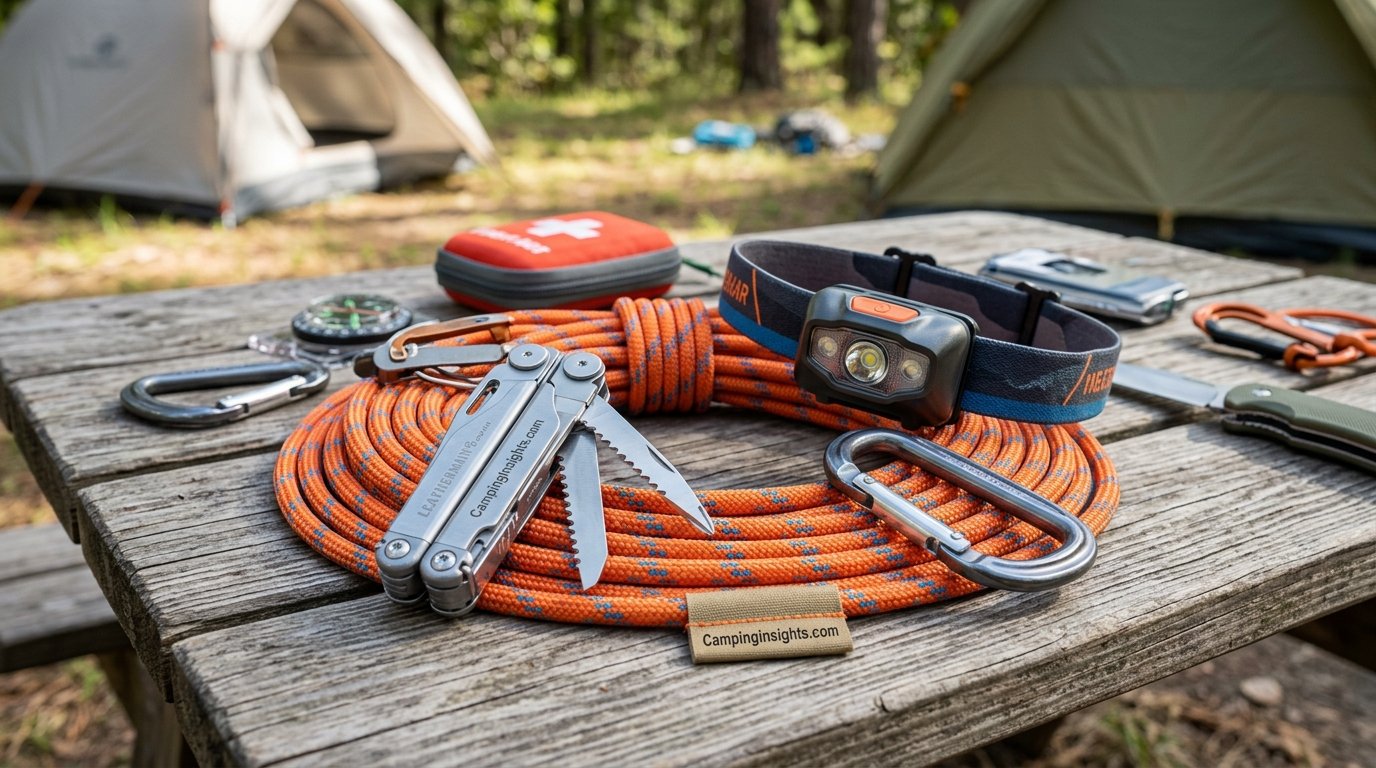
Gear fails at the worst times — a snapped tent pole, a torn rain fly, a leaking air mattress. A small repair kit weighs almost nothing but can save an entire trip. At minimum, carry duct tape, a sewing kit, spare cord, and a patch kit matched to your tent and sleeping pad material.
What Belongs in a Field Repair Kit
Beyond emergency fixes, general tools make daily camp life easier: a multi-tool for dozens of small tasks, a hatchet or saw if fires are permitted, and paracord for everything from clotheslines to gear repairs. For a full breakdown of what to pack specifically for tent failures, see our guide to the best tent repair kit, and if you’ve ever woken up to dampness inside a tent that shouldn’t be leaking, our piece on why is my tent wet inside walks through condensation versus actual leaks.
- Duct tape
- Tent repair kit / patch kit
- Multi-tool
- Paracord
- Sewing kit
- Zip ties
- Extra tent stakes
- Hatchet or folding saw
- Work gloves
- Small tarp (backup shelter)
A common question is whether to carry a dedicated knife, a multi-tool, or both. A fixed-blade knife is more durable and easier to use one-handed for food prep or cutting cordage, while a multi-tool packs pliers, a screwdriver, and a small blade into one compact unit that’s better suited to gear repairs than food tasks. Most experienced campers end up carrying both, since they solve slightly different problems — but if you’re only bringing one, a quality multi-tool covers a broader range of unexpected situations at the campsite.
Pick up a field repair kit and multi-tool before you’re stuck improvising.
Shop on Amazon9. Campsite Comfort & Extras
Once the essentials are covered, comfort items are what turn a functional trip into an enjoyable one. Camp chairs, a folding table, and a hammock all add real quality of life without much packing cost for car camping trips. Choosing the right site to set all of this up matters too — our guide on how to choose a campsite covers drainage, wind exposure, and privacy factors worth checking before you unpack.
Small Extras Worth the Space
A few low-weight extras consistently show up on experienced campers’ lists: a deck of cards or travel game for downtime, a portable speaker for camp evenings (kept at a reasonable volume), binoculars for wildlife or stargazing, and a camp broom for keeping a tent floor free of dirt and debris.
- Camp chairs
- Folding table
- Hammock
- Games / cards
- Binoculars
- Camp broom / dustpan
- Clothesline
- Reusable dry bags
- Camera
- Journal or trip notebook
A dedicated shade setup is one of the more underrated comfort upgrades, especially for sites without much natural tree cover. A simple tarp strung between trees or trekking poles gives you a shaded gathering spot for cooking and hanging out during the hottest part of the day, and doubles as extra rain protection over a cooking area if weather turns. It’s a low-cost, low-weight addition that noticeably improves how much time you actually want to spend outside your tent.
Upgrade your camp comfort with chairs, tables, and hammocks.
Shop on Amazon10. Weather-Specific Additions
Your base checklist covers most trips, but weather extremes call for specific additions. Rain changes everything from footwear to how you store gear overnight — see our full camping in the rain tips guide for a rain-specific packing approach, and pair it with our steps on how to make a tent waterproof if your tent is a few seasons old and the factory coating has worn thin.
Cold-Weather Additions
Cold changes your sleep system priorities most of all. If overnight temperatures are dropping into the 30s or lower, read our guides on how to keep a tent warm at night and, for genuinely cold conditions, how to keep a tent warm in winter. Condensation is a separate but related problem in cold weather — trapped moisture from breathing and cooking can soak a tent interior even without rain, which is why our guide to stopping condensation in a tent is worth reading before a cold-weather trip.
| Condition | Add These Items |
|---|---|
| Rain | Waterproof stuff sacks, extra tarp, gaiters, quick-dry towel |
| Cold / winter | Insulated sleeping pad, cold-rated bag, hand warmers, insulated boots |
| Heat | Extra water, electrolyte tablets, sun shade, wide-brim hat |
| Wind | Extra guylines, heavier stakes, low-profile tent setup |
Hot-weather camping brings its own set of risks that are easy to underestimate, especially at higher elevations or in exposed desert terrain where shade is scarce. Pack more water than you think you’ll need, and add electrolyte tablets or drink mixes to replace what you lose through sweat, since water alone doesn’t fully address the salt and mineral loss that leads to cramping and fatigue. Time strenuous activities like setting up camp or hiking for the cooler morning and evening hours, and choose light-colored, breathable clothing over dark fabrics that absorb heat.
Get rain gear, cold-weather layers, and shade shelters for changing conditions.
Shop on Amazon11. Camping with Kids or Pets
Bringing kids or a dog along adds an extra layer of planning, but it’s rarely as complicated as first-timers expect. For dogs, the essentials are food, water, waste bags, a leash or long line, and a way to keep them warm at night if temperatures drop — our camping with a dog guide covers the full list along with tips for keeping them calm around unfamiliar wildlife and campsite noise.
Packing for Kids
For kids, comfort and boredom prevention matter more than gear complexity. Familiar snacks, a favorite small toy, and simple games go a long way toward a smooth trip. Pack extra layers for kids specifically, since they tend to get cold faster than adults and are less likely to say something until they’re already uncomfortable. A dedicated kids’ headlamp also makes nighttime bathroom trips far less stressful for everyone involved.
- Dog food + bowls
- Leash / long line + waste bags
- Dog bed or blanket
- Kids’ extra layers
- Familiar snacks
- Small toys / games
- Kids’ headlamp
- Baby wipes (if applicable)
- Portable potty (young kids)
- Extra blankets for warmth
Whether you’re supervising kids or a dog, water and wildlife are the two areas that deserve the closest attention. Lakes, rivers, and even shallow creek beds near a campsite can have currents or drop-offs that aren’t obvious at a glance, so establish clear boundaries before anyone starts exploring rather than reacting after the fact. Keep both kids and pets a safe distance from any wildlife encountered near camp, no matter how harmless it looks — this protects the animal as much as it protects your family, since wildlife that gets used to close human contact often ends up worse off in the long run.
Shop dog camping gear and kid-friendly outdoor essentials.
Shop on Amazon12. Packing Strategy & Final Pre-Trip Checklist
Even a perfect gear list falls apart if it’s packed badly. Group items by category — sleep, kitchen, clothing, safety — using separate bins, dry bags, or packing cubes so you’re not digging through everything to find one item. Heavier items go on the bottom of a backpack close to your back for balance, while frequently used items (rain shell, snacks, headlamp) stay accessible near the top or in outer pockets.
Choosing the Right Bag
For car camping, duffel bags and rigid bins are easier to load and stack than backpacks. For backpacking or hike-in sites, fit and load distribution matter far more than capacity alone — our guide to the best camping backpack covers frame types and sizing by trip length. Before you finalize anything, it also helps to zoom out and think through the whole trip timeline, not just the gear — our guide on how to plan a camping trip walks through booking, routing, and scheduling around this checklist.
- Packing cubes or dry bags
- Duffel bag or backpack
- Car camping bins
- Trip itinerary printed/saved
- Reservation confirmations
- Fuel + supplies for the drive
- Final gear walkthrough
- Weather check the morning of
Labeling your storage bins or dry bags by category — “kitchen,” “sleep system,” “first aid” — saves real time both when packing the car and when you’re digging for something specific after dark at the campsite. Keeping a standing inventory taped inside the lid of each bin also makes it easy to spot at a glance whether something is missing before you load the car, rather than discovering the gap once you’re already at the site. Over time, this system turns packing from a stressful scramble into a routine that takes a fraction of the time it used to.
Find packing cubes, duffel bags, and storage bins to organize your gear.
Shop on AmazonFrequently Asked Questions
What are the top 10 things to bring camping?
At minimum: a tent, sleeping bag, sleeping pad, headlamp, food and water, a stove or cooking method, a first-aid kit, weather-appropriate clothing, navigation tools, and a multi-tool or knife. Everything else on this checklist builds outward from those basics.
How do I make a camping checklist for beginners?
Start with the twelve categories in this guide — shelter, kitchen, clothing, safety, lighting, hygiene, tools, comfort, weather, kids/pets, and packing — and check off only what applies to your specific trip length and location. Our beginner’s camping checklist simplifies this further for a first trip.
What should I pack for a weekend camping trip versus a week-long trip?
Weekend trips need less redundancy — one stove fuel canister, a single cooler refill, and minimal spare clothing. Week-long trips need a resupply or storage plan for food, water, and fuel, along with more spare clothing and batteries, since you won’t have easy access to a store.
Do I need a first-aid kit for camping?
Yes, even for short trips close to civilization. Minor injuries like blisters, cuts, and bug bites are common, and a compact kit prevents them from derailing your trip. Check expiration dates on any medication before each trip.
What clothing should I avoid when camping?
Avoid cotton as a base layer in cool or wet conditions, since it holds moisture and loses insulating value once damp. Synthetic or wool layers dry faster and keep you warmer even if they get wet.
How much water should I bring camping?
A common guideline is about one gallon per person per day, covering drinking, cooking, and basic hygiene. Hot weather, high elevation, or strenuous activity increases that need, so plan on the higher end if conditions are demanding.
What’s the best way to keep a tent warm at night?
Layer your sleeping system with an insulated pad underneath a properly rated sleeping bag, and consider a liner for extra warmth. Our guide on how to keep a tent warm at night covers ventilation balance, insulation, and safe heating options in more detail.
What camping gear do I need for rain?
A waterproof rain fly, a groundsheet or footprint, waterproof stuff sacks for dry clothing, and a rain shell for yourself are the core essentials. Our camping in the rain tips guide covers site selection and setup adjustments for wet weather too.
Can I bring my dog camping, and what do I need to pack?
Most developed campsites allow dogs on a leash. Pack food, water, waste bags, a leash or long line, a bed or blanket, and something warm for cold nights. See our camping with a dog guide for a full packing list and behavior tips.
What should I pack for camping with young kids?
Prioritize extra warm layers, familiar snacks, simple games, and a kid-sized headlamp for nighttime comfort. Keeping their routine as normal as possible — regular meals, a familiar sleeping setup — usually matters more than extra gear.
How do I keep bugs away while camping?
Use an EPA-registered insect repellent, wear long sleeves and pants at dawn and dusk when bugs are most active, and avoid setting up camp near standing water when possible. Our full guide on how to keep bugs away while camping covers repellent types and campsite setup tricks.
What’s the difference between car camping and backpacking gear lists?
Car camping prioritizes comfort — larger tents, coolers, chairs, and tables — since weight isn’t a major constraint. Backpacking gear lists prioritize weight and packed size above all else, favoring lightweight, multi-use items and smaller quantities of everything.
Final Thoughts: Build a Checklist You’ll Actually Reuse
The best camping checklist isn’t the longest one — it’s the one you’ll actually use every time you pack. Start with the categories above, adjust them to your typical trip style (car camping versus backcountry, solo versus family, three-season versus winter), and keep a running note of anything you wished you’d packed after each trip. Over a few outings, you’ll end up with a personalized list that takes the guesswork out of every future adventure.
If you’re still deciding where to go with your newly packed gear, our guide on where to go camping is a good next stop.
Ready to fill the gaps in your gear closet? Browse today’s top-rated camping essentials.
Shop on Amazon