What Is Car Camping? The Complete Beginner’s Guide
Everything you need to know about the most flexible, gear-friendly way to sleep under the stars — without carrying it all on your back.
If you’ve ever pictured yourself sleeping outdoors but the idea of hauling a 40-pound backpack up a mountain trail sounds miserable, car camping was invented for you. It sits in the sweet spot between a night in a hotel and a full backcountry expedition — real fresh air and real stars, minus the suffering. This guide walks through exactly what car camping is, how it differs from other styles of camping, and everything you need to plan a trip that actually goes smoothly.
What Car Camping Actually Means
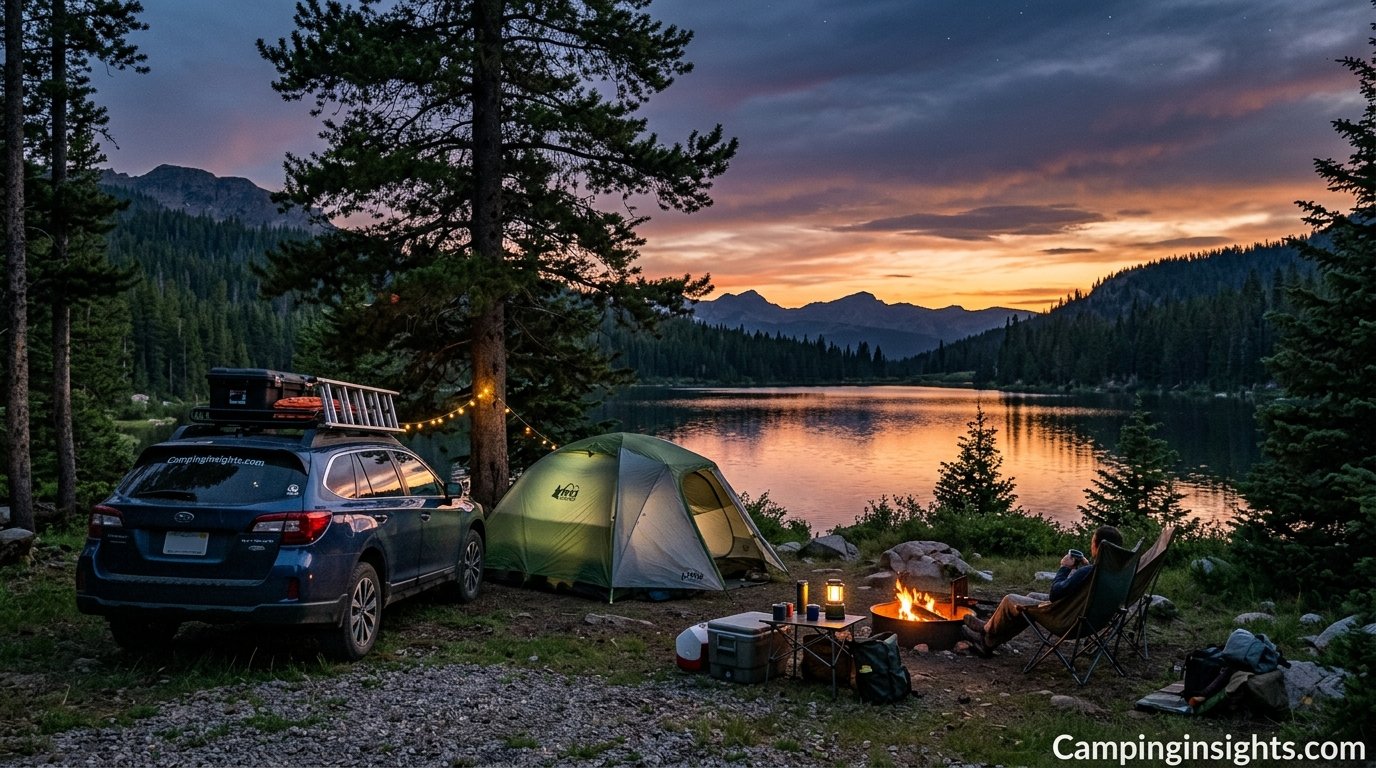
At its core, car camping is any camping trip where your vehicle does the heavy lifting. Instead of packing a backpack with the bare minimum and hiking miles into the wilderness, you drive directly to your campsite — or park within a short walk of it — and unload everything from the trunk. That single difference changes the entire experience. You’re no longer counting ounces or choosing between a warm sleeping bag and a second pair of socks. You bring the cooler. You bring the folding chairs. You bring the extra pillow you’d never dream of carrying on a trail.
Car camping usually happens in designated campgrounds with marked sites, though it can also mean dispersed camping on public land where you park off a forest road and set up nearby. What ties every version of it together is the vehicle: it’s your gear locker, your shelter from bad weather while you cook, and often your emergency exit if a storm rolls in. For a deeper look at the loosely related idea of camping without a designated site, our guide on what dispersed camping is covers where those boundaries blur.
It’s worth noting that “car camping” doesn’t require an SUV or a truck. Plenty of people do it comfortably out of a compact sedan or hatchback — the key ingredient isn’t the vehicle, it’s the mindset. You’re camping with abundance rather than camping with restraint, and that abundance is what makes it such a good entry point for people new to sleeping outside.
The term itself has been around for decades, but it’s taken on new life in recent years as more people discover it as a low-cost, low-commitment alternative to hotel travel. Social media has amplified certain versions of it — the styled-out truck bed setup, the rooftop tent on an overlanding rig — but the everyday reality is far simpler for most families. It’s a sedan trunk packed with a dome tent, a couple of sleeping bags, and a cooler, parked at a state park an hour from home. Both versions count, and neither is more “correct” than the other. What matters is that the vehicle is doing the carrying, not your back.
Car camping also tends to blur into related terms depending on who’s using them. Some campgrounds label every non-RV site as a “tent site,” whether or not the occupant drove there. Others use “car camping” specifically to distinguish drive-up sites from walk-in tent sites that require carrying gear a short distance from the parking area. When you’re booking a site, it’s worth reading the fine print — a “walk-in” tent site at a national park might still be only a hundred feet from the lot, but that hundred feet matters if you’ve packed like a car camper rather than a backpacker.
Car Camping vs. Backpacking vs. RVing
Car camping occupies a specific niche in the wider world of outdoor travel, and understanding where it sits relative to backpacking and RVing helps clarify why so many people gravitate toward it as their default style of trip.
| Style | Gear Limit | Typical Cost | Comfort Level | Best For |
|---|---|---|---|---|
| Car Camping | Trunk-limited, generous | Low to moderate | High | Families, beginners, weekend trips |
| Backpacking | What fits on your back (~25–40 lbs) | Moderate (lighter gear costs more) | Basic | Remote trails, solitude, fitness-minded campers |
| Tent Camping (walk-in) | What you can carry a short distance | Low | Moderate | Sites where vehicles aren’t allowed near the tent |
| RV / Van Camping | Whatever the rig holds | High (vehicle + fuel + sites) | Very high | Long trips, full-time travelers, extreme weather comfort |
The line between car camping and plain camping in general is often just semantics, but the distinction matters when you’re choosing gear. A backpacker might buy the lightest, most compact one-person tent on the market; a car camper can happily choose a roomier, heavier family tent because they’re never carrying it more than a few steps from the trunk. That’s also why our best camping tents roundup leans toward comfort and livable space rather than pack weight.
RVing sits at the far comfortable end of the spectrum, and it’s tempting to think of it as simply “car camping with a bigger vehicle.” In practice, the two experiences feel quite different. An RV insulates you from the outdoors almost entirely — you sleep in a real bed, cook on a real stove, and can run air conditioning through a heat wave. Car camping keeps you closer to the elements by design: you’re still sleeping in a tent, still cooking over a flame or a portable burner, and still dealing with whatever the weather decides to do. For a lot of people, that closer contact with the outdoors is the entire point, which is why car camping remains popular even among people who could easily afford an RV.
Where Walk-In Tent Camping Fits
Walk-in tent camping is a smaller, in-between category that’s worth understanding because campground listings use the term constantly. A walk-in site means you park in a shared lot and carry your gear a short distance — sometimes only a couple hundred feet — to a tent pad that vehicles can’t reach directly. It’s not backpacking, since the distance is minimal and you’re never far from your car, but it does mean leaving the “unlimited gear” mindset of true car camping behind. If a listing specifies walk-in access, plan your packing list closer to a backpacking trip than a full car camping haul.
Why People Love Car Camping
The appeal of car camping goes well beyond convenience, though convenience is a big part of it. Here’s what keeps people coming back to this style of trip year after year.
What Works Well
- Low barrier to entry for total beginners
- Room for real comforts: air mattresses, coolers, camp chairs
- Easier with kids, pets, and larger groups
- Cheaper than a hotel for multi-night trips
- A built-in emergency shelter if weather turns bad
Trade-Offs to Expect
- Ties your trip to drivable, often busier locations
- Less solitude than backcountry backpacking
- Requires a vehicle in decent working condition
- Popular campgrounds can book out weeks ahead
For most first-time campers, the pros outweigh the cons by a wide margin. You get to test whether you actually enjoy sleeping outdoors before investing in ultralight gear or committing to a multi-day trail. If it turns out you love it, car camping remains a totally legitimate way to camp for life — plenty of experienced outdoors people still prefer it for weekend trips.
Families in particular tend to gravitate toward car camping once kids are old enough to sleep through a night outside but not old enough to carry their own gear on a trail. A car camping trip lets parents bring a portable crib, a stack of extra blankets, and enough snacks to survive any level of pickiness, none of which would be realistic on a backpacking trip. The same logic applies to multi-generational trips: grandparents who can’t manage a rough trail can still enjoy an evening around a campfire if the site is a short walk from a parked car.
There’s also a financial angle worth spelling out. A weekend road trip that would otherwise cost two nights of hotel rates can often be done for a fraction of that in campsite fees, with the difference easily covering gas for the drive. Over a summer of regular trips, that savings adds up, and it’s one of the quieter reasons car camping has stayed popular through periods when travel budgets get tighter.
Essential Gear Checklist
Because car camping doesn’t punish you for extra weight, it’s tempting to overpack. A better approach is to build a core kit you reuse every trip, then add trip-specific extras on top. Our full camping checklist for beginners goes deeper, but here’s the short version.
- Shelter: tent, footprint/groundsheet, extra stakes
- Sleep system: sleeping bag or bedding, sleeping pad or air mattress, pillow
- Kitchen: camp stove, fuel, cookware, cooler, water containers
- Lighting: headlamp, lantern, extra batteries
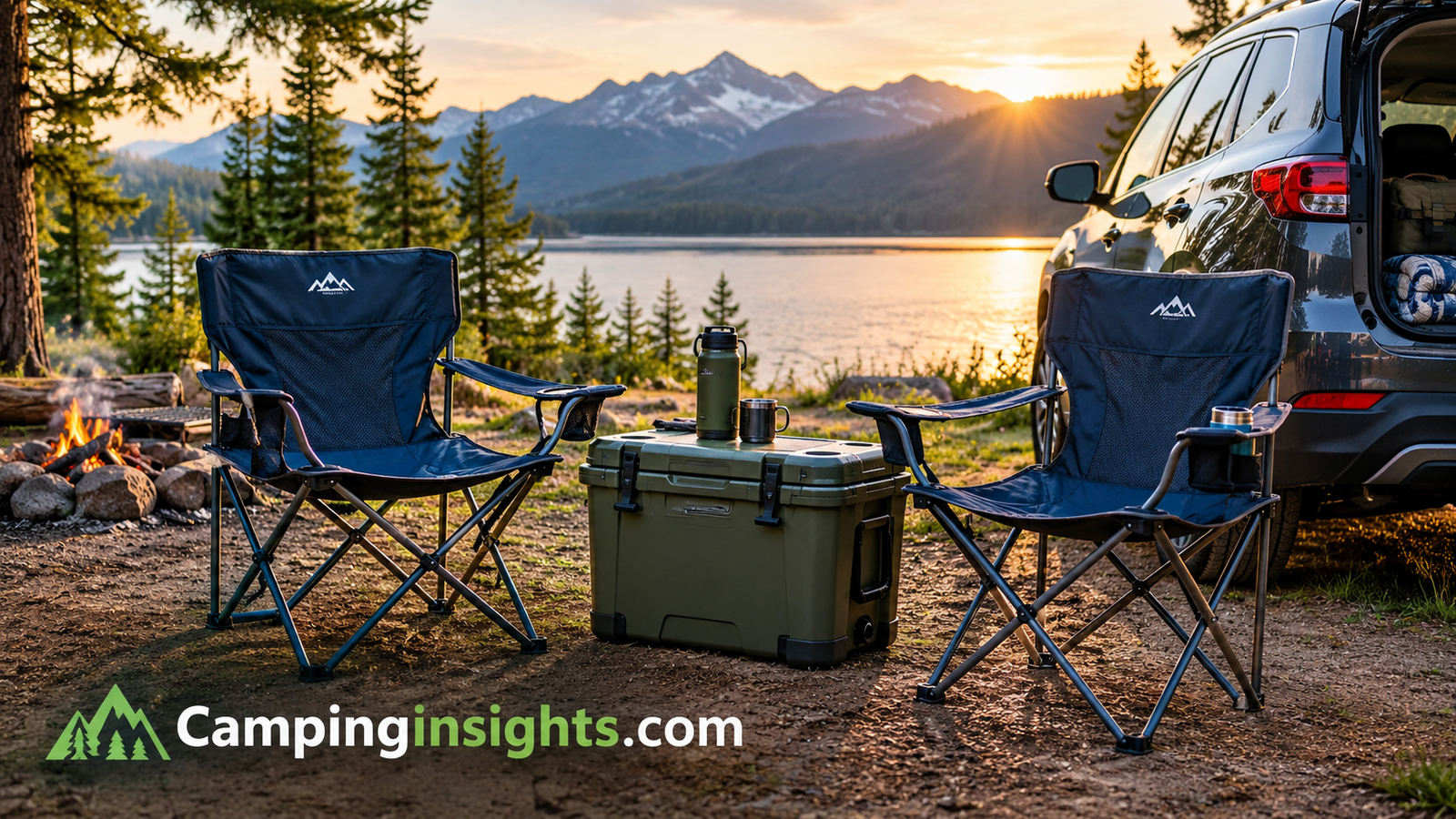
- Comfort: camp chairs, folding table, extra layers
- Safety: first aid kit, multi-tool, fire starter
- Navigation: offline maps or a paper map of the area
Because tent stakes are one of the most commonly forgotten or broken pieces of gear, it’s worth carrying a backup set — especially if you’re headed somewhere with hard-packed or rocky ground, where our guide to the best tent stakes for rocky ground can save you from a frustrating first night. A small tent repair kit is cheap insurance too; a torn seam or bent pole doesn’t have to end a trip early.
Setting Up Your Vehicle
One of the underrated skills of car camping is learning to pack and use your vehicle efficiently. A few habits make a noticeable difference in how smooth the trip feels once you arrive at the site.
Pack in Reverse Order
Load the items you’ll need last — tents, sleeping gear — first, so they end up at the bottom, and load the things you’ll need immediately upon arrival, like chairs and a water bottle, last so they’re on top. It sounds obvious, but it saves a genuine amount of frustration when you’re tired and it’s getting dark.
Use Bins, Not Bags
Stackable plastic bins keep gear organized, protect it from moisture, and make it easy to see what’s inside at a glance. Dedicate one bin to the kitchen, one to sleeping gear, and one to miscellaneous extras.
Plan for Bad Weather From the Driver’s Seat
Your car can double as a dry place to cook or wait out a downpour. Keep a rain jacket, a towel, and a phone charger within reach of the front seat so you’re never stuck digging through bins in the rain.
Think About Ground Clearance
Many campgrounds have paved or gravel access roads that any car can handle, but dispersed sites on forest roads sometimes require higher clearance. Check recent trip reports before assuming your vehicle can make it all the way in.
Create a Simple Loading Diagram
If you camp regularly with the same group, it helps to settle on a rough loading pattern once and reuse it every trip — tent and stakes go in this corner, the cooler always sits upright against the back seat, the stove box goes on top for easy access. Muscle memory takes over after a few trips, and packing the car stops being a puzzle you have to solve from scratch each time.
Leave Room to Sit Out a Storm
Even with two adults and a full kit, try to keep a small cleared patch in the back seat or trunk area where someone could realistically sit for an hour if a storm forces everyone off the ground. It rarely gets used, but on the one trip it does, you’ll be glad it’s there.
Sleep Systems That Work
Sleep quality makes or breaks a camping trip, and car camping gives you room to actually solve this problem instead of just enduring it. A few combinations consistently work well.
Air Mattress + Tent
The classic setup. A queen-sized air mattress fits in most 4-person tents and turns the ground into a non-issue. Bring a battery or hand pump as a backup in case of a slow leak.
Camping Cot
Cots lift you off the cold ground entirely, which matters more than people expect — ground contact is often the biggest source of nighttime chill, even with a warm bag. If you tend to sleep on your side, our review of the best camping cot for side sleepers covers models with enough width and give to stay comfortable all night.
Sleeping Pad Over Foam Mat
For colder trips, insulation matters more than cushioning. Winter and shoulder-season car campers should prioritize an insulated pad — see our breakdown of the best sleeping pad for winter camping for R-value guidance.
Layer Bedding Like You Would at Home
A common mistake is treating a single sleeping bag as the entire solution, regardless of temperature. In practice, layering works just as well outside as it does indoors: a fitted sheet or liner against the mattress, a warm sleeping bag or comforter, and an extra blanket within reach for the coldest hours before dawn, which are almost always colder than the evening temperature you checked before bed.
Whichever combination you choose, test it in the backyard before a real trip if it’s new to you. Discovering that an air mattress has a slow leak, or that a “cold rated” bag isn’t nearly warm enough, is a far better lesson to learn twenty feet from your back door than three hours from home.
Finding the Right Campsite
Because car camping ties you to drivable locations, site selection matters more than it does for backpackers who can simply walk further. Start by deciding between a developed campground and dispersed camping. Developed sites offer picnic tables, fire rings, sometimes water and restrooms, and the peace of mind of a reserved spot. Dispersed camping — free camping on public land outside of a formal campground — offers more solitude but fewer amenities and no guarantee of privacy from other campers doing the same thing.
Our guide on how to choose a campsite walks through what to look for once you’re on the ground: level tent pads, distance from water sources, tree cover, and wind exposure. If you’re still deciding on a region altogether, where to go camping is a good starting point for narrowing things down by season and terrain.
Booking windows matter too. Popular national and state park campgrounds can fill up months in advance for summer weekends, while lesser-known public land sites or midweek trips are far more forgiving for last-minute planning.
It also helps to think about the season before locking in a location. A site that’s gorgeous and shaded in July might be a mud pit in early spring, and a river-adjacent site that feels perfect in dry weather can flood after a heavy rain. Reading recent reviews or trip reports, rather than relying only on official photos, is usually the fastest way to catch these seasonal quirks before you’ve already made the drive.
Meals and Cooking
Food is where car camping really shines compared to backpacking. Because a cooler isn’t a weight penalty, you can bring real ingredients instead of dehydrated meals. Plan meals that use just one or two pots, prep what you can at home, and keep raw meat separated and well-chilled. Our camping food ideas guide has a full rundown of easy, satisfying meals for every meal of the day.
A reliable stove is worth the investment. Whether you go with a simple two-burner propane stove or a compact single-burner setup, check our best camping stove review before buying — boil times and wind resistance vary a lot between models, and a stove that struggles in a light breeze will test your patience fast.
A well-stocked cooler deserves the same attention as the stove. Pre-freezing water bottles instead of buying ice keeps food colder for longer and doubles as drinking water once it thaws. Packing the cooler in the order you’ll use ingredients — breakfast items near the top, anything for the last night near the bottom — saves a lot of digging through melting ice on day two. If you’re camping somewhere warm, a second smaller cooler dedicated to drinks means the main food cooler doesn’t get opened every few minutes, which is one of the biggest factors in how long ice actually lasts.
Staying Safe
Car camping is generally very safe, but a little preparation goes a long way. Tell someone your route and expected return time, especially for dispersed sites with no cell signal. Store food properly to avoid attracting wildlife — a sealed cooler in the trunk is usually enough in most regions, though bear country requires dedicated bear-proof storage. Keep a basic first aid kit accessible and know the location of the nearest ranger station or town. Our full camping safety tips guide covers wildlife, fire safety, and weather-related risks in more detail.
Fire safety deserves its own mention: always check current fire restrictions before assuming a campfire is allowed, and never leave a fire unattended, even for a few minutes.
Weather-Proofing Your Trip
Weather is the single biggest variable in how enjoyable a car camping trip turns out to be, and it’s also the area where a little planning pays off the most. If rain is in the forecast, review camping in the rain tips before you leave — small choices like site drainage and a taut rainfly make a huge difference. Waking up to a damp tent interior is a common complaint, and it’s usually preventable; our guides on how to stop condensation in a tent and why your tent might be wet inside cover the most common causes, from poor ventilation to a rainfly pitched too close to the tent body.
If your trip involves genuine waterproofing concerns — an older tent, or heavy rain in the forecast — read through how to make a tent waterproof before you go, not after the first leak. For cold-weather trips, both keeping a tent warm at night and the more specific how to keep a tent warm in winter guide will help you avoid a miserable, sleepless night.
Car Camping With a Dog
One of the quiet advantages of car camping is how much easier it makes bringing a dog along. There’s room for a crate, extra water, a dog bed, and all the food you need without worrying about pack weight. Our full guide on camping with a dog covers everything from leash laws at different campgrounds to keeping paws safe around a campfire.
A few basics matter regardless of destination: bring more water than you think you need, keep your dog leashed near roads and other campsites, and check ahead of time whether your chosen campground actually allows pets, since policies vary widely between public and private land.
Common Mistakes to Avoid
Even with a vehicle full of gear, a few recurring mistakes trip up first-time car campers. Overpacking to the point where setup takes an hour is one of the most common — abundance is a feature of car camping, but a mountain of unused gear just adds stress. Skipping a site reservation and assuming a spot will be available is another; popular campgrounds fill fast, especially on weekends. Forgetting to test new gear at home before a trip is a third: the first time you pitch a new tent shouldn’t be at dusk, in the wind, at an unfamiliar site.
It’s also worth understanding what car camping is not. It differs meaningfully from stealth camping, which generally means camping discreetly and often illegally in a vehicle in an urban or semi-urban setting rather than at a designated recreational site. Confusing the two can lead to camping in the wrong place entirely, so it’s worth knowing the distinction before you plan a trip around unfamiliar terminology.
Finally, many new campers underestimate bugs. A little preparation — repellent, appropriate clothing, and smart site selection — solves most of it; our guide on how to keep bugs away while camping has the details.
A less obvious mistake is arriving too late in the day. Setting up a tent, sorting bins, and getting a fire going all take longer than they do at home, especially the first few times, and doing any of it in the dark adds unnecessary stress. Aim to arrive with at least two hours of daylight left, more if the site is unfamiliar or the terrain is uneven. It’s also easy to assume cell service will be available for last-minute research once you’re there — downloading maps, campground rules, and check-in details in advance avoids a scramble if the site turns out to have no signal at all.
Frequently Asked Questions
Is car camping the same as tent camping?
Not exactly. Tent camping simply refers to sleeping in a tent, which can happen whether you drove to the site or hiked in. Car camping specifically means your vehicle is parked at or near your site and carries your gear.
Do I need a big SUV to go car camping?
No. Any car with enough trunk or back-seat space for a tent, sleeping gear, and a cooler will work fine for most developed campgrounds.
Is car camping cheaper than a hotel?
Usually, yes, especially over multiple nights. Campground fees are typically a fraction of a hotel room rate, though gear costs are an upfront investment if you’re starting from scratch.
Can I car camp in the winter?
Yes, with the right sleep system and tent setup. Insulated pads, warm bedding, and a well-ventilated tent make a big difference — see our winter-specific guides above for details.
What’s the difference between car camping and dispersed camping?
Car camping describes the style (vehicle-supported), while dispersed camping describes the location (public land outside a formal campground). You can car camp at a developed site or at a dispersed one.
How much does a basic car camping setup cost?
A functional starter kit — tent, sleeping bags, a basic stove, and a cooler — can usually be assembled for a modest budget, and most of it will last for years with reasonable care. Buying secondhand or borrowing gear for a first trip is a smart way to confirm you enjoy it before spending more on upgrades.
Can I bring my dog car camping?
In most cases, yes. Pet policies vary by campground, so it’s worth checking ahead, but the extra trunk space makes it far easier than backpacking with a dog.
How do I keep food safe from animals while car camping?
A sealed cooler stored in the trunk works in most areas. In bear country, use designated food lockers or bear-proof containers instead.
Do I need a permit to car camp?
Developed campgrounds usually require a paid reservation rather than a separate permit. Some dispersed camping areas require a free permit, particularly during high fire-risk seasons — check with the local land management agency first.
What should I do if it rains during my trip?
Make sure your rainfly is taut and fully staked, keep gear off the tent floor, and use your car as a dry space for cooking or waiting out the worst of it.
Is car camping good for beginners?
It’s widely considered the best entry point into camping, since it removes most of the physical and logistical barriers that make backpacking intimidating for first-timers. Many people who eventually take up backpacking or overlanding got their start with a simple car camping trip.
How far in advance should I book a campsite?
For popular parks in peak season, weeks or even months ahead is common. For less popular sites or midweek trips, a few days’ notice is often plenty.
The Bottom Line
Car camping strips away the intimidation factor that keeps a lot of people from ever sleeping outdoors, while still delivering everything that makes camping worthwhile — quiet mornings, a campfire, and a break from routine. Start with a solid core kit, pick a site that matches the season, and build from there. Once you’ve done it a couple of times, you’ll have a much clearer sense of what upgrades are actually worth making.
Shop Car Camping Essentials